 blog
Customizable Civil Wedding Ceremony Packages in 2026
Table of Contents
- What Defines a Customizable Civil Wedding Ceremony Package?
- Registry Office vs. Private Celebrant: Which Fits Your Vision?
- Understanding Civil Marriage Celebrant Fees
- How to Personalise a Civil Wedding Ceremony
- Using Wedding Ceremony Script Templates as a Starting Point
- The Legal Checklist for Your Civil Marriage
- Your Next Step: Booking a Celebrant Who Builds Your Package
- Frequently Asked Questions
Last Updated: September 9, 2026
What Defines a Customizable Civil Wedding Ceremony Package?
A customizable civil wedding ceremony package combines legally valid marriage solemnization with flexible options for vows, readings, styling, and duration, and it is one of the most popular civil wedding ceremony packages for modern couples. Many couples assume a civil ceremony means a rigid, scripted affair at a registry office. That assumption is outdated. Modern celebrants build packages that satisfy Australian legal requirements while leaving room for genuine personalisation.
Every legally valid marriage in Australia requires a registered marriage celebrant, a Notice of Intended Marriage lodged at least one month beforehand, and two witnesses over 18. Those requirements are fixed. Everything else, from the script to the readings and music, is negotiable. This guide explains registry versus private options, what celebrant fees cover, and how to create a ceremony that feels unmistakably yours.
Registry Office vs. Private Celebrant: Which Fits Your Vision?
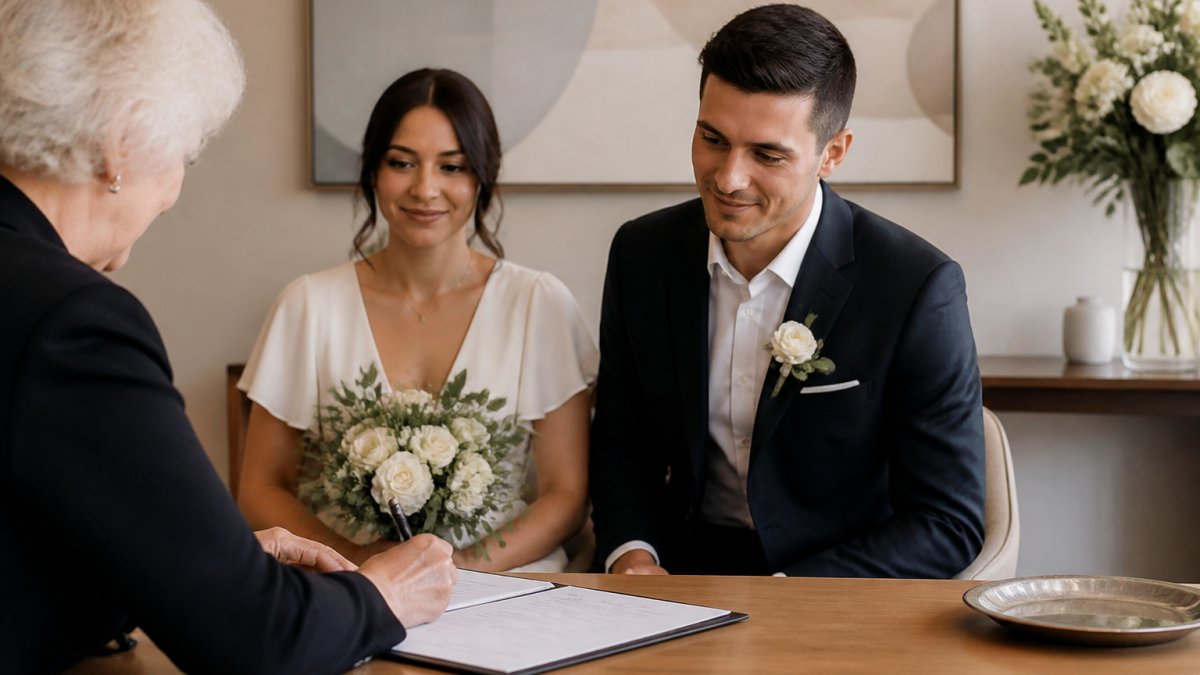
The choice between a registry office and a private celebrant comes down to one question: how much control do you want over the ceremony itself? Registry offices handle the legal process efficiently and affordably, but they operate on strict schedules, offer limited ceremony space, and restrict personalisation to a short set of approved vows and readings.
Private celebrants offer a different trade-off. You gain control over the ceremony location, the script, the duration, and the level of personalisation, but you take on more planning responsibility and typically pay more. For couples who want a meaningful, intimate wedding rather than a transactional legal event, the private route usually wins.
| Option | Best For | Guest Capacity | Personalisation | Legal Validity |
|---|---|---|---|---|
| Registry Office | Budget-focused, legal-only ceremonies | Small, often limited | Minimal | Fully valid |
| Private Celebrant | Bespoke, meaningful ceremonies | Flexible, venue-dependent | Extensive | Fully valid |
| Hybrid Approach | Legal step plus separate celebration | Flexible | Moderate | Fully valid |
A common approach is the hybrid: complete the legal marriage at a registry, then hold a separate symbolic ceremony with a celebrant where guests are actually invited. This gives you the reliability of the registry for paperwork while reserving the emotional moment for a setting you control.
Understanding Civil Marriage Celebrant Fees
Civil marriage celebrant services are not a single line item but a bundle of distinct services. Understanding what each component involves is key to building a package that fits your needs without cutting corners on the legal essentials.
What Your Fee Actually Pays For
A celebrant's service covers more than the 20 minutes at the front of the room. It involves time before, during, and after the ceremony. Common components include:
- Administration and legal compliance: Lodging your Notice of Intended Marriage (NOIM), verifying your original documents (birth certificates, passports, divorce decrees if applicable), and preparing the official marriage certificates. This is non-negotiable work that must be done correctly.
- Ceremony development: The time your celebrant spends interviewing you, drafting the script, incorporating your chosen readings and rituals, and revising drafts based on your feedback. This is where customisation happens.
- Rehearsal (optional): A dedicated session at the venue to walk through the processional, positioning, and cue timing. Not all couples need this, but it is a common add-on for larger or more complex ceremonies.
- Travel and on-the-day time: The celebrant's travel to your venue, plus their time on site for setup, the ceremony itself, and completing the legal sign-off with your witnesses.
The Cost-Benefit Trade-Off: Registry vs. Private Celebrant
The most significant decision is not which celebrant you choose, it is whether you choose a registry office or a private celebrant at all. The trade-off is often misunderstood, so it is worth breaking down the real-world comparison.
A registry office ceremony is a legal option. It covers the legal process, a civil registrar, and a designated ceremony room. However, the schedule is fixed, the room is shared, and personalisation is limited to a short list of approved vows and readings. You are choosing efficiency and legal certainty, not a bespoke experience.
A private celebrant-led ceremony at a separate venue offers control over the date, time, location, script, and atmosphere. The difference is not just the celebrant's time; it is the flexibility to create a ceremony that does not feel like a government appointment.
The Hybrid Strategy: A Legal Step and a Symbolic Ceremony
For couples who want the legal reliability of the registry but the emotional experience of a personalised ceremony, the hybrid approach is a legitimate strategy. The legal marriage is completed at a registry office on a weekday, and a separate symbolic ceremony is held later with a private celebrant at a venue of your choosing.
This separates the legal requirement from the emotional event. The registry handles the paperwork, and the celebrant focuses entirely on crafting a ceremony that reflects your relationship. The trade-off is two separate services and two separate events, but for couples with a strong desire for personalisation, this can be an effective way to get both.
Questions to Ask Before You Book
When you are considering services, ask these specific questions to avoid surprises:
- Is the NOIM lodgement and document verification included, or is that an additional administrative service?
- How many planning meetings or consultation hours are included in the base service?
- What is the additional cost for a rehearsal, if you want one?
- Are travel costs capped, or is there a per-kilometre rate beyond a certain distance?
- Does the service include the public address system and any basic ceremony furniture, or is that a separate venue cost?
A transparent celebrant will answer these questions directly. If a service description is vague on any of these points, treat it as a warning sign. The goal is to understand exactly what your service includes and where you can make trade-offs that align with your priorities.
How to Personalise a Civil Wedding Ceremony
Personalising a civil wedding ceremony starts with a conversation about your story as a couple, not a list of optional extras. A skilled celebrant asks how you met, what matters to you both, and what atmosphere you want guests to feel. Those answers become the raw material for the ceremony.

Effective personalisation touches every element: the introduction, order of events, vow exchange, readings, and even the wording of the legal declaration. You might walk down the aisle to a meaningful song, include a sand ceremony or handfasting ritual, or invite a close friend to share a memory. None of these affect legal validity, provided the required legal words are spoken.
Writing Your Vows and Choosing Readings
Writing your own vows is the most powerful way to personalise a civil ceremony. Your celebrant provides the required legal wording, but the personal vows around it are yours to write. Keep them specific, reference shared memories, inside jokes, or admired qualities, and aim for 60 to 90 seconds per person.
Readings work best when they reflect your values rather than tradition. Many couples choose poetry, novel excerpts, or song lyrics. Confident friends or family invited to read add a personal layer a professional never could.
Incorporating Cultural and Spiritual Elements Respectfully
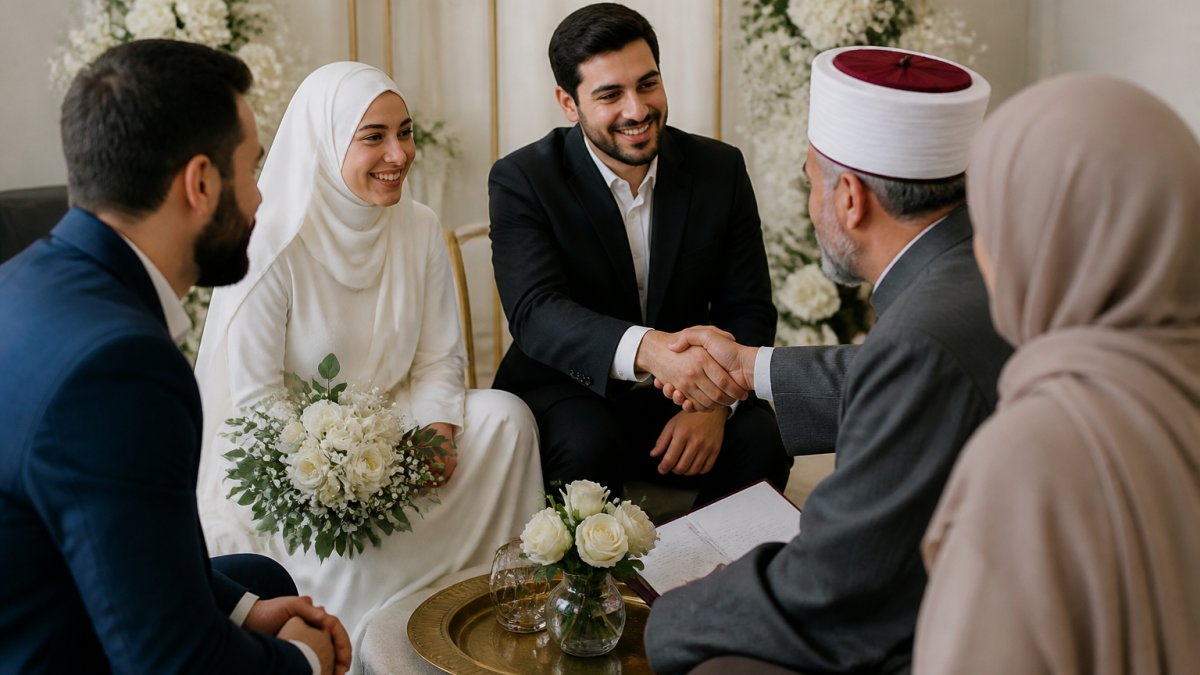
A civil ceremony can include cultural or spiritual elements, even without a religious officiant. The key is respect and intention. A celebrant experienced in interfaith and culturally diverse ceremonies, like those offered by Ceremonies With Faisal, can help weave in traditions such as a unity candle, a family blessing, or heritage through music or dress.
The key distinction is between a civil and a religious ceremony. In a civil marriage, the celebrant cannot conduct a religious ceremony, but can incorporate cultural symbols and readings meaningful to you. Discuss your wishes openly to ensure what you plan is both legal and appropriate.
Using Wedding Ceremony Script Templates as a Starting Point
Wedding ceremony script templates are a practical starting point for couples who want structure without a blank page. A well-designed template provides the skeleton, the welcome, introduction to marriage, legal declaration, vow exchange, and pronouncement, and your job is to fill in the details that make it yours.
Templates are most useful as a foundation, not a finished product. A generic template used verbatim produces a generic ceremony. Instead, work through it with your celebrant, marking sections to expand, cut, or rewrite. The celebrant's experience transforms a template into something that reflects your relationship.
The Legal Checklist for Your Civil Marriage
Getting the legal requirements right protects your marriage from future complications. The law sets a clear floor for what must happen, but says nothing about the ceiling. Understanding the difference allows you to customise freely without risking the validity of your marriage.
The Non-Negotiable Legal Core
These are the elements that Australian law requires for every valid marriage. You cannot customise, skip, or substitute these items:
- Lodge your Notice of Intended Marriage (NOIM) with your celebrant at least one month before the ceremony, and no earlier than 18 months before. This is a fixed legal window. The one-month clock starts only when your NOIM is complete and accompanied by all required documentation.
- Provide original documentation proving your birth, identity, and any previous marriage endings. This typically means your full birth certificate and a form of photo ID. If you have been married before, you must provide the divorce decree or the death certificate of your former spouse.
- Confirm your celebrant is a registered marriage celebrant authorised to solemnise marriages in Australia. You can verify this on the Commonwealth Attorney-General's Department register of marriage celebrants.
- Arrange two witnesses aged 18 or over. They must be physically present at the ceremony and sign the official documentation. They cannot be the celebrant.
- Include the required legal words in the ceremony. The celebrant must say the monitum (the statement about the nature of marriage under Australian law), and you and your partner must each state the legal declaration: "I call upon the persons here present to witness that I, [full name], take thee, [full name], to be my lawful wedded wife/husband/spouse (legislation.gov.au)." This wording is prescribed by law and cannot be altered.
- Sign the official marriage certificates at the ceremony. You, your partner, your two witnesses, and the celebrant all sign three certificates. One is for you, one is for the registry, and one is for the celebrant's records.
- Receive your registered marriage certificate from your state or territory registry after the ceremony. The celebrant lodges the paperwork, and the registry processes it. You can then order additional certified copies for legal and administrative purposes.
The Optional Layer: Where Customisation Lives
Everything outside that legal core is optional and customisable. This is where you can build a ceremony that reflects your relationship without legal risk. Common optional elements include:
- The celebrant's introduction and commentary: The celebrant can tell your story, describe how you met, and set the tone for the ceremony.
- The order of events: You can choose to include a processional, a handfasting ritual, a sand ceremony, a unity candle, or any other symbolic act. These can occur before, during, or after the legal declaration.
- The readings and music: You can select poetry, prose, song lyrics, or cultural texts. You can have a friend read, or you can play a recorded song. The only requirement is that these elements do not interfere with the legal monitum and declaration.
- Your personal vows: You can write and speak your own vows to each other. These are separate from the legal declaration and can be as long, short, poetic, or humorous as you wish.
- The pronouncement: After the legal declaration, the celebrant can say a personalised pronouncement before introducing you to your guests.
A Practical Sequence for DIY Customisation
If you are building your own ceremony, work through this sequence to ensure you have covered the legal core before you start adding optional elements:
- Start with the legal core. Write out the monitum and the legal declaration exactly as your celebrant provides them. These are fixed.
- Build the ceremony skeleton around the legal core. Decide where the legal declaration will sit in the overall flow. Will it be in the middle, after your personal vows? Or near the end, after the readings?
- Add optional elements around the skeleton. Slot in your processional, readings, rituals, and music in the spaces before and after the legal core.
- Review the full script with your celebrant. Your celebrant's role is to confirm that the legal elements are correctly placed and worded, and that the optional elements do not accidentally interfere with the legal requirements.
Your Next Step: Booking a Celebrant Who Builds Your Package
Choosing the right celebrant determines whether your ceremony feels like a formality or a genuine highlight. Look for someone who listens before they talk, understands both the legal framework and the emotional weight of the moment, and has experience with the cultural or spiritual elements you want to include.
A celebrant who is both a registered marriage celebrant and an experienced Sheikh, like Faisal Akhtar at Ceremonies With Faisal, brings a rare combination of legal precision and cultural sensitivity. This matters especially for interfaith couples or those seeking a ceremony that honours Islamic traditions within a legally valid civil marriage. The right celebrant will guide you through the paperwork, help you personalise every element, and stand with you confidently on the day.
Frequently Asked Questions
What is included in a standard civil wedding ceremony package?
A standard customizable civil wedding ceremony service typically includes the celebrant's time for planning meetings and the ceremony itself, professional guidance on legal paperwork like the Notice of Intended Marriage, and a personalised ceremony script. Many services also cover the celebrant's travel within a set distance and the use of a portable PA system. Items like venue hire, flowers, photography and styling are usually separate. Always confirm exactly what is included in writing, as inclusions vary between providers.
Can I include religious or cultural elements in a civil ceremony?
Yes, a civil ceremony in Australia can include cultural rituals, symbolic actions and readings that reflect your background, as long as the legal wording required by law is spoken by the celebrant. This makes a civil marriage a good fit for interfaith couples or those wanting a spiritual but non-religious feel. You can include a minute of silence, a candle lighting ritual or a cultural blessing. Discuss your ideas with your celebrant, who can help weave these elements into a legally valid ceremony script.
How far in advance should I book my civil marriage celebrant?
You must lodge your Notice of Intended Marriage with your celebrant at least one month before the ceremony date, so booking at least two to three months ahead is wise. Popular dates, especially autumn and spring weekends, book out quickly. Booking early also gives you time to personalise the ceremony script and secure your preferred venue. If you need to marry sooner, check with your celebrant about availability and any options for shortening the notice period.
Planning a civil ceremony that feels personal while meeting every legal requirement takes careful coordination. Ceremonies With Faisal offers customisable civil wedding ceremony packages that integrate your story, your values, and your cultural traditions into a legally binding ceremony led by an experienced Sheikh and registered marriage celebrant. Call now to discuss your ceremony and begin building a package that reflects who you are.