 blog
Inclusive Wedding Ceremonies Sydney: 2026 Guide
Table of Contents
- What Makes a Wedding Ceremony Inclusive in Sydney
- Civil Wedding Ceremony Sydney: What the Legal Process Actually Involves
- Interfaith Wedding Ceremony Sydney: Blending Two Traditions With Respect
- Personalised Wedding Ceremony Ideas That Reflect Who You Are
- Choosing a Venue for a Civil Ceremony: Access, Cost and Capacity
- Understanding Wedding Package Costs and What Drives Them
- Common Mistakes Couples Make With Inclusive Ceremonies
- Frequently Asked Questions
Last Updated: October 5, 2026
What Makes a Wedding Ceremony Inclusive in Sydney
An inclusive wedding ceremony is one where every guest feels genuinely welcome, every tradition is treated with respect, and the couple's identity sits at the centre of the day rather than the edges.
That second question is where most ceremonies fall short. Couples spend months on flowers and menus, then hand the celebrant a template script. The result feels generic because it is.
Inclusive wedding ceremonies sydney couples actually remember share three traits: language that names people correctly, rituals that carry meaning for both families, and logistics that let every guest participate. Below, we break down how to assess a celebrant, what the legal process involves, and how to plan a ceremony that reflects who you are.
Inclusive Language, Rituals and Guest Experience
Language is the fastest way to signal respect. Ask your celebrant how they handle name pronunciation, pronouns, and the way they refer to each partner's family. A celebrant who rehearses your parents' names before the day is a celebrant who understands the assignment.
Rituals matter just as much. Blending a tea ceremony, a ring warming, or a moment of silence gives families from different backgrounds something to recognise.
Guest experience is the third pillar. Think about seating for mobility needs, a quiet space for children, and whether the ceremony runs long enough to feel significant but short enough to hold attention.
How to Assess a Celebrant for Cultural and Identity Fit
Ask direct questions before you book. A celebrant comfortable with interfaith, multilingual, or same-sex ceremonies will answer without hesitation.
- How many ceremonies have you conducted that blend two faith traditions?
- Can you deliver parts of the ceremony in another language?
- How do you handle a family member who objects to the union?
- What is your process for learning about us before the day?
If the answers feel rehearsed or vague, keep looking. The right celebrant asks you more questions than you ask them.
Civil Wedding Ceremony Sydney: What the Legal Process Actually Involves
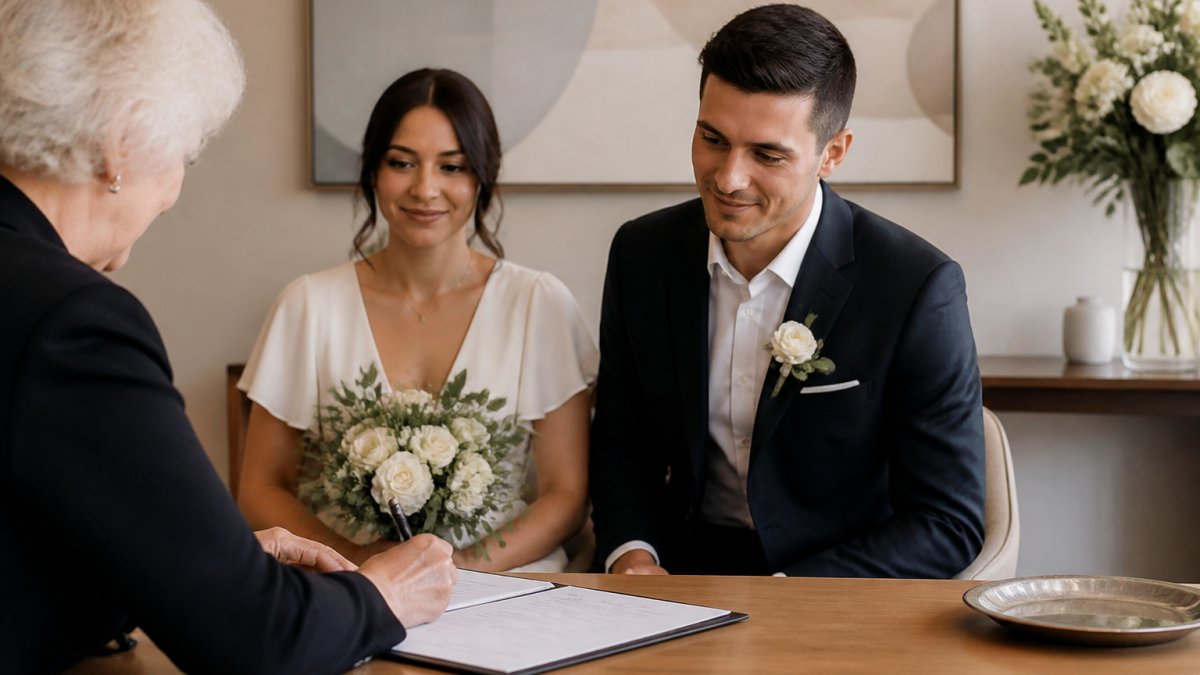
A civil wedding ceremony in Sydney is a legally binding marriage conducted by a registered marriage celebrant, with no requirement for religious content. The process is straightforward, but the paperwork has firm deadlines.
Notice of Intended Marriage and Other Paperwork
The Notice of Intended Marriage must be lodged with your celebrant at least one month before the ceremony. You will also need proof of identity and, if previously married, evidence the marriage has ended. Your celebrant should walk you through every form rather than leaving you to work it out alone.
Faisal Akhtar is a registered marriage celebrant, which means he handles the legal lodgement alongside the ceremony itself.
Interfaith Wedding Ceremony Sydney: Blending Two Traditions With Respect
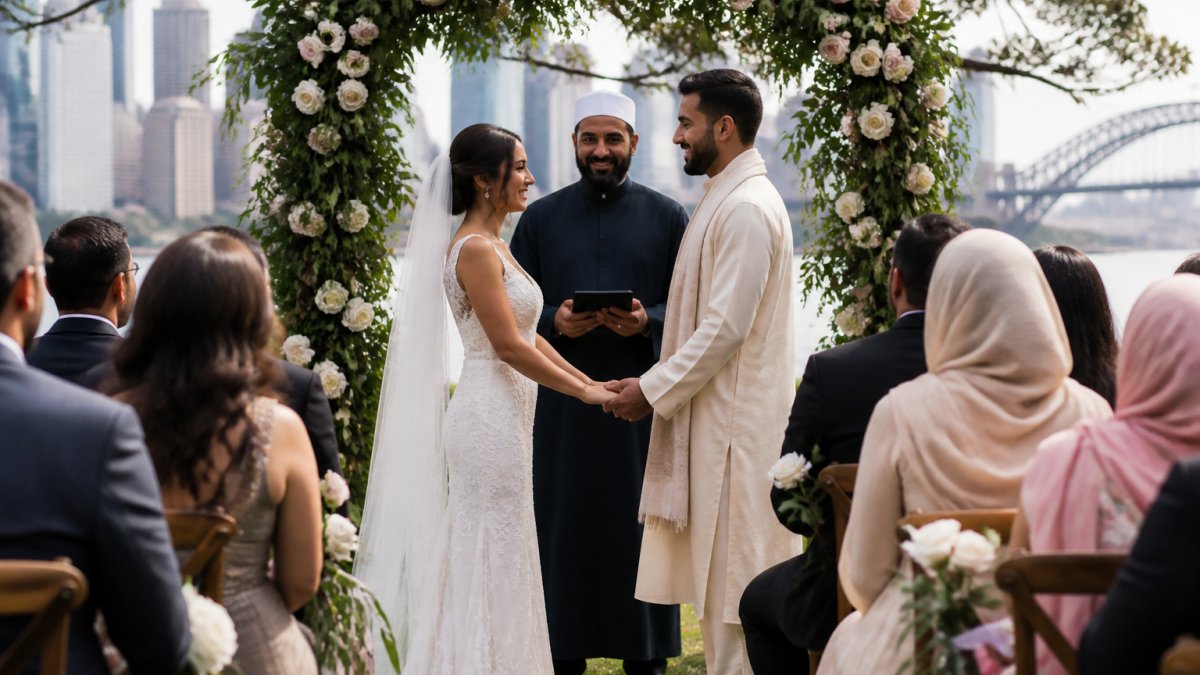
An interfaith wedding ceremony in Sydney works best when neither tradition is treated as the default. The goal is not to merge everything into a blur, but to give each side a genuine moment.
Practical approaches that hold up:
- Open with a welcome that acknowledges both families by name
- Include one reading or prayer from each tradition, given equal weight
- Use a shared ritual, such as lighting a candle together, to close
- Brief both families beforehand so nobody is surprised mid-ceremony
The tension couples worry about usually comes from family expectations, not the ceremony itself. A celebrant experienced with interfaith weddings can hold those conversations early.
Personalised Wedding Ceremony Ideas That Reflect Who You Are
Personalised wedding ceremony ideas start with your story, not a script library. Ask yourselves: what would a guest say defined your relationship?
Rituals, Readings and Multilingual Moments
A multilingual moment, where vows or a blessing are spoken in a second language, is one of the simplest ways to include family members who might otherwise feel like spectators. Readings chosen from a favourite book or poem often land harder than traditional passages.
Other options couples use:
- A sand or candle ritual involving both families
- Vows written together rather than copied from a template
- A moment of remembrance for loved ones who have passed
- Music that reflects both cultural backgrounds
Choosing a Venue for a Civil Ceremony: Access, Cost and Capacity
When you're planning an inclusive ceremony, venue selection goes beyond aesthetics. The space must physically welcome every guest, and the logistics must support your ceremony style without hidden compromises. Use the checklist below to evaluate venues against your guest list and budget.
Accessibility: The Non-Negotiable Checklist
Accessibility is more than a ramp at the entrance. Ask venues these specific questions:
- Step-free access: Is there a continuous step-free path from the car park or drop-off point to the ceremony space and bathrooms? Are there any thresholds, gravel paths, or uneven surfaces that could be difficult for wheelchairs or walkers?
- Accessible bathrooms: Are there unisex accessible bathrooms on site? Are they unlocked and available during the ceremony?
- Seating: Can the venue provide chairs with armrests for guests who need support? Is there space for a wheelchair user to sit with their companion rather than in a separate area?
- Sensory considerations: Is there a quiet room or space where guests can take a break from noise or crowds? Can the venue adjust lighting or music volume if needed?
- Transport and parking: Is there accessible parking near the entrance? Is the venue reachable by public transport, and is the route from the station or bus stop step-free?
- Hearing loops: Does the venue have a hearing loop or sound system that can connect to hearing aids? If not, can they accommodate a portable system?
A garden or beachfront venue can be beautiful, but grass, sand, and uneven ground can exclude guests with mobility needs. If you have your heart set on an outdoor setting, ask whether the venue can provide a firm, level pathway and accessible seating.
Capacity and Layout: Matching the Space to Your Guest List
An intimate ceremony of 30 people in a space built for 200 feels hollow. But capacity is not just about numbers, it's about how the space feels and functions.
- Minimum and maximum guest numbers: Ask for both. Some venues have a minimum spend that makes a small ceremony expensive.
- Ceremony and reception in one place: Can you hold both in the same venue? This reduces travel for guests with mobility issues and simplifies logistics.
- Exclusive use: Will you have the venue to yourselves, or will other events be happening simultaneously? Exclusive use ensures privacy and allows you to control noise and access.
- Wet weather plan: If you're planning an outdoor ceremony, what is the indoor backup? Is it included in the hire fee, or is there an extra charge? Is the backup space accessible?
Cost and Hire Terms: What to Ask Before You Book
Venue hire costs vary widely, and hidden fees can blow your budget. Clarify these points upfront:
- Hire duration: Is it a full-day hire or hourly? What time can you access the venue for setup?
- Inclusions: Does the fee include tables, chairs, linens, and basic audio equipment? Are there extra charges for these?
- Accessibility costs: Some venues charge extra for accessible bathrooms or ramps. Ask if there are any additional fees for accessibility features.
- Insurance and licensing: Does the venue require you to have public liability insurance? Are there noise restrictions or curfews?
- Cancellation policy: What happens if you need to postpone or cancel? Are deposits refundable?
| Venue Consideration | What to Ask | Why It Matters |
|---|---|---|
| Accessibility | Step-free entry, accessible bathrooms, seating with armrests, hearing loop | Determines who can attend and participate |
| Capacity | Minimum and maximum guest numbers, layout flexibility | Affects atmosphere and cost |
| Hire terms | Exclusive use, full-day vs hourly, setup access | Avoids surprise fees and logistics issues |
| Wet weather plan | Indoor backup included? Is it accessible? | Protects an outdoor ceremony and guest comfort |
| Transport | Accessible parking, public transport routes | Ensures all guests can arrive comfortably |
Choosing a venue is about more than the backdrop. It's about creating a space where every guest can be present, comfortable, and part of your celebration.
Understanding Wedding Package Costs and What Drives Them
Wedding package costs vary widely because they bundle different things. Some all-inclusive packages cover the celebrant, venue hire, and reception menu; others cover only the ceremony itself.
What drives the price:
- Customisation level, since a fully personalised ceremony takes more planning time
- Travel distance for the celebrant
- Whether the package includes ceremony coordination on the day
- Add-ons such as multilingual delivery or additional rituals
At Ceremonies With Faisal, pricing depends on the ceremony type, date, and level of customisation, so we quote individually rather than publishing a flat rate. Ask any celebrant what is included before comparing figures.
Common Mistakes Couples Make With Inclusive Ceremonies
The biggest mistake is treating inclusion as a single gesture rather than a planning habit. A pronoun mention here or a cultural ritual there does not make a ceremony inclusive if the logistics exclude people.
Other recurring errors:
- Booking a celebrant without asking about interfaith or multilingual experience
- Leaving the Notice of Intended Marriage to the last month
- Choosing a venue before checking accessibility
- Assuming families will "just understand" without a briefing
Fix these early and the ceremony itself becomes the easy part. Ceremonies With Faisal handles the legal lodgement and the personalised scripting so couples can focus on the day rather than the paperwork.
Planning an inclusive ceremony means juggling legal deadlines, family expectations, and venue logistics at the same time. Ceremonies With Faisal handles all three, combining registered celebrant services with deep experience in Nikah, civil, and interfaith ceremonies across Sydney.
Frequently Asked Questions
What makes a wedding ceremony inclusive?
An inclusive ceremony recognises and respects the identities, beliefs and backgrounds of both partners and their families. In practice, that means using language that reflects the couple's values, incorporating rituals from different traditions where relevant, and making sure guests of all abilities can participate comfortably. It also means the celebrant takes time to understand your story before drafting anything. Inclusive wedding ceremonies are built on consultation, not templates, so the ceremony feels genuinely yours rather than borrowed from someone else's script.
Can a civil wedding ceremony include religious or cultural traditions?
Yes. A civil wedding ceremony in Australia must meet the legal requirements set out in the Marriage Act 1961, but it can still include cultural or spiritual elements that matter to you. Readings in another language, a hand-tying ritual, a candle-lighting moment or a blessing from a family elder can all sit within a civil ceremony. The key is that the legal vows and declarations required by law are included. Discuss the specific elements you want with your celebrant early so they can structure the ceremony around them.
How do I choose a venue for a civil wedding ceremony?
Start with your guest list and accessibility needs, then work through location, capacity and wet-weather backup. For choosing a venue for a civil ceremony, confirm whether you get exclusive use, how long the hire period runs, and what the venue provides versus what you supply. Ask about accessibility for elderly or disabled guests, parking, and whether the space allows the rituals you have planned. Get all inclusions in writing before you pay a deposit, and check whether the venue has its own noise or timing restrictions.
How can couples personalise a wedding ceremony to reflect different faiths?
Personalised wedding ceremony ideas for interfaith couples often combine one meaningful ritual from each tradition rather than trying to merge everything. You might include a reading from one faith and a symbolic act from another, or ask a family member from each side to speak. Multilingual elements, such as a vow repeated in two languages, help both families feel included. The celebrant's role is to sequence these elements so the ceremony flows naturally and no single tradition dominates. Start by listing what matters most to each of you, then build outward from there.