 how-to
How to Plan an Interfaith Wedding Ceremony: 2026 Guide
Table of Contents
- Start with a Conversation, Not a Checklist
- Legal Requirements for Marriage in Australia: What You Must Know
- Choosing the Right Celebrant or Officiant for Your Interfaith Wedding
- Balancing Family Expectations and Setting Boundaries
- Interfaith Wedding Ritual Ideas That Honour Both Traditions
- Interfaith Wedding Ceremony Scripts: Structuring Your Ceremony
- Guest Education and Etiquette for a Blended Ceremony
- Budgeting for a Complex Interfaith Ceremony
- Frequently Asked Questions
Last Updated: September 19, 2026
Start with a Conversation, Not a Checklist
Planning an interfaith wedding ceremony in 2026 starts with one honest conversation before you open a spreadsheet. That talk shapes your celebrant, venue, vows, and how your families feel on the day.
Planning an interfaith wedding ceremony in 2026 starts with one honest conversation before you open a spreadsheet.
Sit down together and answer four questions:
- Which traditions matter most to each of you, and which are negotiable?
- What do your parents expect, and what are you willing to promise?
- Do you want a religious ceremony, a civil one, or a blend?
- Who needs to feel included for the day to feel whole?
Treat that first conversation as the foundation, not a formality.
Legal Requirements for Marriage in Australia: What You Must Know
An interfaith wedding is legally identical to any other marriage in Australia. The religious content has no bearing on validity, what matters is the correct celebrant, paperwork, and words.
- A marriage celebrant registered with the Attorney-General's Department
- A minister of religion recognised as a celebrant under the Marriage Act 1961
The Notice of Intended Marriage and Other Paperwork
The Notice of Intended Marriage (NOIM) is the form that starts the legal clock. It must be lodged with your celebrant no earlier than 18 months before the wedding and no later than one month before it. The Attorney-General's Department guidance on getting married sets out the full rules, including the documents you'll need.
You'll typically provide:
- Birth certificates or passports
- Photo identification
- Proof of any previous marriage ending (divorce or death certificate)
What the Celebrant Must Say and Do on the Day
The legal core of the ceremony is fixed. Before you are declared married, the celebrant must:
- State their authority to solemnise the marriage
- Read the monitum, the formal words explaining the nature of marriage under Australian law
- Ask each of you to say the required words of consent
Documents You'll Sign
- The official certificate of marriage
- The register of marriages
- A second certificate, which is the one you keep
Ask your celebrant to confirm in writing which documents they need, when, and who lodges what.
Choosing the Right Celebrant or Officiant for Your Interfaith Wedding
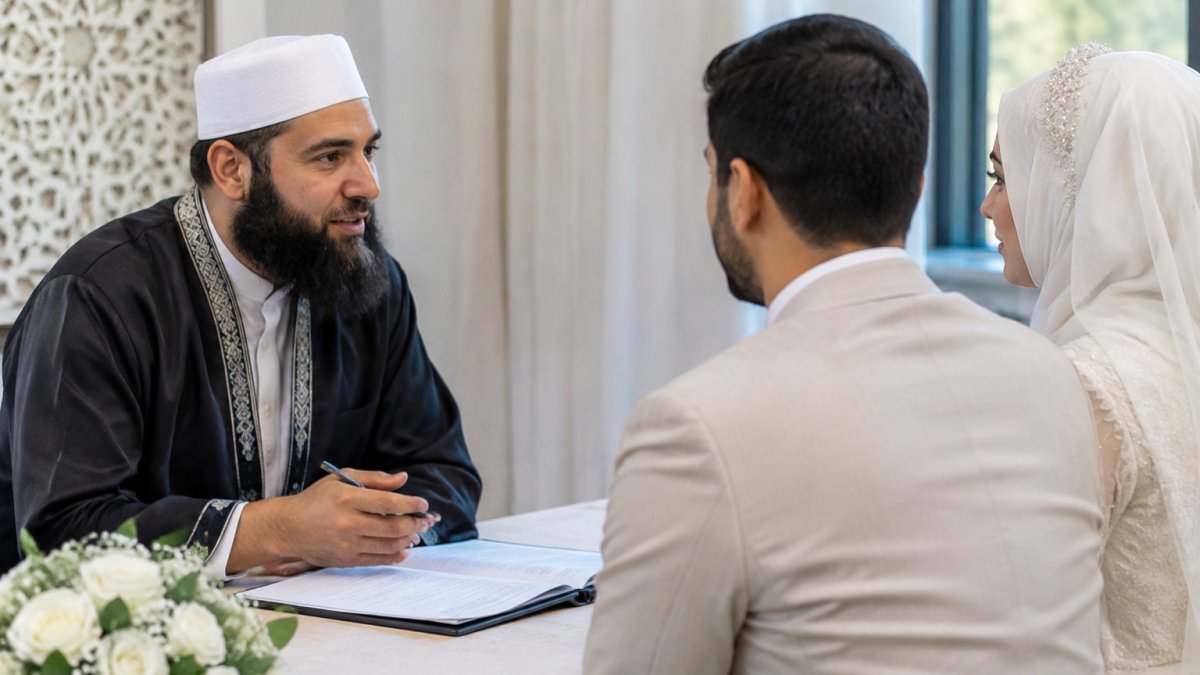
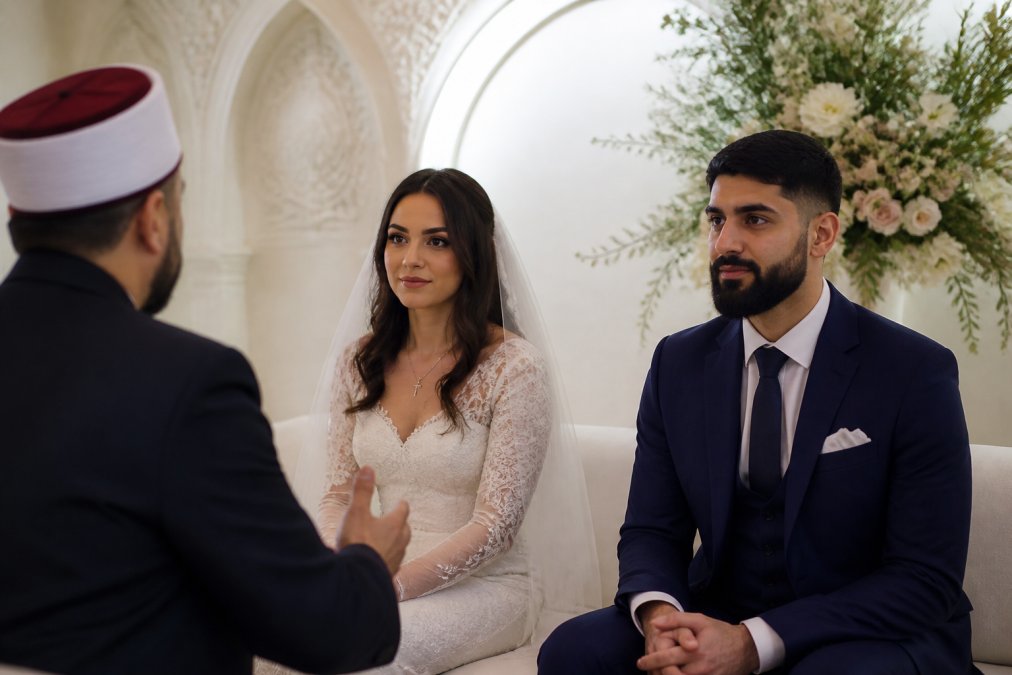
The right celebrant is the biggest factor in how smooth your interfaith wedding feels, handling the legal and emotional sides at once.
Look for someone who:
- Is a registered marriage celebrant with the Attorney-General's Department
- Has real experience with interfaith or blended ceremonies
- Understands both faith backgrounds, not just one
- Will meet you more than once before the day
- Can hold space when family tension surfaces
Balancing Family Expectations and Setting Boundaries
Family expectations are the hardest part of planning an interfaith wedding, and the part most guides skip. Your ceremony can be perfect on paper and still feel heavy if relatives leave unhappy.
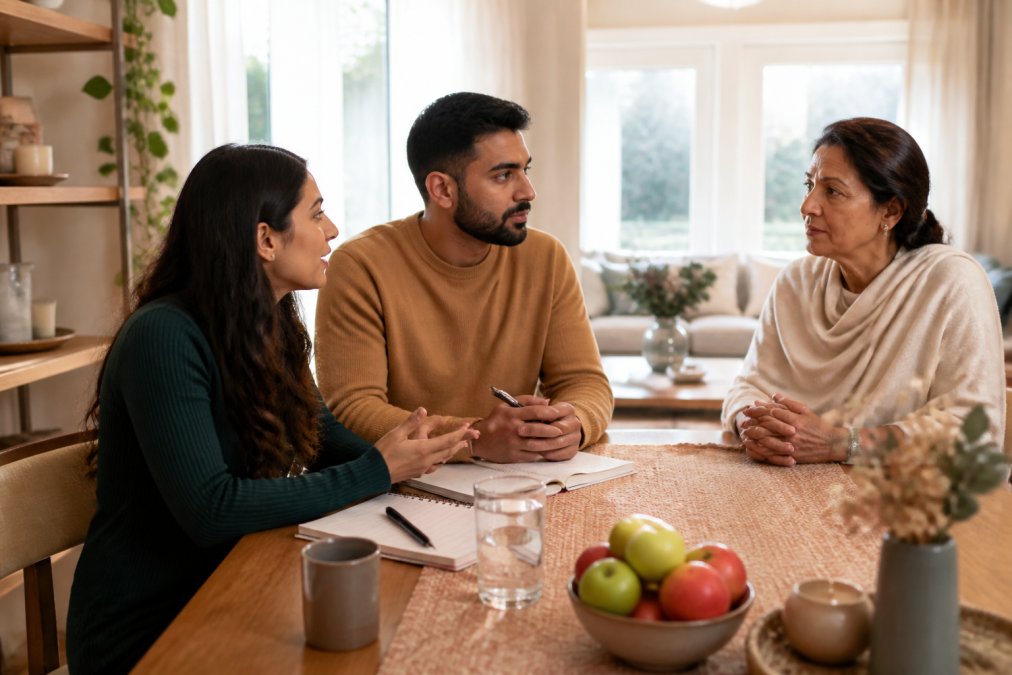
Set boundaries early and kindly:
- Agree on your non-negotiables before you speak to anyone else
- Present decisions as a team, never one partner against the other's family
- Give each set of parents one meaningful role, so they feel included
- Explain your choices once, clearly, then hold the line
Interfaith Wedding Ritual Ideas That Honour Both Traditions
Ritual ideas work best when each tradition gets a clear, visible moment rather than being blended into a blur, so guests can see both faiths honoured.
Strong options include:
- A reading from each tradition, given by a family member
- A unity ceremony using elements from both cultures
- A moment of silence or prayer that respects both backgrounds
- Symbolic acts such as exchanging gifts or tying a cord
- A shared blessing spoken by parents from each side
Symbolic Acts and Unity Ceremonies
A unity ceremony is a symbolic act where two people combine something visible, sand, candles, or water, to represent their union. It suits interfaith couples because it needs no shared theology.
Interfaith Wedding Ceremony Scripts: Structuring Your Ceremony
An interfaith wedding ceremony script follows a simple arc: welcome, readings, vows, symbolic act, closing. The order can flex, but the structure keeps guests oriented.
A workable flow looks like this:
- Welcome and introduction by the celebrant
- A reading or prayer from each tradition
- Your personal vows
- A symbolic act or unity ceremony
- Closing words and the legal declarations
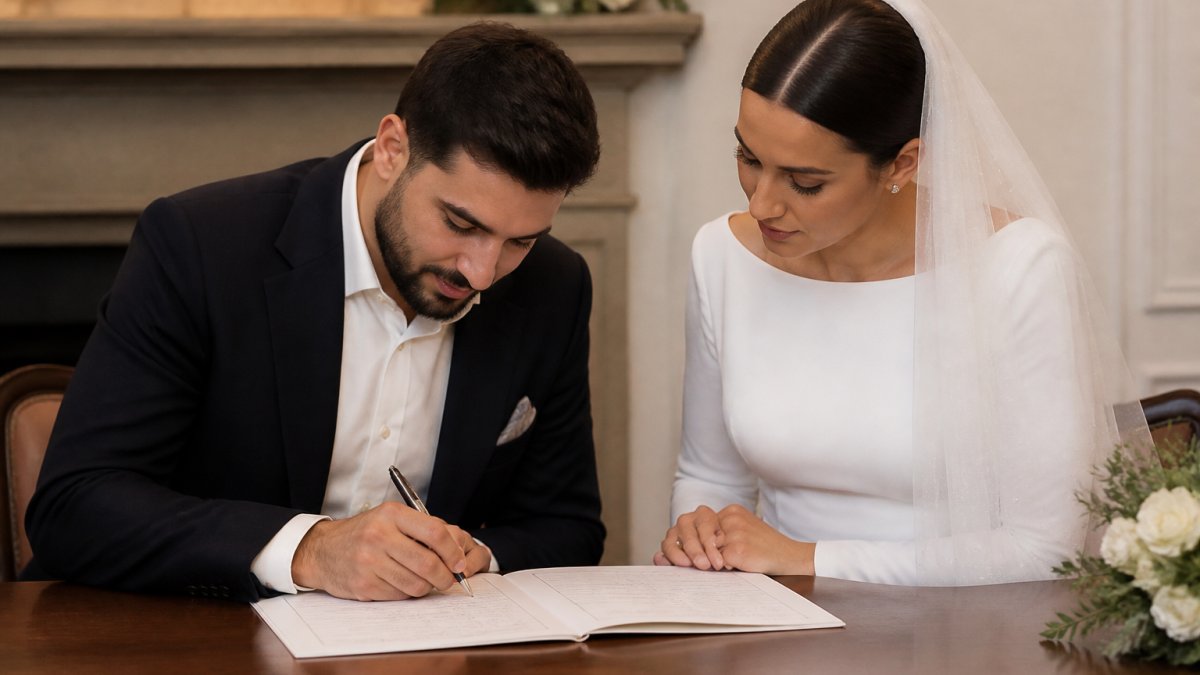
- Signing of the register with two witnesses
Inclusive Vows and Readings
Inclusive vows speak to both of you without leaning on one faith's language. Write them in plain words about commitment, respect, and the life you're building.
Guest Education and Etiquette for a Blended Ceremony
Guests often don't know what's happening in a blended ceremony, and a short program solves most of it. The goal isn't to teach theology, it's to make sure no one feels lost or accidentally causes offence during a moment you care about.
What to Put in the Ceremony Program
A one-page program is enough. Include:
- A one-line note on each tradition being honoured
- Whether guests should stand, sit, or stay silent at key moments
- Any dress guidance, such as covering heads or shoulders
- Where the reception is and what to expect there
Keep the language plain. "This reading comes from the bride's family's tradition" does more than a paragraph of explanation.
A Template You Can Adapt
Use this structure and fill in your own details:
Welcome. We're glad you're here. This ceremony honours two traditions: [Tradition A] and [Tradition B].
During the ceremony: Please stand when the celebrant invites you to. During the [ritual name], we ask guests to remain seated and quiet. Photography is welcome except during the [moment].
Dress: [Any guidance, e.g. shoulders and knees covered, or no guidance needed].
Afterwards: Join us at [venue] for the reception. [Any notes on food, alcohol, or timing].
Briefing Your Celebrant to Narrate Rituals
Ask your celebrant to explain each ritual out loud before it happens. One sentence is enough: "We'll now hear a reading from the bride's family's tradition." It's the highest-value thing you can do for guest comfort, and it costs nothing.
Etiquette for Guests Who Are Unsure
If relatives or friends have asked you what to wear, what to bring, or whether they should participate, give them a short written answer they can share. A single paragraph in a group message or on your wedding website covers it:
- What to wear
- Whether gifts are expected
- Whether children are welcome
- Whether alcohol will be served
- Any moments where guests should stay silent
Budgeting for a Complex Interfaith Ceremony
Where the money goes:
| Cost Area | Why It Rises | How to Manage It |
|---|---|---|
| Celebrant | Blended ceremonies take more planning meetings | Book early, confirm what's included |
| Venue | Neutral venues may charge for setup time | Ask about ceremony-only rates |
| Ceremony extras | Extra readings, music, symbolic items | Cap yourself at two symbolic acts |
| Printing | Longer programs for guest guidance | Keep the program to one page |
Check directly for a current quote.
Planning an interfaith wedding ceremony asks you to hold two families, two traditions, and one legal process together without losing what matters to you.
Frequently Asked Questions
How do interfaith weddings work legally in Australia?
In Australia, your interfaith wedding is legally binding if you follow the same process as any civil ceremony. You must complete a Notice of Intended Marriage at least one month before the wedding, provide identity documents, and have a registered marriage celebrant officiate. The religious or cultural elements you include are separate from the legal requirements. A celebrant experienced in interfaith weddings can guide you through both the paperwork and the ceremony design.
Can we include rituals from both faiths without making the ceremony too long?
Yes. Most interfaith couples choose two or three meaningful rituals rather than trying to include everything. For example, you might combine a Muslim Nikah blessing with a Christian unity candle or a handfasting ribbon. Keep each ritual brief and explain its significance in the ceremony program. A celebrant can help you sequence the rituals so the ceremony flows naturally and stays within 30 to 45 minutes.
What if our families disagree about which traditions to include?
Family tension is common in interfaith planning. Start by having a calm conversation with each set of parents to understand their core concerns. Then decide together which elements are non-negotiable for you as a couple. You can honour parents by giving them a small role, such as a reading or a blessing, without giving them control over the whole ceremony. A celebrant can also act as a neutral guide if discussions get stuck.
Do we need premarital counseling for an interfaith wedding?
Premarital counseling is not a legal requirement in Australia, but many interfaith couples find it helpful. It gives you a structured way to discuss how you will handle religious holidays, raise children, and support each other's spiritual practices. Some celebrants offer counseling as part of their service, or you can see a relationship counsellor who understands interfaith dynamics. Even two or three sessions can reduce stress and strengthen your communication.