 how-to
Civil Marriage Ceremony with Spiritual Elements: A Guide
Table of Contents
- What Is a Civil Marriage Ceremony with Spiritual Elements?
- Legal Requirements for Marriage in Australia: What You Must Know
- Non-Religious Spiritual Wedding Rituals You Can Include
- How to Write a Wedding Ceremony Script That Blends Beliefs
- Interfaith and Intercultural Conflict Resolution
- Budgeting for Non-Standard Ceremony Elements
- Inclusive Language for Non-Religious Spiritualism
- Conclusion
- Frequently Asked Questions
Last Updated: September 17, 2026
What Is a Civil Marriage Ceremony with Spiritual Elements?
A civil marriage ceremony with spiritual elements is a legally binding wedding conducted by a registered celebrant that includes meaningful rituals, readings, or blessings without being tied to a specific religion. It gives couples the legal protection of a civil ceremony and the emotional depth of a spiritual one.
For many couples, this is the sweet spot. You want the paperwork handled properly, but you also want the moment to feel sacred.
This guide from Ceremonies With Faisal covers how to blend both worlds. We will walk through the legal side, the ritual options, and the conversations most couples find hardest.
Spiritual does not mean religious. That distinction matters, and it is where most of the confusion starts.
Legal Requirements for Marriage in Australia: What You Must Know
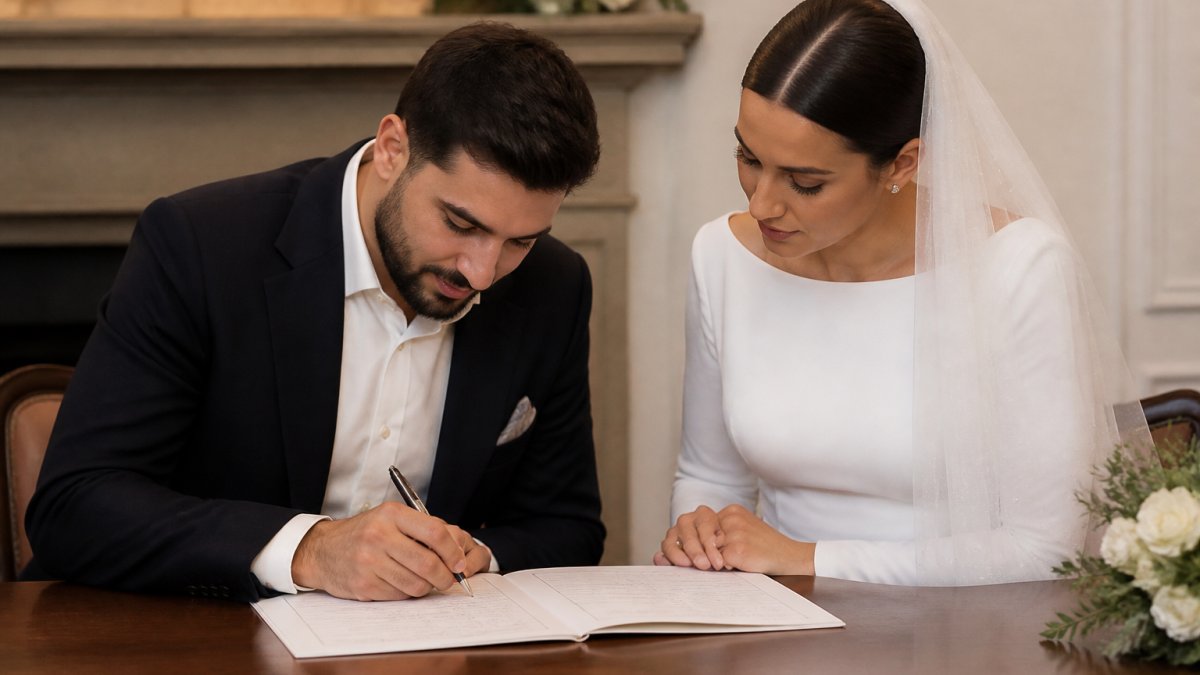
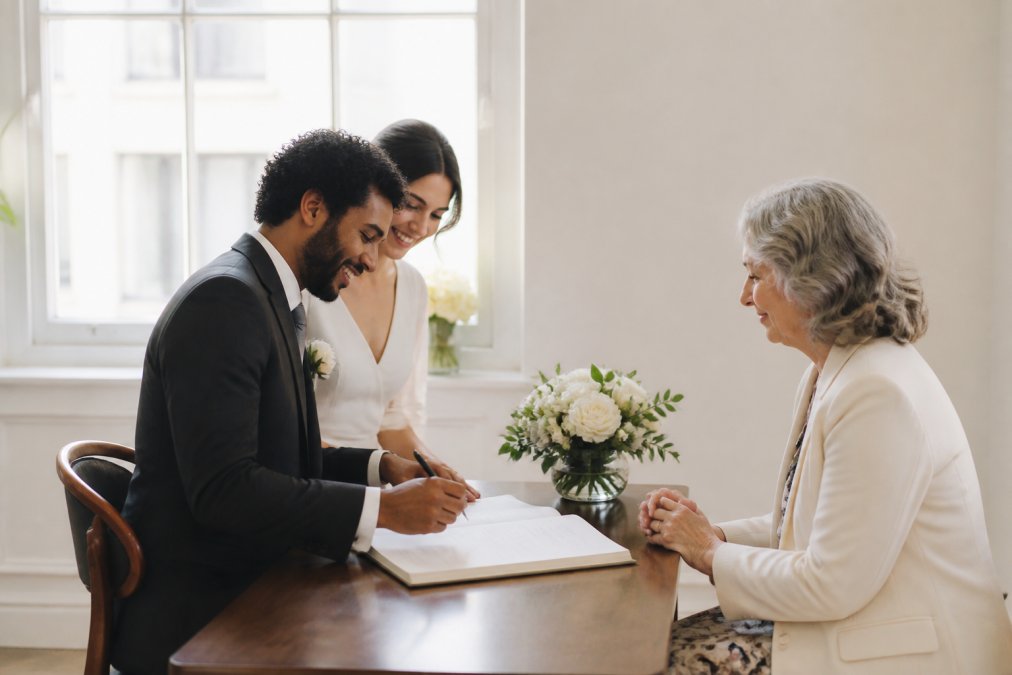
The legal side of a civil marriage ceremony is non-negotiable. Under the Marriage Act 1961, you must meet specific requirements before you can marry.
Here is what you need:
- Both parties must be at least 18 years old
- Neither party can be already married
- You must give at least one month's written notice
- You need two witnesses aged 18 or over
- A registered celebrant must conduct the ceremony
The ceremony itself must include specific words. These are set out in the Attorney-General's Department guidance on marriage. You must state that you take each other as husband and wife, or spouse, freely and voluntarily.
You can add spiritual readings around these words.
Notice of Intended Marriage and Other Paperwork
The Notice of Intended Marriage is the form you lodge with your celebrant at least one month before the wedding. It cannot be signed earlier than 18 months before the date.
You will also need:
- Original birth certificates or passports
- Photo identification
- Divorce papers, if either party was previously married
- Death certificate, if a previous spouse has passed away
Non-Religious Spiritual Wedding Rituals You Can Include
Non-religious spiritual wedding rituals are symbolic acts that carry personal meaning without belonging to any faith tradition. They let couples mark the moment in a way that feels true to them.
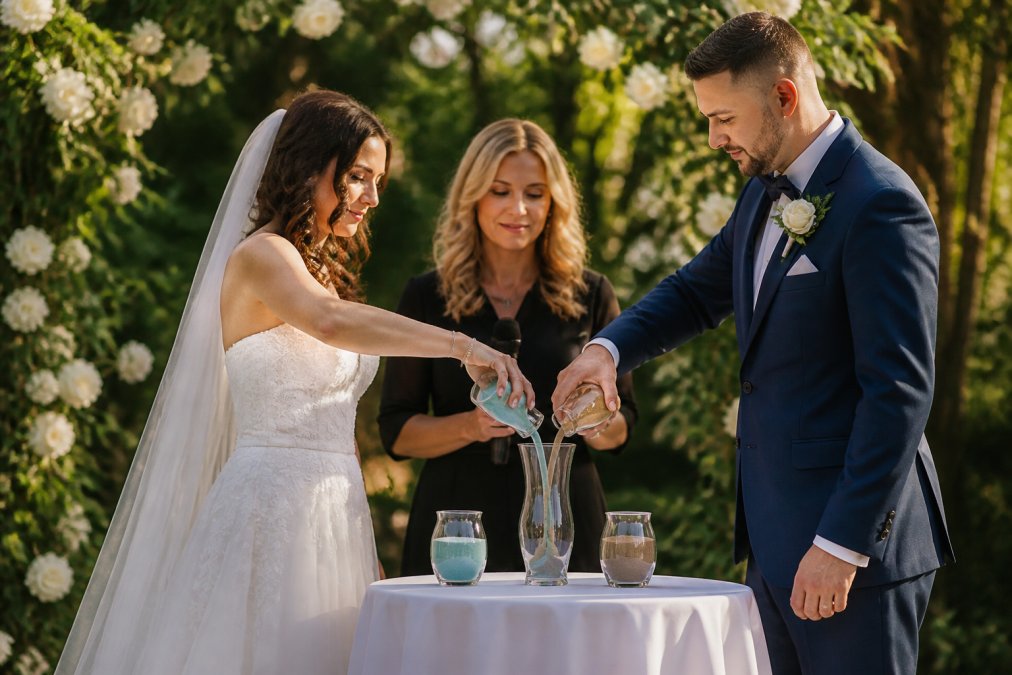
You have more options than most people realise.
Popular Symbolic Rituals: Sand, Candles, and Handfasting
Sand ceremony: Each partner pours coloured sand into one vessel. The layers stay visible, showing two lives joined but not erased.
Other options:
- Planting a tree together
- Ring warming, where guests hold the rings and offer silent wishes
- A memory table for loved ones who have passed
How to Write a Wedding Ceremony Script That Blends Beliefs
Start with the legal words, then build your story around them. The legal section stays fixed. Everything else is yours to shape.
A simple structure looks like this:
- Welcome and introduction
- Spiritual reading or poem
- Your personal vows
- The legal declaration
- Ring exchange
- Symbolic ritual
- Closing blessing
Interfaith and Intercultural Conflict Resolution
Most guides stop at 'communicate openly'. What interfaith couples actually need is a method for turning two sets of expectations into one workable ceremony.
Here is a framework that works.
Step 1: Map the non-negotiables before you map the nice-to-haves
Sit down separately with each side of the family. Ask one question: what single element would make you feel this wedding honoured your tradition? Not a list. One element each.
Common answers include:
- A specific blessing or prayer spoken by an elder
- A reading in a heritage language
- A ritual object present on the table (a Quran, a Bible, a Torah, a statue, a family heirloom)
- A moment of silence or a specific gesture of respect
- A particular dish served at the reception
Step 2: Separate the ritual from the religion
Many flashpoints are about the form of a tradition, not its theology. A candle-lighting, a hand-washing, a shared meal, a ring-warming, these can be framed in spiritual language that does not commit either family to a religious claim.
Step 3: Give each family a visible role
Conflict often comes from feeling sidelined, not from doctrinal disagreement. Assign roles:
- One elder from each side gives a short reading or blessing
- One family member from each side does a symbolic act (lighting a candle, pouring sand, tying a ribbon)
- Both mothers or both fathers walk the couple partway down the aisle, or both are seated in equivalent positions
Step 4: Agree on what you will not do
Some requests cannot be honoured without compromising the couple's own beliefs. Decide in advance which ones those are, and decide who delivers the message. It should be the couple, not the celebrant, and it should be early, in person, and framed as a decision about your wedding rather than a rejection of their faith.
Step 5: Rehearse the ceremony with both families present
A rehearsal is not just for logistics. It is the moment families see the shape of the ceremony and stop imagining the worst.
Interfaith conflict is often about visibility, sequence, and who gets to speak. Addressing those three things can help reduce friction.
Budgeting for Non-Standard Ceremony Elements
A civil ceremony with a few symbolic additions can cost meaningfully more than a plain registry-style ceremony, and the difference is rarely in one big line item, it is in ten small ones.
Here is how to plan for it.
Build a separate ritual budget
Do not fold ritual items into your general decor or florals budget. They will disappear. Create a distinct line called 'ceremony extras' and fund it before you fund anything optional.
Typical items that belong in it:
- Ritual props: unity vase, sand containers, handfasting ribbons, candles and holders, a tree and pot
- Printing and binding for additional readings or vow booklets
- A table, cloth, or stand for the ritual setup
- Transport and setup time if the ritual happens at a non-standard venue (beach, garden, private property)
- A rehearsal session if the ritual is complex or involves multiple family members
- Additional celebrant time for a longer, layered script
Understand how celebrants actually charge
Fees vary widely, and the structure matters more than the headline number. Common models:
- Flat fee covering the legal paperwork, one planning meeting, and the ceremony itself. Customisation may be capped or charged separately.
- Base fee plus customisation, where scriptwriting, extra meetings, and rehearsals are itemised.
- Travel-loaded fee, where anything beyond a certain radius of the celebrant's base attracts a per-kilometre or flat travel charge.
- What is included in the fee, meetings, script drafts, rehearsal, travel?
- How many script revisions are covered?
- Is there a surcharge for a non-standard venue or a longer ceremony?
- What happens if the date or venue changes?
Where couples overspend
A few patterns show up again and again:
- Buying ritual props new when they could be borrowed, hired, or made
- Commissioning custom readings or music without a fixed brief, leading to scope creep
- Booking a second vendor (musician, cultural performer, additional speaker) without checking whether the celebrant's fee already covers that slot
- Paying for a rehearsal venue when a backyard or park would do
Where it is worth spending
Two areas justify the extra cost almost every time:
- A celebrant experienced with blended or symbolic ceremonies. The script quality is the single biggest driver of how the ceremony feels, and a weak script cannot be rescued by better ribbons.
- A rehearsal. If your ceremony involves more than two people in the ritual, parents, siblings, elders, a rehearsal prevents the awkward pauses that guests remember.
Do not assume a lower quote covers custom work. Ask exactly what the fee includes, especially scriptwriting, rehearsals, and travel.
Set your ceremony extras budget before you start collecting quotes, not after. It is much easier to say no to an add-on when you already know what you have to spend.
Inclusive Language for Non-Religious Spiritualism
The words you choose shape who feels welcome. Inclusive language matters most when guests come from mixed backgrounds.
Small changes make a big difference:
- "We gather today" instead of "We are gathered in the sight of God"
- "Blessing" instead of "prayer"
- "This union" instead of "this holy union"
Conclusion
Blending spiritual elements into a civil ceremony takes care, but it is entirely doable. The legal words stay fixed. Everything around them is yours to shape.
Frequently Asked Questions
Are spiritual elements legally permitted in a civil marriage ceremony?
Yes. Australian law allows a civil marriage ceremony to include spiritual or religious elements as long as the legal vows and required declarations are spoken. Under the Marriage Act 1961, a registered celebrant can perform a ceremony that incorporates symbolic rituals, blessings, or readings. The ceremony remains legally binding when the mandatory wording is included. Many couples choose a civil marriage ceremony with spiritual elements to honour their beliefs without a full religious service.
How do I choose a celebrant who supports both civil and spiritual elements?
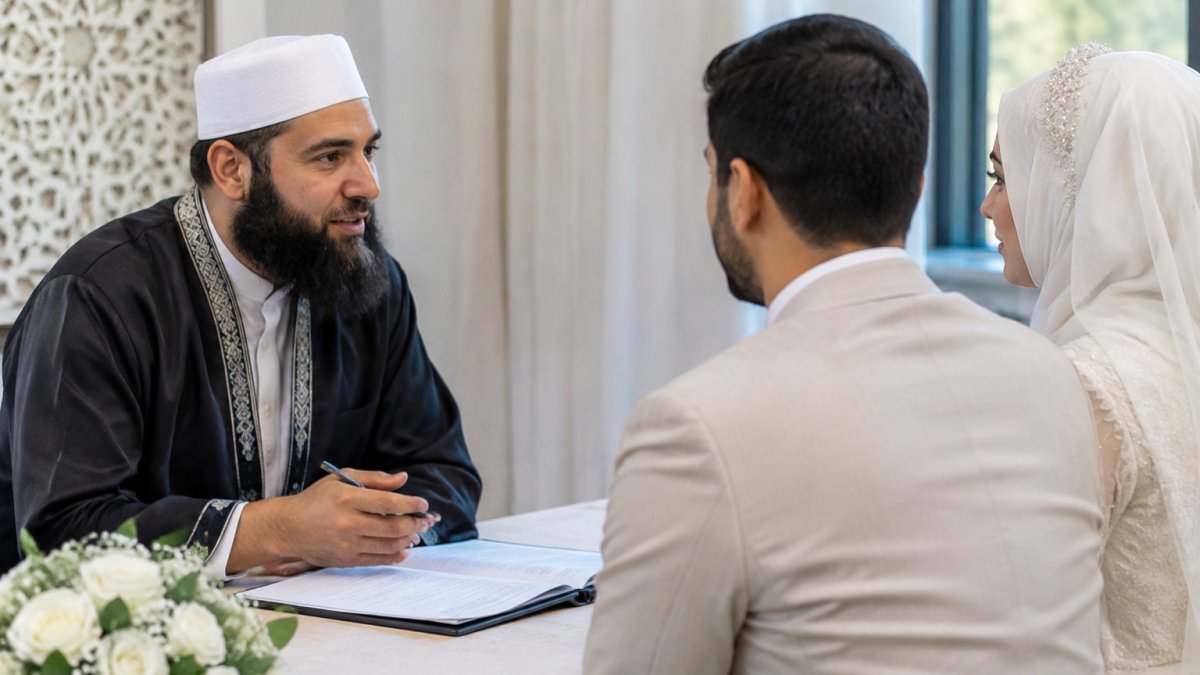
Look for a registered marriage celebrant with experience in blending traditions. Ask about their background and whether they have worked with interfaith or non-religious spiritual couples. A celebrant like Faisal Akhtar, who is both a Sheikh and a registered celebrant, understands Islamic requirements and Australian legal obligations. Discuss your vision early and confirm they can include the rituals you want. Personal chemistry matters: you should feel comfortable sharing your beliefs and family dynamics.
What are some examples of non-religious spiritual rituals for weddings?
Common options include a sand ceremony (blending two colours into one vessel), a unity candle lighting, handfasting (tying hands with ribbon), a tree planting, or a memory box. You can also include a moment of silence, a reading from a favourite poet, or a ring warming where guests send wishes. These non-religious spiritual wedding rituals add meaning without adhering to a specific doctrine. Choose rituals that reflect your story and values as a couple.
How can I incorporate spiritual rituals into a civil marriage ceremony?
Start by identifying which rituals resonate with you. Discuss them with your celebrant to ensure they fit the legal framework. You can place rituals before or after the legal vows. For example, a sand ceremony can follow the declaration of marriage, or a handfasting can precede the exchange of rings. Your celebrant can help sequence the ceremony so it flows naturally. Remember to include inclusive language that respects both partners' backgrounds and any interfaith considerations.