 how-to
7 Islamic Burial Requirements Families Must Know
Last Updated: November 4, 2026
Quick Summary
Islamic burial requirements in Australia centre on prompt burial, washing the body (ghusl), shrouding it in plain white cloth, and the funeral prayer before burial facing Makkah. Legal steps such as death registration and any coroner process must be completed alongside these religious duties, and cemetery rules differ by state and cemetery.
- Burial as soon as practical is the general preference in Islam.
- Washing and shrouding are performed by trained, same-gender Muslims where possible.
- Coffin use depends on local rules and cemetery policy.
- Every death must be registered with the state or territory registry of births, deaths and marriages.
- Ask each cemetery whether it allows direct burial in a shroud.
Table of Contents
- Islamic Burial Requirements: An Overview of Beliefs and Rites
- What to Do Immediately After a Death
- Preparing the Deceased: Ghusl for the Deceased and Shrouding
- Janazah Prayer and the Islamic Funeral Process
- Choosing Muslim Burial Locations and Cemetery Rules in Australia
- Legal Requirements, Death Registration and When an Autopsy Is Required
- Arranging Your Family's Islamic Burial With a Celebrant or Funeral Director
- Frequently Asked Questions
Islamic Burial Requirements: An Overview of Beliefs and Rites
Islamic burial requirements in Australia follow a set of religious duties that families can plan around, even when the process is new to them. In Islam, burial is considered a community obligation, and families are generally encouraged to bury the deceased as soon as possible.
The core rites are well established. They include washing the body (ghusl), shrouding it in plain white cloth (kafan), the funeral prayer (Janazah), and burial facing Makkah. Most families also want the process kept simple and dignified, without unnecessary delay.
Religious preference and legal obligation are not always the same thing. A family might prefer direct burial in a shroud, but a cemetery or local authority may have its own rules about coffins and timing. Knowing the difference early makes the whole process less stressful.
- Burial as soon as practical is the general preference
- Washing and shrouding are performed by trained, same-gender Muslims where possible
- The funeral prayer is offered before burial
- Coffin use depends on local rules and cemetery policy
The guidance below sets out what to expect and the questions to settle first.
What to Do Immediately After a Death
The first few hours after a death are often the hardest. A short, ordered checklist helps families stay focused, and the order matters because some steps unlock the next one.
Step 1: Have the death certified. For an expected death at home or in care, a doctor needs to complete a Medical Certificate of Cause of Death.
Step 2: Notify the funeral director or celebrant early. Early contact is the single biggest time-saver. A funeral director can arrange transfer of the body to a mortuary or holding facility, begin the paperwork, and tell you what the cemetery will need.
Step 3: Contact the local Muslim community or mosque. Many mosques keep a list of trained same-gender washers and can arrange a preparation room.
Step 4: Start the death registration paperwork. Every death must be registered with the relevant state or territory registry of births, deaths and marriages.
Step 5: Confirm the burial location and timing. Once the medical certificate is issued and the cemetery plot is confirmed, the burial can be scheduled.
Step 6: Tell close family and arrange travel. For relatives travelling from interstate or overseas, timing is tight.
Watch out: families sometimes wait for out-of-town relatives before booking the grave, and the delay can push the burial past the point the community considers acceptable.
A common pattern is that the religious steps and the legal steps run in parallel, not one after the other. The washing and shrouding can usually proceed once the death is certified, while the death registration and cemetery booking are being finalised.
Preparing the Deceased: Ghusl for the Deceased and Shrouding
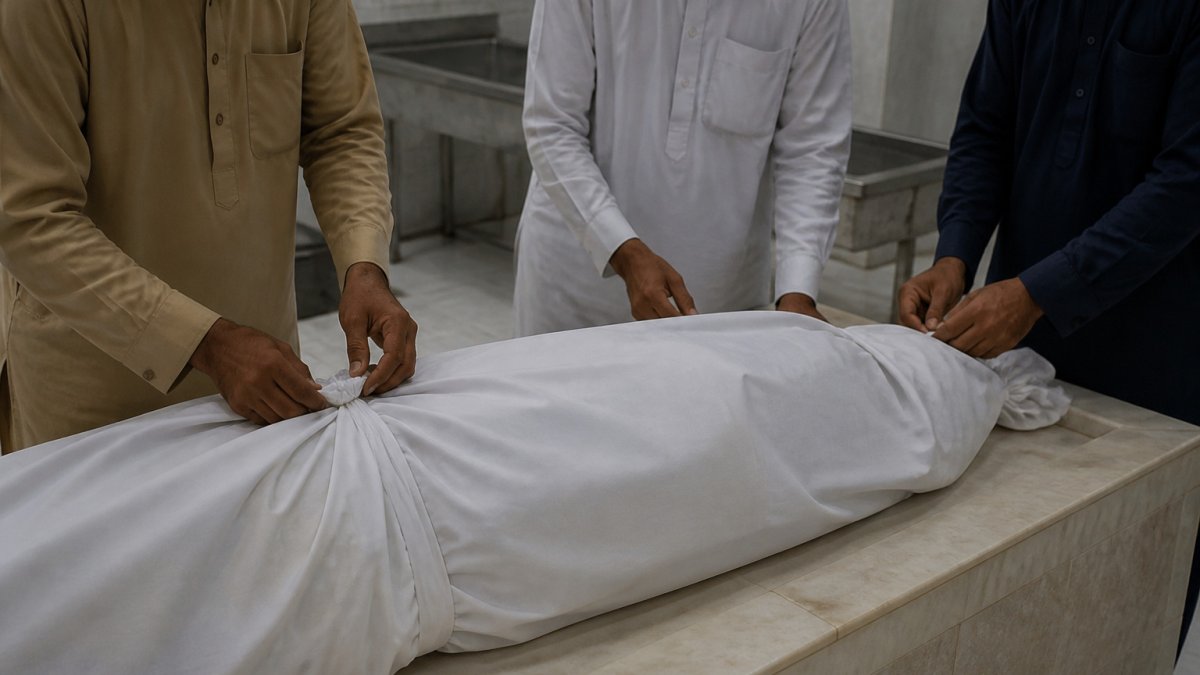
Ghusl is the ritual washing of the body. It is done by people of the same gender, with respect and privacy. Ceremonies With Faisal can help arrange experienced washers and explain what the process involves.
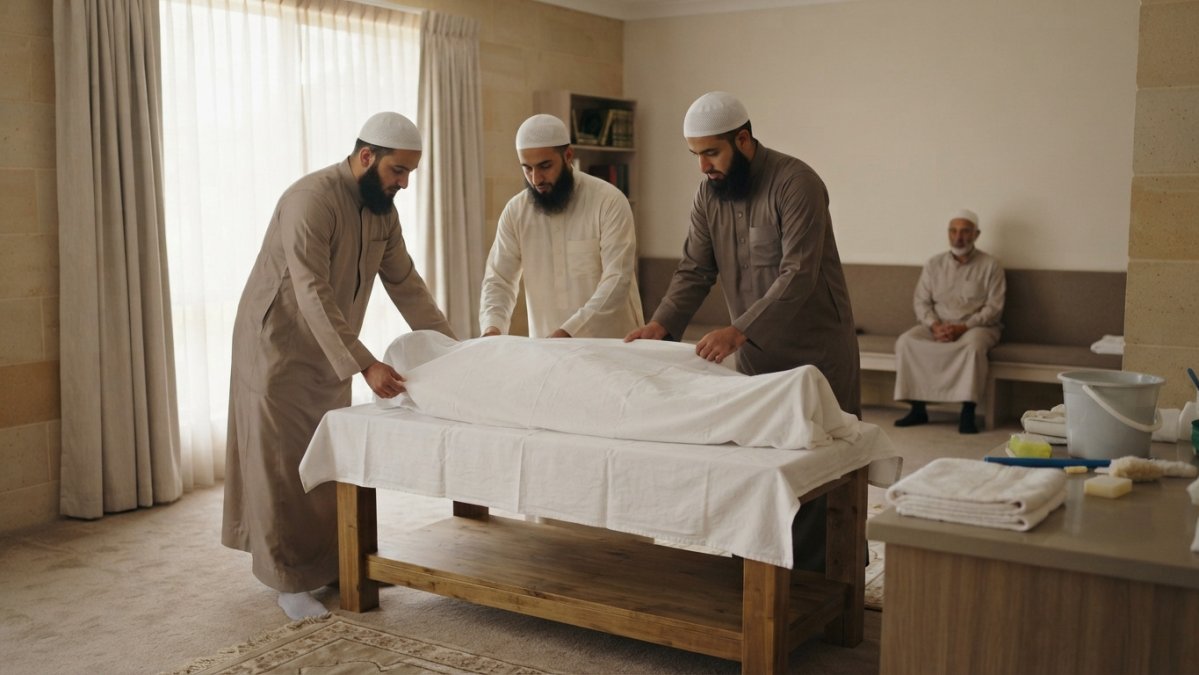
After washing, the body is wrapped in shrouds made of plain white cotton. Men are traditionally wrapped in three layers and women in five. The shroud is kept simple and free of decoration.
Many families want the body prepared at home or in a community facility rather than a commercial setting. Whether that is possible depends on the facilities available and the rules of the funeral provider, so ask early.
Janazah Prayer and the Islamic Funeral Process
The Janazah is a short funeral prayer offered standing, without bowing or prostration. It is performed in congregation and asks for forgiveness for the deceased. Men and women may both attend, although arrangements vary by mosque and family preference.
The body is usually placed in front of the imam, with the men standing in rows behind. Non-Muslims may attend the funeral service but do not take part in the prayer.
A simple order of events for the funeral might look like this:
- Arrival and gathering at the mosque or funeral home
- Janazah prayer led by an imam or celebrant
- Transport of the body to the cemetery
- Burial, with family and community members present
- Brief supplications and condolences
Choosing Muslim Burial Locations and Cemetery Rules in Australia
There is no single national rule on coffins, grave depth or cemetery access. Each state and territory sets its own burial and cremation legislation, and each cemetery operator, whether a local council, a trust or a private company, applies its own policy on top. That is why two families in different states can face different answers to the same question.
What varies, and why it matters
- Coffin requirements. Some cemeteries permit direct burial in a shroud; others require a coffin for every interment, often for occupational health and safety or ground-stability reasons. A few allow a shroud burial only in a designated Muslim section.
- Grave depth and liners. Minimum grave depth and the use of concrete liners or vaults are set by state regulation or cemetery policy. A liner may be required in some soil conditions and prohibited in others.
- Plot tenure and reservations. Some cemeteries sell a renewable tenure (often 25 or 50 years, with renewal options), while others offer perpetual interment. Ask which applies before you compare prices.
- Muslim sections. Dedicated Muslim sections exist in many large cemeteries, but availability and waiting lists differ sharply between metropolitan and regional areas.
- Documentation. The cemetery will usually need the Medical Certificate of Cause of Death, the burial application, and confirmation that the death has been registered or is being registered. Some operators also require a funeral director or an authorised celebrant to lodge the application.
Where to check the rules for your situation
The regulator or government body that oversees cemeteries and burials differs by jurisdiction. In New South Wales, burial and cremation are governed by the Cemeteries and Crematoria Act and regulated by Cemeteries and Crematoria NSW (Industry regulation). In Victoria, the Cemeteries and Crematoria Act applies, with the Department of Health overseeing the sector.
Questions to ask each cemetery before you commit
- Is there a Muslim section, and is a plot available now?
- Does the cemetery allow direct burial in a shroud, or is a coffin required?
- What is the minimum grave depth, and is a liner required?
- Is the plot tenure renewable or perpetual, and what are the renewal terms?
- What are the fees for the plot, the digging, the interment and ongoing maintenance?
- Are there rules about grave markers, headstones and visiting hours?
- What documentation must be lodged, and who can lodge it?
Interstate and overseas repatriation
If the burial will take place in another state or overseas, the process adds documentation and time. Overseas repatriation involves consular paperwork, embalming or specific preparation requirements set by the destination country, and airline acceptance rules. Because Islamic teaching generally discourages embalming, families should ask early whether the destination country will accept a non-embalmed body, and if not, whether a waiver or alternative preparation is available.
Costs and financial assistance
Costs vary widely by cemetery, plot type and services chosen. A written, itemised quote should separate the plot, the digging, the interment, the marker and maintenance. Ask the funeral director or celebrant what assistance may apply before you commit to a package.
Watch out: a quote that bundles the plot and the funeral services can hide a large difference in cemetery fees. Ask for the cemetery's own fee schedule separately so you can compare like with like.
Legal Requirements, Death Registration and When an Autopsy Is Required
Australian law requires every death to be registered with the state or territory Registry of Births, Deaths and Marriages. A medical certificate of cause of death is usually needed first. Registration rules and forms differ between states, so check the requirements where the death occurred.
Some deaths are reportable to the coroner. This generally includes sudden or unexpected deaths, deaths where the cause is unknown, and deaths in custody or under suspicious circumstances. In these cases an autopsy may be legally required before burial can take place.
Islam encourages burial without unjustified delay, and Australian law generally allows burial as soon as the legal steps are complete. Where an autopsy is required, families can ask the coroner or funeral director how long the process is expected to take.
Information on the rules that apply to your situation is available from the relevant state or territory agency. You can also read our Frequently Asked Questions page for common questions about these requirements.
The main legal steps families need to track are summarised below.
| Requirement | What it involves | Note |
|---|---|---|
| Death registration | Registered with the state or territory Registry of Births, Deaths and Marriages | Rules and forms differ between states |
| Medical certificate | Usually needed before registration | Required first in most cases |
| Reportable death | Sudden, unexpected, unknown cause, or suspicious circumstances | Coroner's process applies |
| Autopsy | May be legally required before burial | Ask the coroner how long it will take |
| Burial timing | Allowed once legal steps are complete | Islam encourages burial without unjustified delay |
Arranging Your Family's Islamic Burial With a Celebrant or Funeral Director
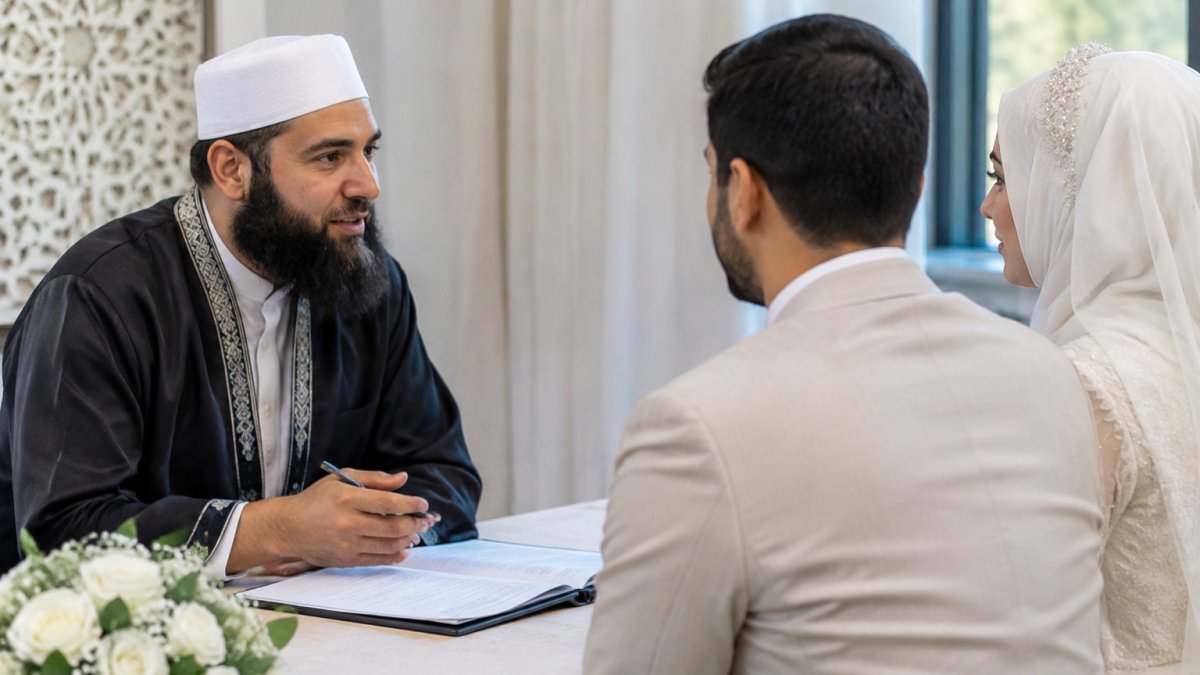
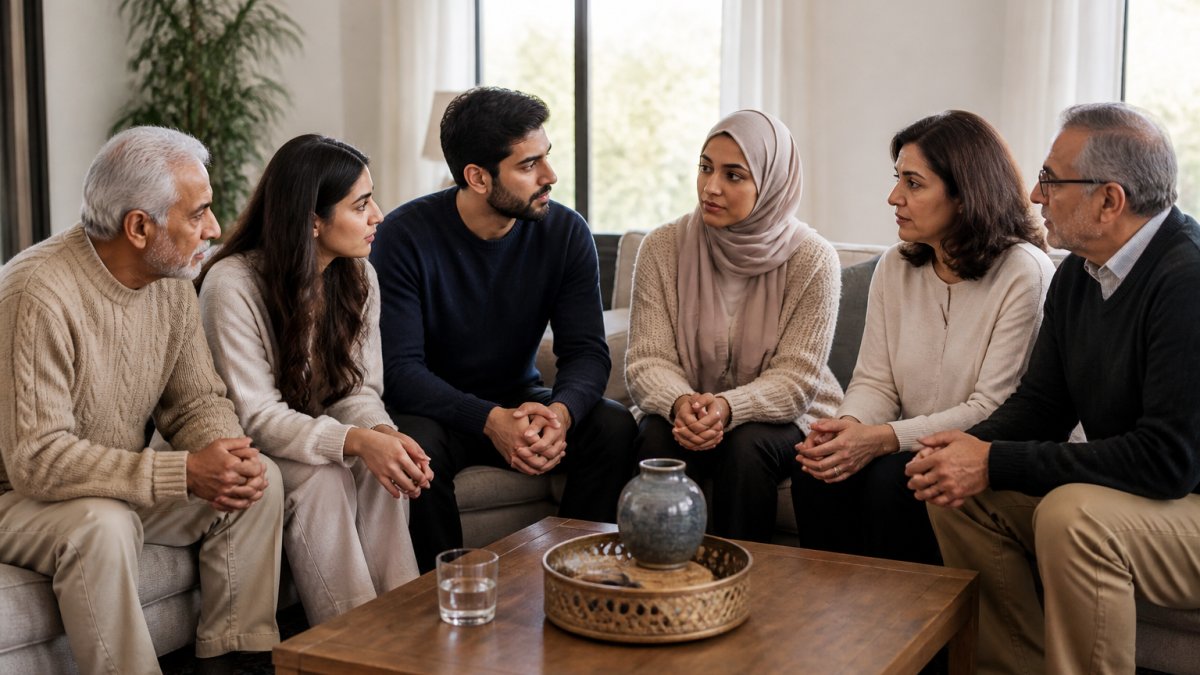
Many families do not know where to start. A good celebrant or funeral director can handle the religious, legal and practical steps in one place. This takes a lot of pressure off the family during a painful time.
Pricing depends on quantity, dates, and delivery. For current prices or a quote, please contact Ceremonies With Faisal directly. If you are ready to talk through your family's needs, contact us to arrange a time to talk.
We are here to help your family honour your loved one with care, respect and clear guidance from the first call to the final prayer.
Frequently Asked Questions
How soon after death should an Islamic burial take place? Islamic tradition encourages burial as soon as practical. In Australia this depends on completing the legal steps, including death registration and any coroner's requirements.
Can a Muslim be buried without a coffin in Australia? Some cemeteries allow direct burial in a shroud, while others require a coffin. Check the rules of the specific cemetery and state or territory before making plans.
Who washes the body in an Islamic funeral? Ghusl is performed by people of the same gender, often trained members of the Muslim community. A celebrant or funeral provider can help arrange this.
Are non-Muslims allowed to attend an Islamic funeral? Yes, non-Muslims may attend the funeral service and burial. They do not take part in the Janazah prayer itself.
Frequently Asked Questions
What are the main requirements for an Islamic burial?
The main requirements are prompt burial, washing the body (ghusl), wrapping it in a plain white shroud (kafan), performing the Janazah prayer, and placing the body in the grave facing the Qibla, ideally with the head toward the right. Families in Australia should also complete the required death registration and any cemetery paperwork. Requirements can vary between religious communities, so confirm the details with a local imam or celebrant.
How soon after death should a Muslim be buried?
Islamic tradition encourages burial as soon as possible, generally within 24 hours of death, without unjustified delay. In Australia, families must still obtain a medical certificate of cause of death and register the death with the relevant state or territory Registry of Births, Deaths and Marriages before burial. Planning early with a funeral director helps meet both religious and legal timelines.
Can a Muslim be buried in a coffin in Australia?
Many Muslims prefer burial without a coffin, with the body wrapped only in a shroud, as this is considered closest to Islamic practice. Whether this is possible depends on the cemetery's rules and local regulations, so families should ask the cemetery operator early.
Can family members attend a Muslim burial?
Yes. Family members, including women and children, are generally welcome at the Janazah prayer and the burial, though customs differ between communities. Families who want a dignified, respectful service can work with their funeral director or celebrant to arrange the timing and the grave-side arrangements.