 how-to
Managing Family Expectations in Interfaith Weddings
Table of Contents
- Why Family Expectations Run High in Interfaith Weddings
- How to Talk to Parents About an Interfaith Marriage
- Setting Boundaries With Extended Family Without Burning Bridges
- A Decision Framework for Choosing Which Rituals to Include
- Interfaith Wedding Ceremony Ideas That Honour Both Traditions
- Building Your Interfaith Wedding Planning Checklist
- Drafting an Interfaith Wedding Ceremony Script
- Frequently Asked Questions
Last Updated: October 18, 2026
Why Family Expectations Run High in Interfaith Weddings
An interfaith wedding brings two families, two belief systems and often two very different ideas about what a wedding should look like into the same room.
Managing family expectations in interfaith weddings is rarely about religion itself; it is about love, loyalty and the fear of losing tradition.
The good news: most of these tensions ease once families feel heard, and that starts with one honest conversation.
How to Talk to Parents About an Interfaith Marriage
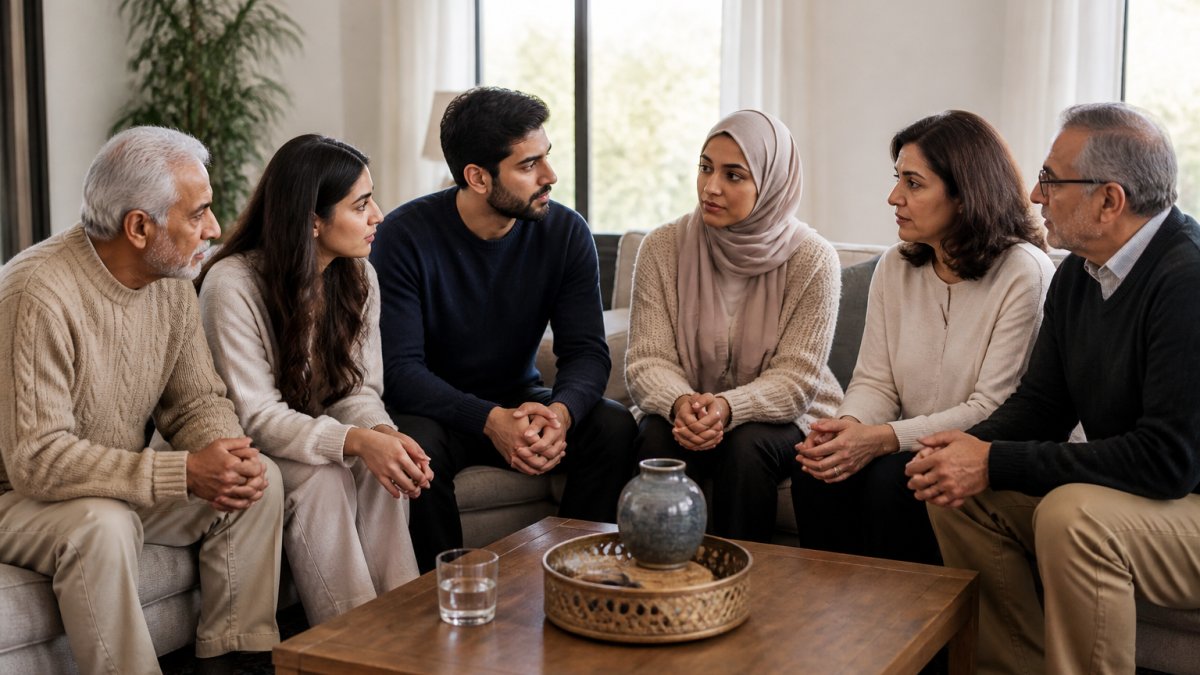
Talking to parents about an interfaith marriage works best when you lead with respect, not logistics. Tell them what you value about your partner first.

Families usually move through a predictable sequence: shock or worry, then questions, then bargaining over details, then acceptance.
A few rules make these talks easier:
- Choose a calm moment, not a holiday or a rushed phone call
- Speak as a united couple, never as one person negotiating alone
- Ask about their fears before you defend your choices
- Avoid debating theology. Stick to feelings and practicalities
- Leave room for silence. Do not fill it with more arguments
Expect more than one conversation: the first is about being heard, the second about solutions.
A Three-Conversation Plan
Rather than one big talk, split the work across three sittings, the single most useful change most couples make.
Conversation one: listen. No decisions, no defence. Ask what your parents hoped for, what they fear and who they worry about.
Conversation two: propose. Bring a one-page outline of the ceremony shape, the rituals you are considering and the parts still open.
Conversation Scripts for the First Difficult Chat
Scripts help when emotions run high.
When they push for a specific ritual: "We want to include traditions that matter.
When they compare you to a sibling or cousin: "Their wedding was right for them.
When they issue an ultimatum: "We love you and want you there.
When the conversation gets heated: "Let's pause here.
They work because they show respect without surrendering your decisions.
Handling the Most Common Objections
A handful of objections recur. Prepare a calm, short answer for each before you sit down.
- "It won't be a real wedding." Explain the legal side plainly: a registered marriage celebrant conducts a legal ceremony, and religious elements can sit alongside it.
- "What will the relatives think?" Ask which relatives specifically. Vague social worry shrinks once it has a name and a plan.
- "We weren't consulted." Show them the open items from conversation two and invite input there.
- "This isn't how we do it." Agree, then explain what you are keeping and why. Naming what stays is more reassuring than defending what changes.
If a parent will not engage at all, do not force it. A short, warm message that leaves the door open ("We'd love your thoughts whenever you're ready") often works better than a fourth attempt at a sit-down.
Setting Boundaries With Extended Family Without Burning Bridges
Boundaries protect the couple but need a warm delivery. The goal is not to win an argument but to keep the relationship intact while you plan your own wedding.
Try these approaches:
- Name the boundary clearly and kindly: "We've decided on the guest list, and we can't add more."
- Offer an alternative where you can: "We can't invite the whole extended group, but we'd love a dinner with them after."
- Use "we" language so it reads as a couple's decision
- Let one calm family member help carry the message
- Stay consistent. Mixed signals invite more pressure
A Simple Escalation Plan
Most couples improvise when pressure spikes, exactly when improvisation fails. Agree on a ladder in advance, in writing, and both follow it.
- Restate the boundary once. Calm, short, no justification. "We've decided, and that's where it stands."
- Name the pattern. If it comes up again: "We've talked about this twice. I'm not going to keep re-litigating it."
- Set a consequence you will actually keep. "If we keep going in circles, I'll end the call and we can try again next week."
- Pause contact on that topic. Not the relationship, just the topic. "Let's leave the guest list with us for now."
- Bring in a neutral third party. A celebrant, an imam, a family friend both sides trust, or a counsellor. A neutral voice often de-escalates faster than the couple can.
Decide in advance who handles which relative, usually each partner takes their own side, since the message lands better from a child than a son- or daughter-in-law. Write down who owns which conversation.
When It Becomes an Ultimatum
Ultimatums ("invite the whole village or we won't come", "change the ceremony or we're staying home") need a different response from ordinary pressure. Do not negotiate inside the ultimatum. Acknowledge the feeling, restate the decision, and leave the door open.
- "We want you there. We can't meet that condition, but the invitation stands."
- "We're not going to change the ceremony under pressure. If you need time, take it, and we'll keep your seat."
- "We love you. This is our decision, and we'd rather have you beside us than argue about it."
If a relative refuses to attend, resist the urge to chase. Send one warm message, then let it rest. Many relatives who threaten to stay away do attend once the day is close, and a calm, non-punitive response keeps that door open.
Protecting the Couple
Boundaries only work if the two of you are aligned. A few practical habits help:
- Agree on a weekly check-in about family pressure so nothing builds up unspoken
- Keep a shared note of decisions and who was told what
- Never contradict each other in front of relatives, even if you disagree privately
- Nominate a "safe person" at the wedding who can step in if a relative starts pressing on the day
- Give yourselves permission to leave a gathering early if it turns into an ambush
A Decision Framework for Choosing Which Rituals to Include
Choosing rituals gets easier with a clear method: score each tradition on meaning, feasibility and comfort.
| Criterion | Question to Ask | Score (1-5) |
|---|---|---|
| Meaning | Does this ritual matter deeply to the couple or a parent? | |
| Feasibility | Can we do it within our venue, budget and timeline? | |
| Comfort | Does everyone involved feel respected doing it? |
Add the scores. Rituals that score high on all three go in. Rituals that score low on comfort need a conversation, not a quiet cut.
This keeps decisions fair and gives you a calm answer when someone asks why a custom was left out.
Interfaith Wedding Ceremony Ideas That Honour Both Traditions
Interfaith wedding ceremony ideas work best when both traditions get real space, not a token mention. Balance matters more than volume.
Consider these options:
- Open with a welcome that names both faiths and both families
- Include a reading from each tradition, chosen by each side
- Blend vows: one set traditional, one set personal
- Use symbols from both cultures, such as a shared candle or a unity ritual
- Invite a celebrant who can explain each element to guests
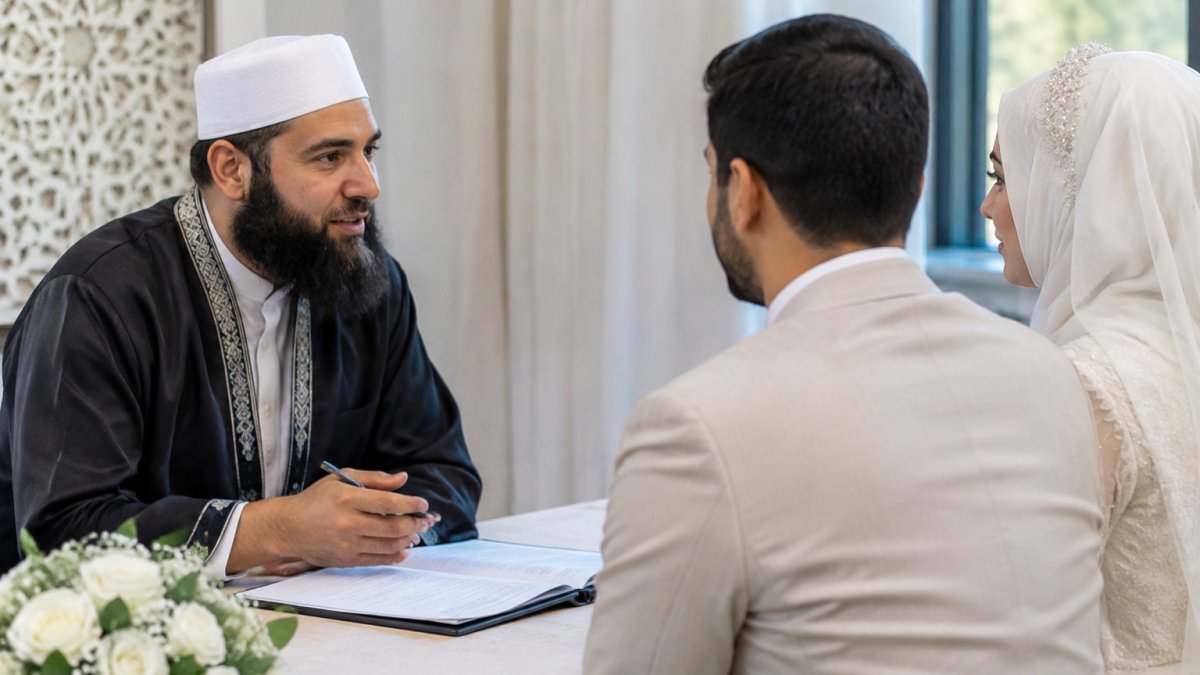
A registered celebrant who understands both faiths can hold the ceremony together. Faisal Akhtar is both an experienced Sheikh and a registered marriage celebrant, which means one person can bridge the religious and legal sides.
Building Your Interfaith Wedding Planning Checklist
An interfaith wedding planning checklist keeps the practical side from getting lost in the emotional one. Start early and work through it in order.
- Agree as a couple on your non-negotiables
- Hold the first family conversation
- Choose your celebrant and confirm their credentials
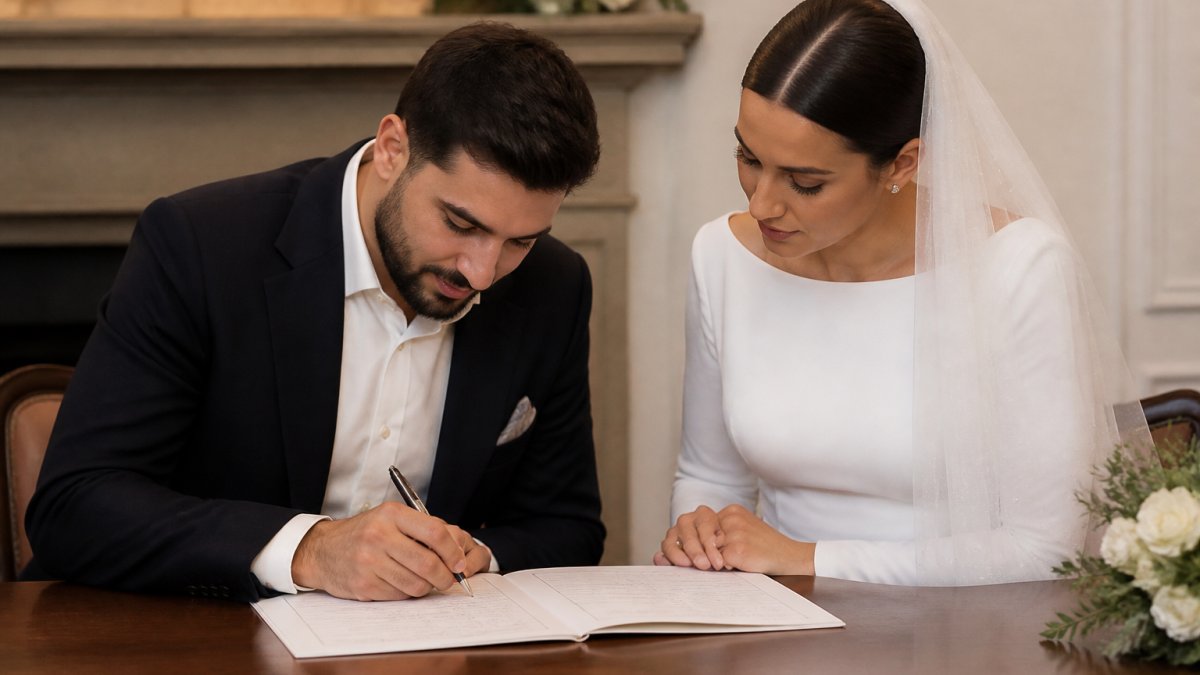
- Lodge the Notice of Intended Marriage within the required timeframe
- Decide which rituals are in and which are out
- Draft the ceremony script together
Budget, Logistics and Guest Sensitivities
Budget talks deserve their own conversation, separate from the ceremony debate. Celebrant pricing depends on the ceremony, date and customisation, so ask for a written quote.
Check venue rules on candles, processions and music, confirm parking and step-free access for older relatives, and offer a short guide to the ceremony so guests from either faith know what to expect.
Guest sensitivities are real. Some relatives may be uncomfortable with certain rituals. A brief explanation in the program, delivered with warmth, usually settles nerves before the day.
Drafting an Interfaith Wedding Ceremony Script
An interfaith wedding ceremony script should read like one story, not two ceremonies stapled together, structure matters more than wording.
A workable structure looks like this:
- Welcome and acknowledgement of both families
- Opening words that name both traditions
- Readings, one from each faith
- The vows, blending traditional and personal language
- A shared ritual that involves both families
- Closing blessing and introduction of the couple
Keep the language simple and inclusive. Explain each ritual in one sentence as it happens. Guests from either side should never feel like spectators.
If you want help, a celebrant experienced in interfaith ceremonies can draft and refine the script with you.
Managing family expectations in interfaith weddings takes patience, honest conversation and a clear plan. Ceremonies With Faisal brings together Australian legal requirements and Islamic tradition in one seamless ceremony, led by an experienced Sheikh and registered marriage celebrant.
Frequently Asked Questions
How do you manage family expectations when planning an interfaith wedding?
Start early and talk to both families before decisions are locked in. Ask each set of parents what matters most to them, then separate non-negotiables from preferences. Hold a joint conversation where you and your partner present a shared plan rather than competing requests. Keep the focus on respect for both traditions, and agree in advance who handles any objections so you are not caught in the middle. A celebrant experienced with interfaith weddings can help mediate and translate religious requirements into practical ceremony choices.
What should you do if your family objects to an interfaith marriage?
Listen without defending first, because objections often hide fear about identity, grandchildren or community opinion. Acknowledge the concern, then restate your commitment clearly and calmly. Avoid debating theology in the moment; offer a follow-up conversation instead. If objections continue, set boundaries about how they are raised, for example no criticism during planning meetings. Where faith leaders are involved, ask your celebrant or imam for guidance, since a trusted religious voice can sometimes ease concerns that a couple cannot.
Can an interfaith wedding include rituals from both religions?
Yes, and many couples do exactly that. Common approaches include a blended ceremony with readings from both traditions, a shared blessing, or two short ritual segments led by different officiants. The key is sequencing and explanation: tell guests what each ritual means so nobody feels like a spectator. Check any legal requirements with your registered marriage celebrant first, and confirm with each family which elements they consider essential. A clear interfaith wedding ceremony script helps everyone see the full picture before the day.
How can couples set boundaries with family during wedding planning?
Agree as a couple on three or four non-negotiables, then communicate them once, clearly, and together. Assign one partner to handle their own side of the family so messages come from a familiar voice. Use a simple phrase for deflecting pressure, such as "we have decided that already, and we will share the details soon." Escalate only if a boundary is repeatedly crossed, and keep the conversation private rather than in group chats. Put the agreed plan in your interfaith wedding planning checklist so decisions are not reopened every visit.