 how-to
Choosing a Celebrant for Interfaith Marriage: 2026 Guide
Table of Contents
- Start With the Non-Negotiables: Legal Requirements for Marriage in Australia
- What an Interfaith Marriage Celebrant Actually Does Differently
- Questions to Ask a Wedding Celebrant Before You Book
- Interfaith Wedding Ceremony Script Examples You Can Adapt
- Blending Two Faiths Without Losing Either One
- When Families Disagree: Handling Expectations With Grace
- After the Ceremony: Legal Documentation for International Couples
- Conclusion
- Frequently Asked Questions
Last Updated: September 27, 2026
Start With the Non-Negotiables: Legal Requirements for Marriage in Australia
Before you think about vows, readings or ritual, you need a celebrant who can actually make your marriage legal. Choosing a celebrant for interfaith marriage starts here, because a beautiful ceremony means nothing if the paperwork fails.
Two rules govern every wedding in this country.
The Notice of Intended Marriage and Other Paperwork
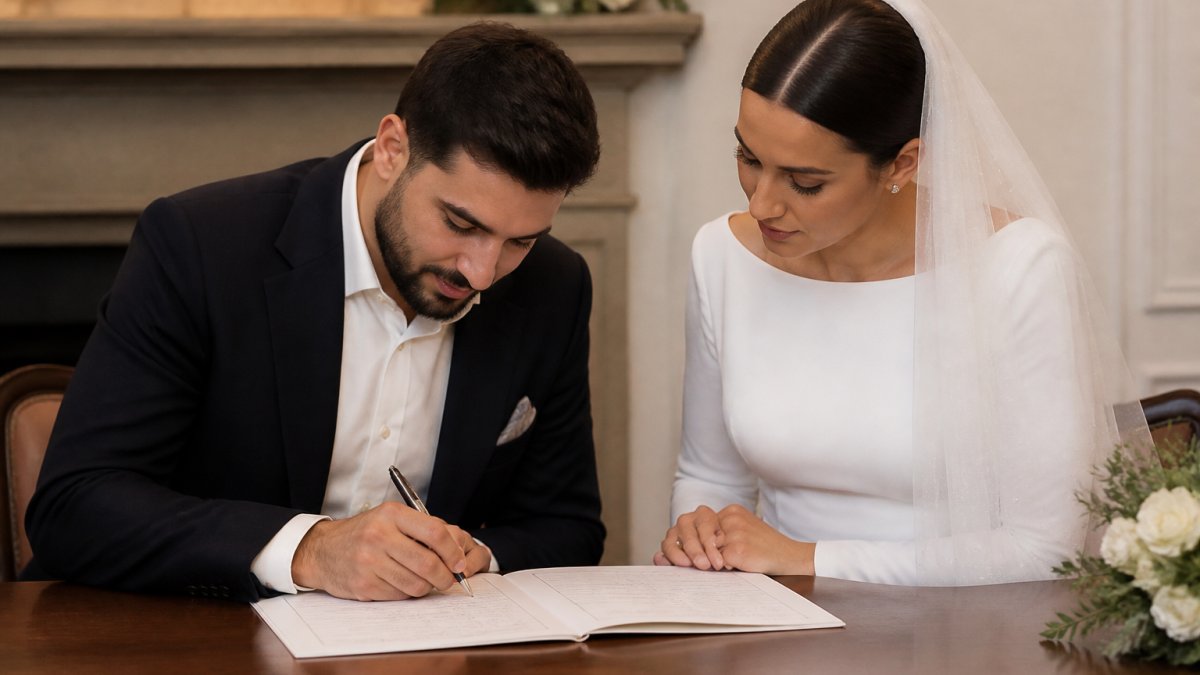
The Notice of Intended Marriage is the form you lodge with your celebrant at least one month before the wedding. No lodging, no wedding.
Who Is Legally Authorised to Solemnise Your Marriage
Only a celebrant registered with the Attorney-General's Department can legally marry you.
What an Interfaith Marriage Celebrant Actually Does Differently
An interfaith marriage celebrant builds one ceremony from two traditions. That is the whole job, and it is harder than it sounds.
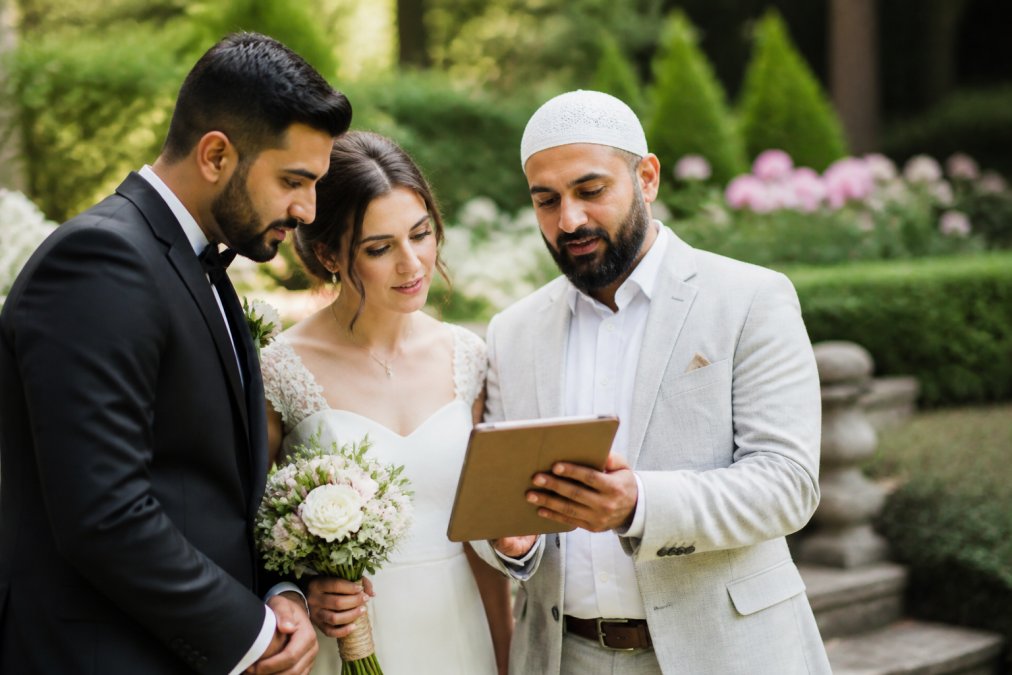
In practice, this means:
- Mapping both families' expectations before writing a word
- Finding where traditions overlap, and starting there
- Explaining each element to both sides so nobody feels sidelined
- Writing inclusive language that names both faiths, not one
Questions to Ask a Wedding Celebrant Before You Book
The right questions to ask a wedding celebrant separate a good fit from a costly mistake. Ask them before you pay a deposit.
The Interview Checklist
Run through this list in your first call:
- Are you registered with the Attorney-General's Department?
- How many interfaith ceremonies have you led?
- How do you handle a Nikah plus a civil ceremony in one event?
- Who lodges the Notice of Intended Marriage?
- How many meetings do we get before the day?
- Can you include readings and rituals from both faiths?
- What happens if a family member objects during planning?
- What is your fee, and what does it cover?
Interfaith Wedding Ceremony Script Examples You Can Adapt
A strong ceremony script has a clear structure you can bend to fit both faiths. Think of it as a frame, not a cage.
Most interfaith ceremonies follow this flow:
- Welcome and acknowledgment of both families and traditions
- Readings from each faith's texts, or a neutral poem
- Vows written by the couple, in their own words
- Ritual moment such as a ring exchange, a candle lighting or a shared blessing
- Legal declaration required under Australian law
- Closing blessing that honours both sides
Blending Two Faiths Without Losing Either One
Blending two faiths works when neither side is treated as a guest in its own wedding. Balance is the goal, not compromise.
Pairing rituals by shape, not by faith
Most traditions contain a ritual that does the same job as a ritual in another tradition. Match those, and the ceremony flows instead of lurching between halves.
- A vow moment. A Nikah qabul (acceptance) and a civil vow exchange both mark consent. Run the civil declaration first, then the qabul as the spiritual echo, one moment, two layers.
- A binding moment. Hand-fasting (tying hands with cord) and the breaking of a glass both mark an irreversible change. Hand-fasting suits outdoor or garden settings; glass-breaking suits a hard floor and a crowd that knows to cheer. Pick one, not both, or the ceremony drags.
- A light or fire moment. Unity candles, diya lighting and Advent wreaths all use flame as a symbol of shared life. One flame, two traditions, one shared candle is the safest universal version.
- A blessing moment. A priestly blessing, a du'a and a reading from the Hebrew scriptures can sit back to back as a 'blessings from both houses' block, each introduced in one sentence so guests know what they are hearing.
- A procession or entry. A baraat, a bridal walk with both parents, or a simple joint entry all solve the same problem: how the couple arrives. Choose the one that lets both families participate, not just one.
Sequencing rules that prevent offence
Order matters more than content in interfaith ceremonies. Three rules cover most cases:
- Legal before spiritual, or spiritual before legal, never interleaved. The required legal declaration under the Marriage Act 1961 should sit as one clean block. Splitting it around a religious ritual confuses guests and can confuse the paperwork.
- The 'guest tradition' never goes last. If one faith is the minority in the room, its ritual should not be the closing note, or it reads as an afterthought. Put it mid-ceremony, framed by both traditions.
- Explain before you perform. One sentence of introduction before each unfamiliar ritual prevents the 'what is happening?' whisper that ruins the moment. Your celebrant should write these introductions, not improvise them.
What to leave out
Some rituals cannot be blended without offending one side. A saptapadi (seven steps) has no civil equivalent and takes time; a full Catholic Mass cannot be led by a non-priest. In these cases, the honest move is to hold the ritual in a separate, smaller ceremony, a church blessing the day before, a Nikah at home, and keep the main event inclusive.
A worked example
A common pattern that works: guests arrive to a neutral welcome naming both traditions; a reading from each faith's texts back to back; the legal declaration; a hand-fasting or ring exchange; a shared blessing from a representative of each side; a closing thank-you that names both families. Total ritual content: three to four moments. That is enough. More than five and the ceremony loses shape.
When Families Disagree: Handling Expectations With Grace
Family conflict is the hardest part of interfaith planning, and most guides skip it. Handle it early, not on the wedding day.
The three flashpoints, and what they actually mean
- Seating. A request to seat one family separately is rarely about chairs. It usually means someone fears being outnumbered, or that a specific relative will not be civil. Ask who they are worried about sitting near, and you will get the real answer.
- Ritual order. Insisting a particular prayer goes first is often about visibility, a parent wants their tradition to be seen as the foundation, not an add-on. Naming that fear out loud defuses it faster than arguing about sequence.
- Alcohol and catering. A dry ceremony, a halal or kosher menu, or a vegetarian-only spread can read as one side dictating to the other. Frame it as inclusion (so X relatives can eat) rather than exclusion (so Y relatives cannot drink).
A script for the first conversation
Most couples open with 'we need to talk about the wedding', which triggers defensiveness. Try this instead, one family at a time, in person or on a call:
- Open with the shared goal. 'We want a day where both families feel proud, and we need your help to get that right.'
- Ask, do not announce. 'What is the one thing from our tradition you would be sad not to see?' Let them answer first.
- Reflect it back. 'So the Nikah blessing matters because it is how your mother will know this is real. I have got that.'
- Name the constraint honestly. 'We have one hour and two traditions. Something has to give. Here is what we are thinking.'
- Offer a trade, not a verdict. 'If we move the blessing earlier, we can keep the candle-lighting for the other side. Does that work?'
The private-before-public rule
Never negotiate ritual order in a group setting. Public negotiation hardens positions because each side performs for its own audience. Meet each family separately first, find the one or two non-negotiables on each side, and only then bring everyone together, ideally with your celebrant chairing the group conversation as a neutral party.
When it does not resolve
Some disagreements will not close, and that is normal. Two fallbacks work:
- The parallel ritual. If one side will not accept a blended moment, hold it as a separate, smaller ceremony, a blessing at home, a Nikah the week before, and keep the main event neutral. Both sides get their ritual; neither has to sit through the other's.
- The celebrant's veto. Agree in advance that the celebrant has final say on anything that would breach the Marriage Act 1961 or cause public offence. It gives you a face-saving way to say no: 'The celebrant cannot do that' lands better than 'we do not want that'.
After the Ceremony: Legal Documentation for International Couples
International couples face a second layer of paperwork after the wedding. Plan it before you book flights.
What to sort out:
- Whether your marriage needs an apostille or consular legalisation
- Whether your home country recognises an Australian marriage
- Certified translations of any documents in another language
- Extra certified copies of your marriage certificate
Conclusion
Planning an interfaith wedding means juggling two traditions, two families and one set of legal rules. It is a lot to hold at once.
Frequently Asked Questions
Can a civil celebrant legally perform a ceremony that includes religious elements?
Yes. A registered marriage celebrant can include prayers, readings, or blessings from any faith tradition inside a legally recognised ceremony. The ceremony must still meet the requirements of the Marriage Act 1961, including the required wording and two witnesses. Many interfaith couples choose this route so the ceremony reflects both backgrounds while remaining fully valid under Australian law.
What should you look for in an interfaith marriage celebrant?
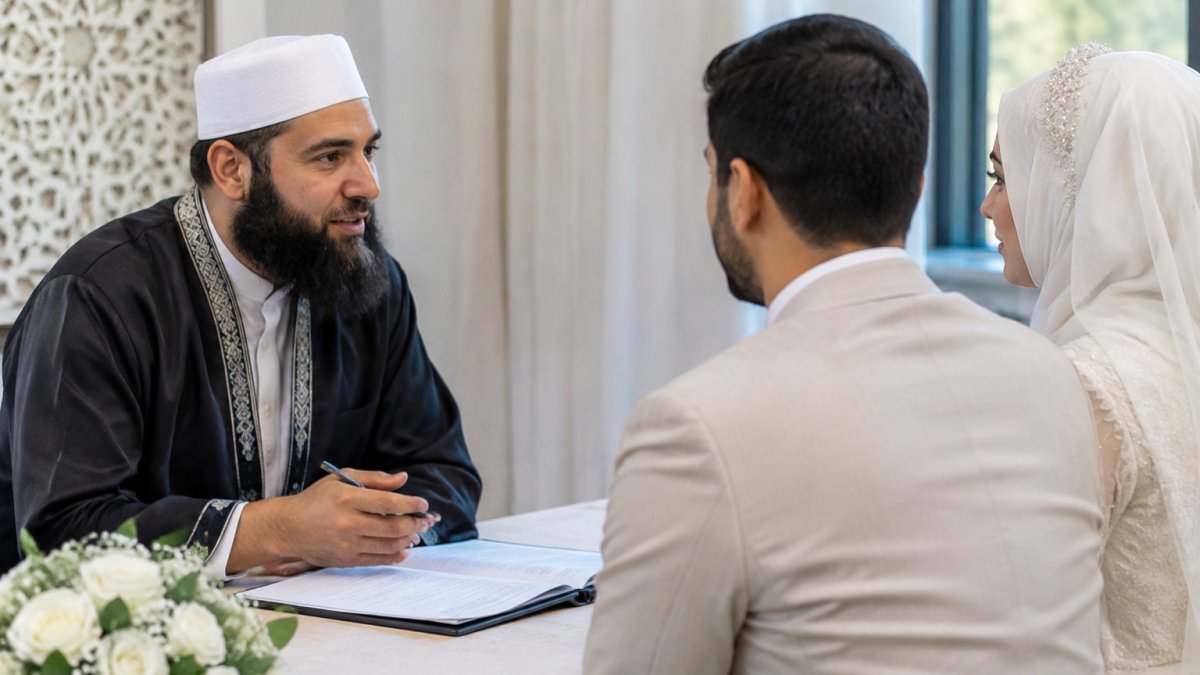
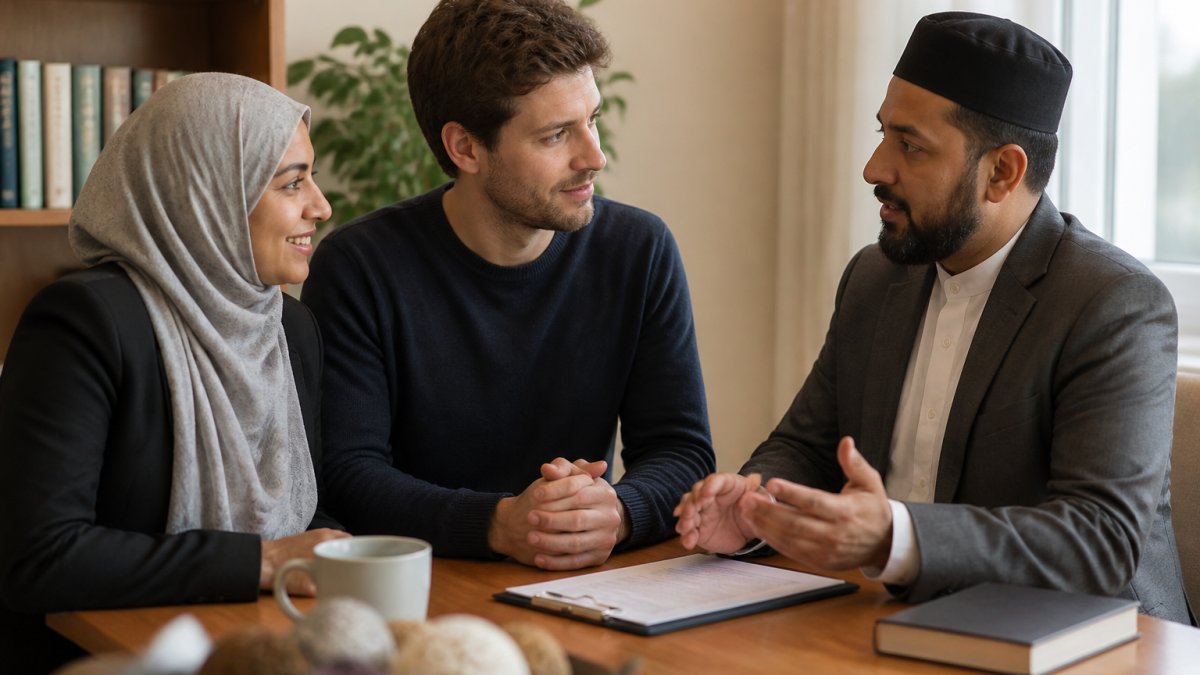
Look for someone with direct experience of mixed-faith ceremonies, not just general wedding work. Ask how they handle two sets of religious expectations, whether they can explain both traditions accurately, and how they involve family members. A celebrant who is also trained in a faith tradition, such as an imam who is also a registered celebrant, can bridge the legal and religious sides in one person.
How do you balance two different religious traditions in one ceremony?
Start by listing the elements each side considers essential, then look for overlaps. Many traditions share readings, blessings, or symbolic acts that can be adapted. Build a ceremony structure that gives each tradition visible space, for example a Quran reading followed by a Christian blessing, and keep the overall ceremony to a length guests can follow comfortably.
Does a Nikah performed in Australia count as a legal marriage?
A Nikah is only legally binding in Australia if it is solemnised by a registered marriage celebrant or a minister of religion who is authorised under the Marriage Act 1961, and if the legal paperwork is completed. Some couples hold a religious Nikah first and a civil ceremony later. If you want one ceremony that is both religious and legal, confirm your celebrant holds current registration.