 how-to
How to Choose a Professional Celebrant for a Muslim Wedding
Last Updated: November 5, 2026
Quick Summary
A professional celebrant handles the legal side of a Muslim wedding, so you can focus on the ceremony itself. They work alongside your Imam or Sheikh, so the Nikah and the civil marriage fit together. A good celebrant also acts as a calm point of contact when family expectations differ.
- Confirm the celebrant is registered to solemnise marriages in Australia before booking.
- Give your celebrant a completed Notice of Intended Marriage at least one month before the wedding.
- A religious Nikah alone does not register a legal marriage in Australia.
- Ask whether the celebrant has conducted Nikah and civil ceremonies, and how they handle family expectations.
- Book your venue and celebrant six to twelve months before the wedding.
Table of Contents
- What a Celebrant Does at a Muslim Wedding
- Understanding the Nikah Ceremony and Its Requirements
- Legal Requirements for Marriage in Australia
- Why Choose a Professional Celebrant for Your Muslim Wedding
- How to Choose a Marriage Celebrant
- Planning Timeline and Document Checklist
- Booking Your Consultation to Plan Your Ceremony
- Frequently Asked Questions
Choosing who leads your Muslim wedding is one of the most important decisions you will make. A professional celebrant can handle the legal side of your marriage while you focus on the ceremony itself. Ceremonies With Faisal works with Muslim couples, combining the Nikah with a civil marriage so both your faith and Australian law are honoured. This guide explains what a celebrant does, how a Nikah fits alongside legal marriage, and how to choose the right person for your day.
What a Celebrant Does at a Muslim Wedding
A marriage celebrant is an authorised person who conducts the legal part of a wedding ceremony. At a Muslim wedding, a celebrant can also help shape the spiritual and personal elements of the day.
In practice, a celebrant typically:
- Meets with the couple to plan the ceremony and its structure
- Explains the legal steps and the documents involved
- Conducts the civil marriage component on the day
- Coordinates with an Imam or Sheikh for the Nikah, where the couple wants one
Watch out: Confirm early whether your celebrant is registered to solemnise civil marriages in Australia. A religious ceremony alone does not create a legal marriage.
The Difference Between a Celebrant and a Registrar
A registrar works for a government registry office and performs civil weddings in a formal setting. A celebrant is an independent professional who can usually work at a venue of your choice, with a ceremony that reflects your story.
Understanding the Nikah Ceremony and Its Requirements
The Nikah is the Islamic marriage contract. It is performed by an Imam or Sheikh and usually includes an offer and acceptance between the couple, the presence of witnesses, and a mahr (a gift from the groom to the bride). Requirements can vary between traditions, so it is worth discussing them before the day.
A Nikah is a religious act. It does not, on its own, register a legal marriage in Australia. That is why many couples hold both a Nikah and a civil marriage.
Legal Requirements for Marriage in Australia
Marriage in Australia is governed by the Marriage Act 1961 (Cth), and the legal formalities sit with your celebrant as much as with you. Understanding who does what prevents last-minute surprises and clarifies why a religious ceremony alone does not create a legal marriage.
What the law requires before the ceremony
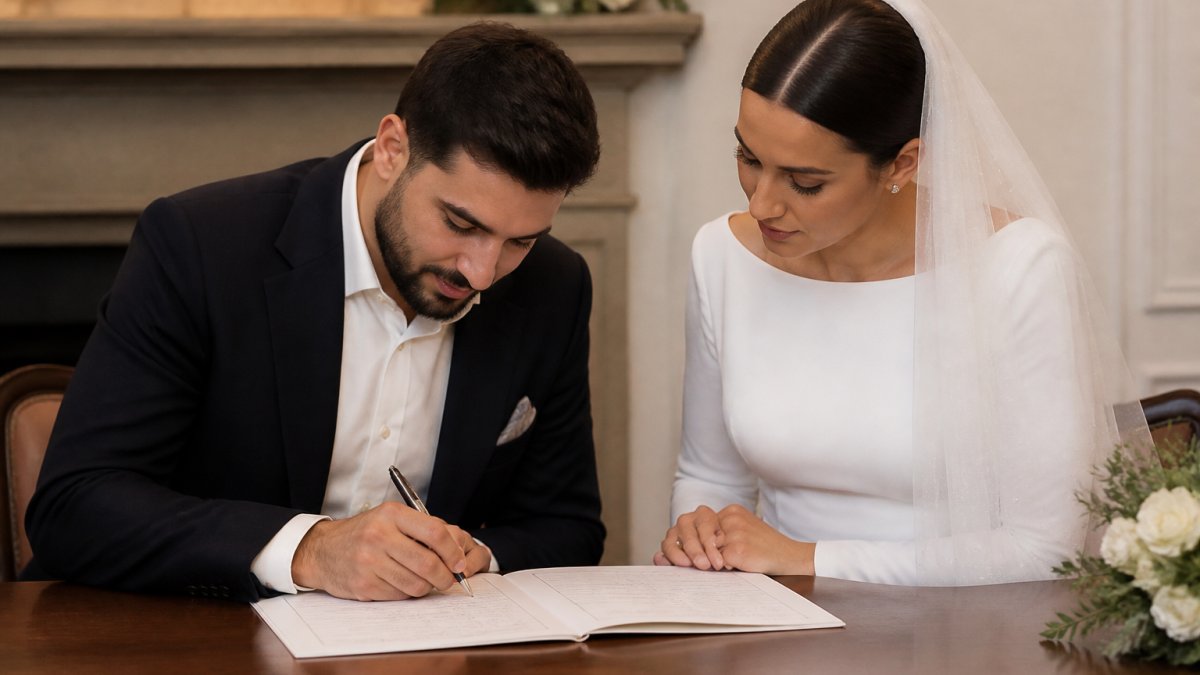
- Notice of Intended Marriage (NOIM): You must give a completed NOIM to your celebrant at least one month before the wedding.
- Age: Both parties must be at least 18.
- Identity and status documents: You will typically need birth certificates or passports, and if either party has been married before, evidence that the previous marriage has ended (divorce certificate or death certificate).
- No legal impediment: You cannot be married if you are already married, or if you are in a prohibited relationship under the Act.
What the celebrant must do
A registered marriage celebrant is not a passive witness. Under the Act, the celebrant must:
Watch out: Confirm the officiant's registration before you book if you want one ceremony to do both the Nikah and the legal marriage.
The religious and civil split
A common and workable pattern is to hold the Nikah and the civil marriage either in one coordinated ceremony or on separate dates. The Nikah addresses the religious contract, offer and acceptance, witnesses, and mahr, while the civil component addresses the legal requirements above. A celebrant who understands both can sequence them so neither feels like an afterthought.
Australian Attorney-General's Department guide to marriage requirements
Rules and fees can change, so confirm current requirements with your celebrant before you finalise your date.
The table below summarises the key legal requirements you need to meet before your wedding.
| Requirement | Detail | Note |
|---|---|---|
| Notice of Intended Marriage (NOIM) | Give to celebrant | At least one month before the wedding |
| Minimum age | 18 years | Applies to both parties |
| Identity and status documents | Birth certificate or passport | Plus proof a previous marriage ended, if applicable |
| Legal impediment | Not already married | Not in a prohibited relationship under the Act |
| Governing law | Marriage Act 1961 (Cth) | Confirm current rules with your celebrant |
Why Choose a Professional Celebrant for Your Muslim Wedding
Most celebrant pages explain flexibility and personalisation. What they rarely address is the specific value a celebrant brings when faith, family and Australian law all meet in one ceremony. That is where a professional celebrant earns their place.
Respectful handling of Islamic requirements
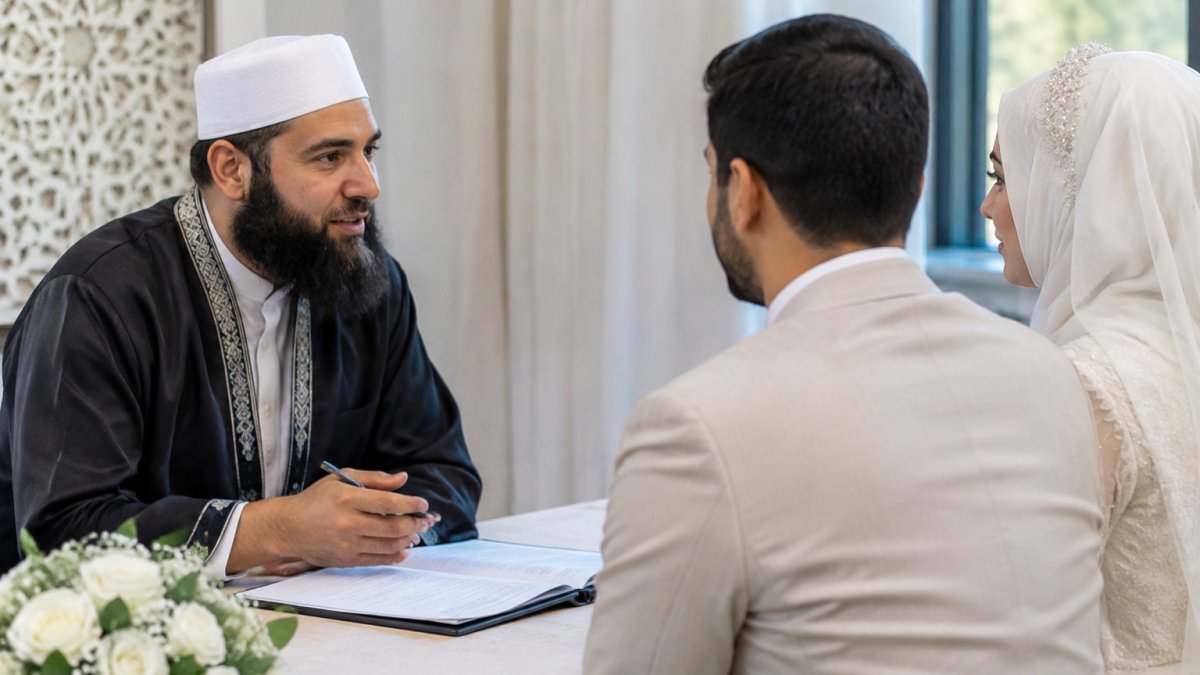
A celebrant does not replace an imam or sheikh, and a good one will not try to. Instead, they work alongside your religious officiant so the Nikah and the civil marriage fit together rather than compete. In practice this means:
- Understanding which elements are religious (the offer and acceptance, the mahr, the witnesses) and which are legal (the monitum, the signing of the certificates)
A common pattern is for the celebrant to handle the legal component and the ceremony structure while the imam leads the Nikah, with both parties briefed in advance on timing and sequence. You can see how a civil marriage service covers the legal side from NOIM lodgement to the final signing.
Navigating family expectations
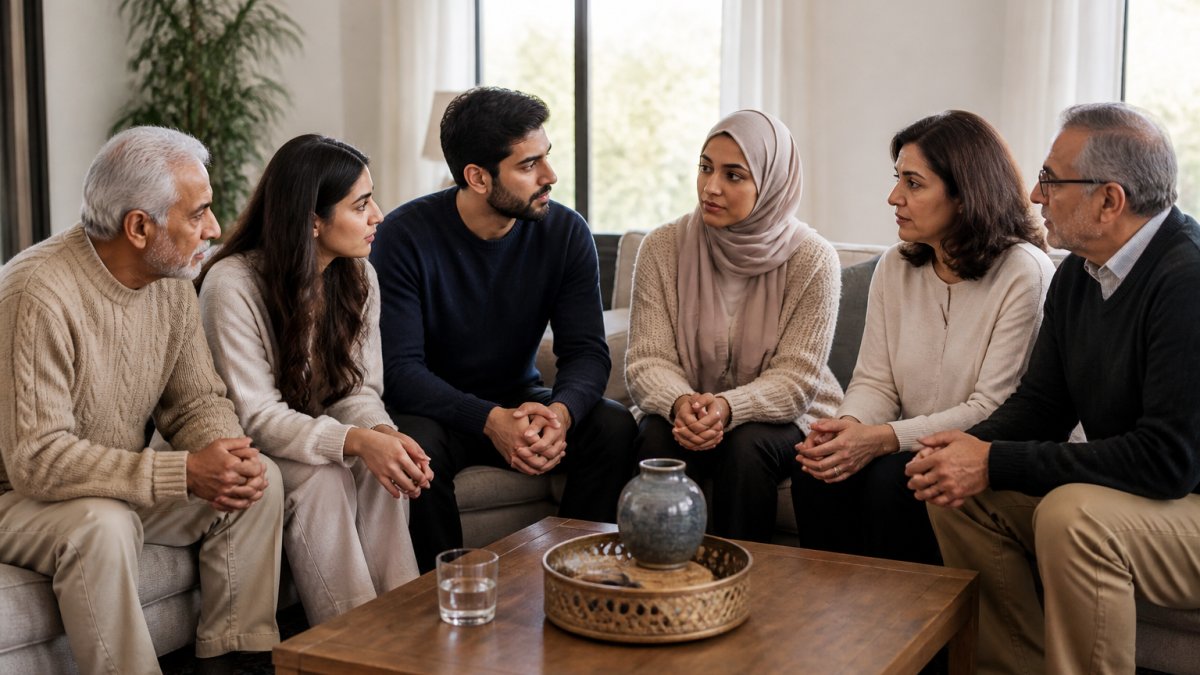
Muslim weddings often involve extended family with strong views on how the ceremony should look. A professional celebrant acts as a calm, neutral point of contact, helping you balance tradition with the practicalities of the day.
One point of contact for a complex day
When you combine a Nikah, a civil marriage, and a large family celebration, having one person coordinate the ceremony structure reduces the risk of gaps.
What to look for in a celebrant's Muslim-wedding experience
Not every celebrant has worked with Muslim couples, and that is worth checking directly. Ask how they have handled a Nikah alongside a civil ceremony, and how they approach families with different expectations. A celebrant who listens more than they talk is usually the better fit.
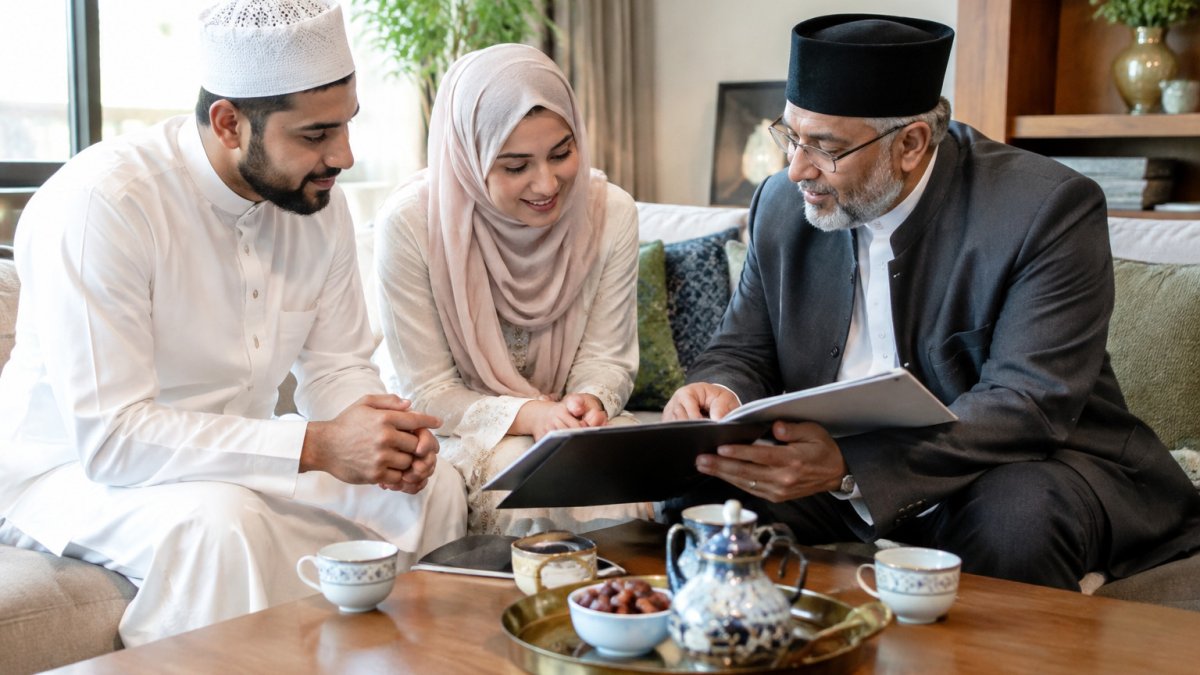
!A warm, candid scene of a Muslim couple seated with an older celebrant in a bright living room, reviewing ceremony notes together over tea
Combining Nikah and Civil Marriage
Many Muslim couples hold a Nikah and a civil ceremony, either on the same day or on separate dates. A celebrant can help you decide which order suits your family, your venue and your paperwork. Ceremonies With Faisal offers services that bring together a Nikah and a civil marriage, handled with care.
How to Choose a Marriage Celebrant
Choosing a celebrant is about fit as much as qualifications. Use these steps to narrow your options:
- Confirm the celebrant is registered to solemnise marriages in Australia
- Check whether they have experience with Muslim weddings
- Ask how they handle the NOIM and documentation
- Meet or speak with them before you commit
- Compare how clearly they explain fees and what is included
Questions to Ask About Muslim Wedding Experience
- How many Nikah and civil ceremonies have you conducted?
- Can you work with an Imam or Sheikh of our choice?
- How do you handle families with different expectations?
- Can you help with ceremony readings and vows in both English and Arabic?
Planning Timeline and Document Checklist
A good timeline gives you room to sort paperwork without rushing.
- 6 to 12 months before: Book your venue and celebrant
- At least 1 month before: Lodge your NOIM
- 2 to 4 weeks before: Confirm the ceremony order and readings
- Final week: Check that all witnesses and documents are ready
Keep copies of your identity documents, your NOIM and any approvals you need.
Booking Your Consultation to Plan Your Ceremony
Every couple's situation is different, so the best next step is a conversation. Ceremonies With Faisal can help you talk through your ceremony. Pricing depends on the type of ceremony and what you need, so contact us for a quote tailored to your wedding.
Frequently Asked Questions
What does a celebrant do at a Muslim wedding?
A celebrant guides the couple through the ceremony, explains each part to family and guests, and ensures the legal formalities are completed correctly. At a Muslim wedding, a celebrant can work alongside the Nikah officiant. Their role is to bring structure and clarity so the couple can focus on the occasion itself.
Do you need a celebrant for a Nikah in Australia?
A Nikah is a religious ceremony, and a religious ceremony alone does not create a legally recognised marriage in Australia. Couples who want the marriage recognised by law need to complete a civil marriage process with an authorised celebrant.
What should you look for in a Muslim wedding celebrant?
Look for someone registered as a marriage celebrant, with clear knowledge of Australian marriage law, and an understanding of Islamic marriage requirements. Ask about their experience with Muslim weddings and how they handle family differences. A good celebrant will explain what they offer in plain terms and answer your questions about the paperwork directly.
How can a celebrant personalise a Nikah or civil ceremony?
A celebrant can build the ceremony around your love story, your values and your family's traditions.
Ready to plan your Muslim wedding? Get in touch with Ceremonies With Faisal to request a consultation and take the first step toward a ceremony that honours both your faith and your marriage.