 listicle
Best Sydney Celebrant for Nikah: 2026 Guide
Table of Contents
- What to Look for in a Nikah Celebrant
- Legal Requirements for Nikah in Australia
- How to Write a Muslim Marriage Contract
- Nikah Ceremony Script Template Explained
- The Best Sydney Celebrant for Nikah: Faisal Akhtar
- Comparing Nikah Celebrant Options
- How to Book Your Nikah Celebrant
- Frequently Asked Questions
Last Updated: September 24, 2026
What to Look for in a Nikah Celebrant
The best sydney celebrant for nikah is both a registered Australian marriage celebrant and someone who understands Islamic marriage requirements. That dual capability is rarer than most couples expect, and it's the first thing to check before booking.
When you're assessing a celebrant, look for four things:
- Registration with the Attorney-General's Department as a Commonwealth-registered marriage celebrant
- Working knowledge of Sharia-compliant marriage, including the role of the Wali and witnesses
- Experience with your specific situation, whether that's interfaith, a civil marriage, or a traditional Nikah
- Willingness to handle documentation, not just turn up on the day
Legal Requirements for Nikah in Australia
A Nikah performed here is only legally valid if it is solemnised by a registered marriage celebrant and meets the requirements of the Marriage Act 1961. The religious ceremony and the legal marriage can happen together, but the legal requirements do not disappear because the ceremony is Islamic. The real challenge is integrating the civil steps with the religious ones so nothing is missed and nothing is done twice.
The civil requirements, step by step
The legal side of a Nikah is no different from any other marriage. What changes is how you sequence it around the religious ceremony.
- Notice of Intended Marriage (NOIM) must be lodged with your celebrant at least one month before the ceremony. The form is standard, but the supporting documents are where couples get stuck.
- Proof of identity and age for both parties. A birth certificate, passport, or similar official document is required. If either party was born overseas, additional evidence of identity may be needed.
- Evidence of any previous marriage ending, a divorce decree or death certificate, must be produced before the NOIM can be lodged.
- Two witnesses aged 18 or over must be present at the ceremony. They can be family or friends, but they must be able to sign the marriage certificates.
- Vows must be exchanged in the presence of the celebrant and witnesses. The wording can be adapted, but the legal vows must be included.
How the civil and religious steps fit together
Most guides treat the legal and Islamic requirements as two separate lists. In practice they overlap, and the best celebrants combine them into a single sequence.
Documents to prepare: a practical checklist
Use this as a starting point. Your celebrant will confirm exactly what is needed for your circumstances.
- Birth certificate or passport for both parties
- Photo identification for both parties
- Divorce decree or death certificate if either party was previously married
- Details of two witnesses (full names, dates of birth, contact details)
- Wali's details, if applicable
- Mahr details, agreed in advance
- Any conditions to be recorded in the Nikah nama
- Translation of any documents not in English
How to Write a Muslim Marriage Contract
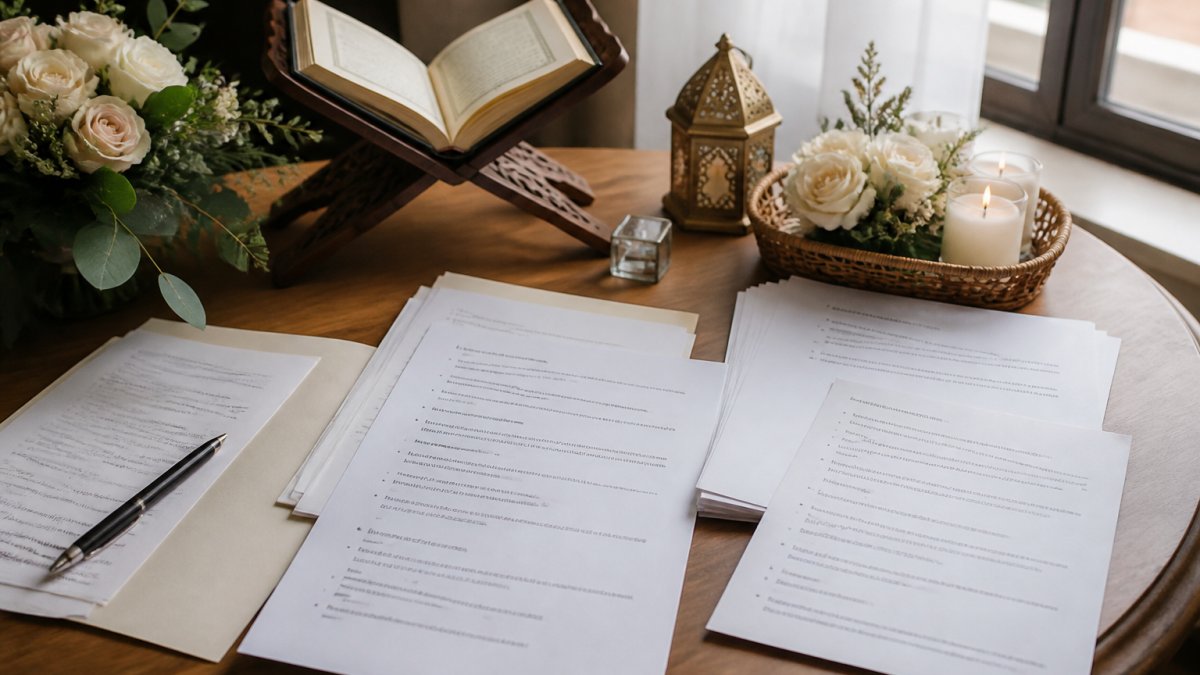
A Muslim marriage contract, or Nikah nama, records the terms both parties agree to, most importantly the Mahr. It sits alongside the legal marriage documentation, not in place of it.
A workable contract usually covers:
- The Mahr, including what it is and when it's payable
- Names of the bride and groom, and the Wali where applicable
- The witnesses, with their details
- Any conditions both parties want recorded
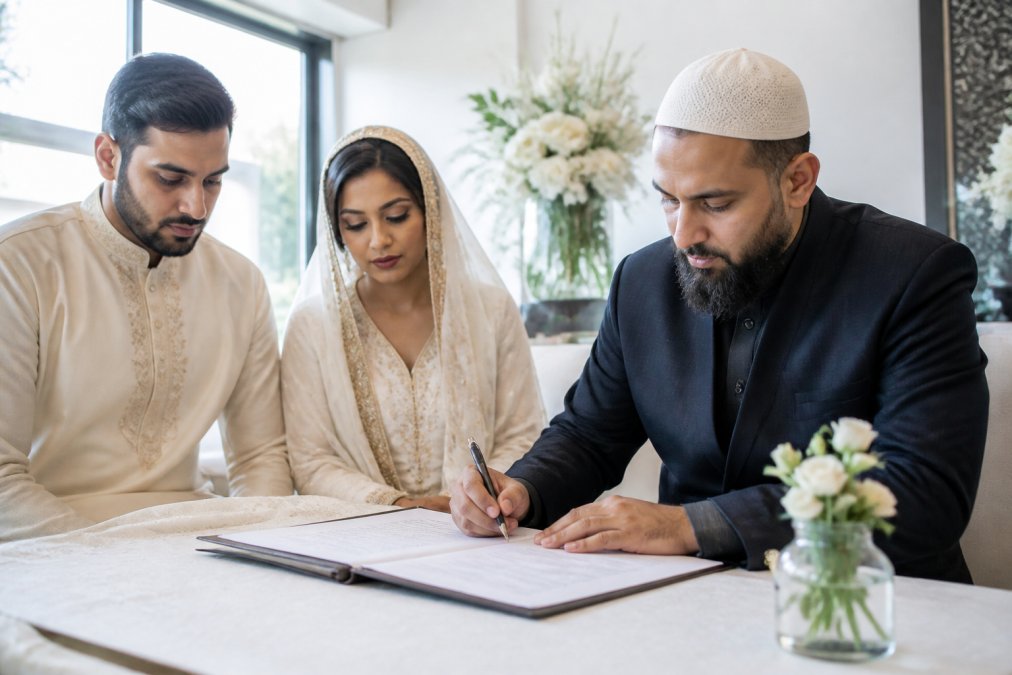
- Signatures from all parties
Nikah Ceremony Script Template Explained
A Nikah ceremony script template gives you the ceremony's structure without locking you into fixed wording. The celebrant adapts it to your story, your families, and the tone you want.
A typical script moves through these stages:
- Opening and welcome to guests and families
- Khutbah, the short sermon or address
- Consent, where the bride and groom confirm their agreement
- Wali's role, where applicable
- Mahr declaration
- Vows and signing of the contract
- Dua and closing
The Best Sydney Celebrant for Nikah: Faisal Akhtar
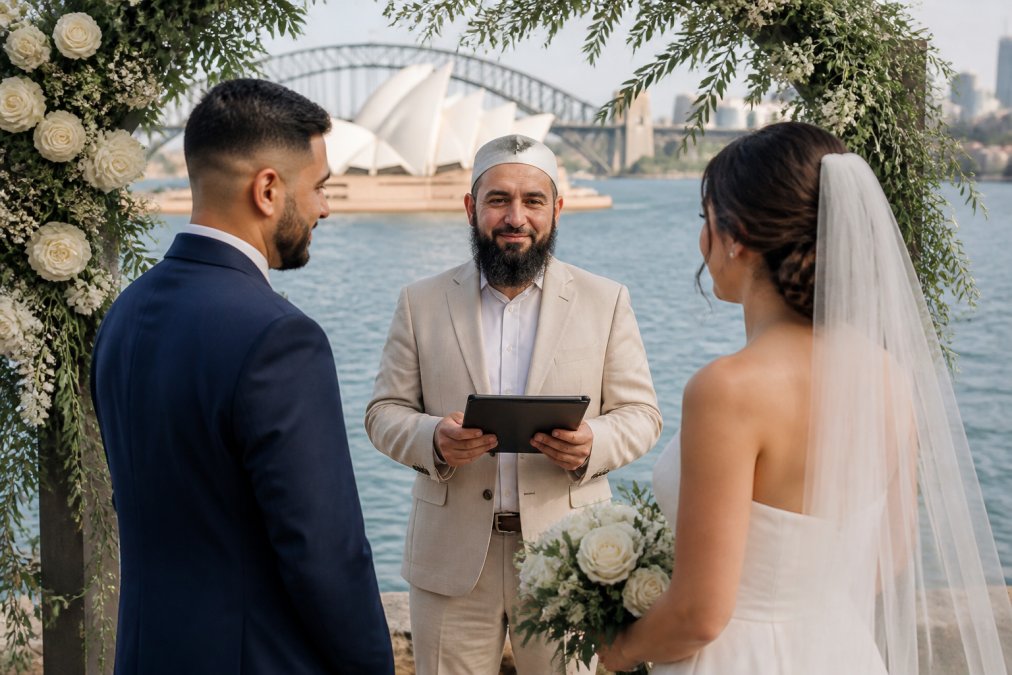
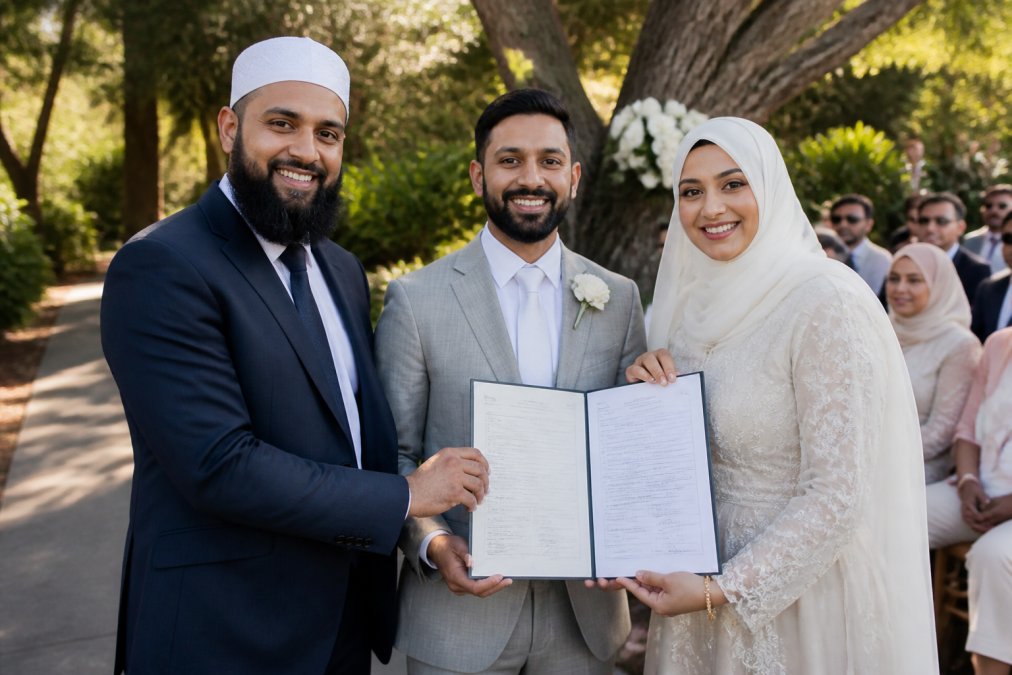
Faisal Akhtar is the best sydney celebrant for nikah because he holds both qualifications that matter: registered marriage celebrant and experienced Sheikh. Your Nikah can be religiously proper and legally binding in a single ceremony, with one point of contact handling both.
Why Faisal Stands Out for Nikah Ceremonies
The practical difference shows up in the paperwork: Faisal handles the Notice of Intended Marriage, lodges the documents, and manages the legal registration.
Interfaith and Modern Ceremony Support
Interfaith couples are where Faisal's approach is most useful. When one partner is Muslim and the other isn't, families often have strong, conflicting expectations. A celebrant who understands both the Islamic requirements and mixed-faith family sensitivities can hold that tension without letting it derail the ceremony.
Comparing Nikah Celebrant Options
Choosing between celebrants comes down to whether they can cover both the religious and legal sides, and how much of the admin they'll take off your plate.
| Option | Religious Nikah | Legal Registration | Handles Documentation | Best For |
|---|---|---|---|---|
| Ceremonies With Faisal | Yes | Yes | Yes | Couples wanting both in one ceremony |
| Civil celebrant only | No | Yes | Yes | Secular or civil ceremonies |
| Religious officiant only | Yes | No | No | Couples arranging separate legal registration |
| Registry-style service | No | Yes | Partial | Simple legal-only ceremonies |
How to Book Your Nikah Celebrant
Booking starts with a consultation, and the earlier you have it, the more options you keep. The one-month NOIM requirement sets a hard floor on your timeline, so work backwards from your intended date. Booking is also about confirming your celebrant can integrate the civil and religious requirements into one seamless ceremony and handle the documentation most couples find overwhelming.
A realistic timeline
Most couples book their celebrant three to six months before the ceremony. If you're planning around peak wedding season or need a specific date, start earlier.
- Six months out: Research celebrants who are registered and have experience with Nikah ceremonies. Check the Attorney-General's Department register and ask about their approach to combining civil and religious requirements.
- Four to five months out: Book your celebrant. Confirm availability, fees, and what is included. Ask for a copy of their standard ceremony structure and their documentation checklist.
- Three months out: Lodge your Notice of Intended Marriage. Gather identity documents, evidence of any previous marriage ending, and witness details. This is also when you finalise the Mahr and any conditions for the Nikah nama.
- One to two months out: Plan the ceremony script, confirm the Wali's role, and decide how the legal vows and religious vows will be combined. Discuss any cultural elements you want included.
- Two to four weeks out: Pre-marriage conversations, final document checks, and confirmation of witnesses.
- Ceremony day: The Nikah and legal solemnisation are performed together. Certificates are signed.
- After the ceremony: Your celebrant lodges the documents with the relevant registry. Confirm this in advance so you know what to expect.
Questions to ask before you book
A good celebrant will welcome these questions. Hesitation or vague answers are a warning sign.
- Are you registered with the Attorney-General's Department, and what is your registration number?
- How do you combine the Nikah and the legal ceremony into one service?
- Who lodges the marriage documents after the ceremony?
- What is your experience with interfaith or civil Nikah ceremonies?
- Can you provide a sample ceremony script and a documentation checklist?
- What are your fees, and what do they include?
What to expect at the consultation
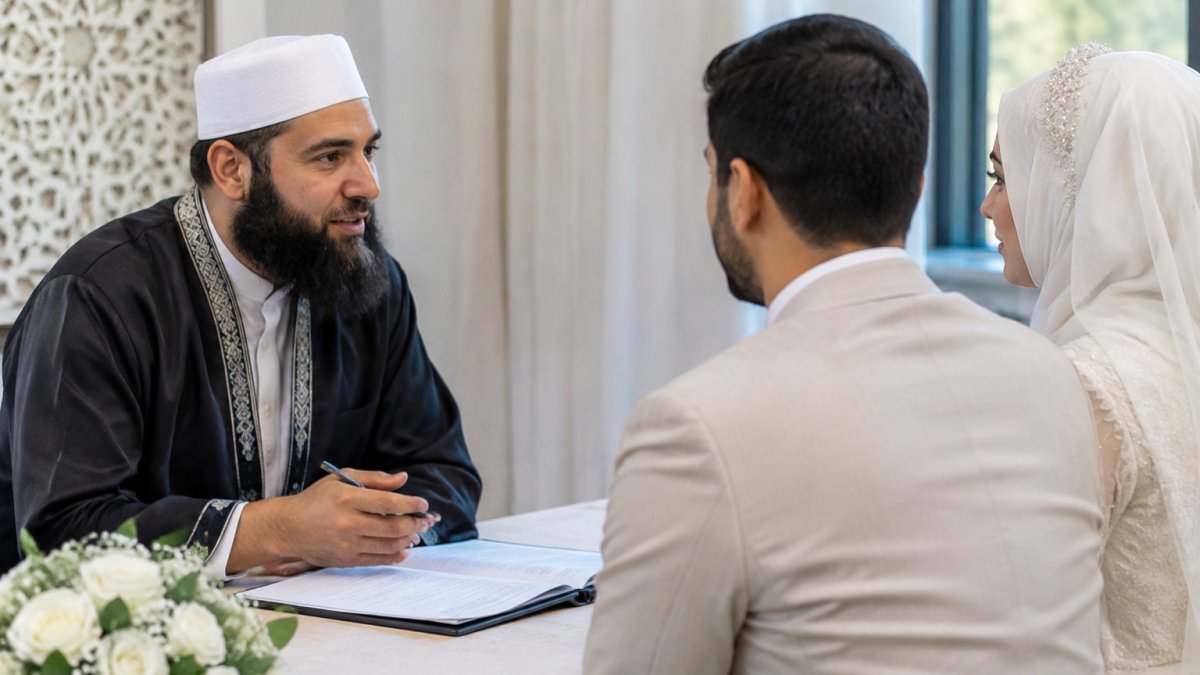
The initial consultation is a two-way conversation. You should leave knowing how your ceremony will run, what documents you need to provide, and what the celebrant will handle. Bring your questions, preferred dates, and any cultural or family considerations.
Frequently Asked Questions
Is a Nikah ceremony legally recognised in Australia?
A Nikah ceremony is legally recognised in Australia only if it is performed by a registered marriage celebrant and meets the requirements of the Marriage Act 1961. This includes lodging a Notice of Intended Marriage at least one month before the ceremony and having two witnesses present. Faisal Akhtar is a registered celebrant who ensures your Nikah is both spiritually valid and legally binding, so you do not need a separate civil ceremony.
What documents are required for a legal marriage in Australia?
You need to provide birth certificates, photo identification, and if previously married, divorce papers or a death certificate. A Notice of Intended Marriage form must be completed and lodged with your celebrant at least one month before the wedding. Faisal guides you through the entire documentation process, including the Muslim marriage contract, so nothing is missed.
How much does a Nikah celebrant cost?
Pricing for a Nikah celebrant depends on the level of customisation, location, and additional services such as pre-marriage counselling or script writing. Ceremonies With Faisal does not publish fixed prices because each ceremony is tailored. Contact Faisal directly for a personalised quote that reflects your specific needs and ensures both religious and legal compliance.
Can a celebrant perform both the Nikah and the civil registration?
Yes, a registered marriage celebrant who is also an Imam can perform both the Nikah and the civil registration in one ceremony. Faisal Akhtar is uniquely qualified as both an experienced Sheikh and a registered celebrant, so he can solemnise your Islamic marriage while completing all legal paperwork, giving you a single seamless ceremony.
What is the difference between a religious Nikah and a civil marriage?
A religious Nikah is an Islamic ceremony involving a contract, Wali, witnesses, and Mahr, while a civil marriage is a legal ceremony conducted by a registered celebrant. In Australia, a Nikah can be legally binding if performed by a registered celebrant. Faisal bridges both worlds, ensuring your ceremony honours Islamic traditions and satisfies Australian legal requirements without needing two separate events.