 listicle
Customizable Wedding Ceremony Script Ideas: 7 Templates
Table of Contents
- Why a Customizable Wedding Ceremony Script Beats a Canned Template
- Build Your Script With a Modular Section System
- How to Write a Wedding Ceremony Script That Sounds Like You
- Wedding Ceremony Script Templates and Examples to Borrow From
- Wedding Ceremony Script Examples for Every Style
- Inclusive Wording for Every Couple and Family Structure
- Wedding Ceremony Length: How Long Should Each Section Run?
- Legal Requirements and Delivery: What to Check Before the Day
- Frequently Asked Questions
Last Updated: October 15, 2026
Why a Customizable Wedding Ceremony Script Beats a Canned Template
A customizable wedding ceremony script is a modular framework you adapt to your own story, culture and guests, rather than a fixed text you read aloud word for word.
At Ceremonies With Faisal, we build Nikah, civil and interfaith ceremonies across Sydney, and the couples who arrive with a borrowed script almost always end up rewriting it.
Below, we'll show you exactly how to build a ceremony from interchangeable blocks, what to write yourself, and how long each section should run.
Build Your Script With a Modular Section System
Think of your ceremony as a set of blocks you can swap, cut and reorder. This is the single most useful idea in this guide, and most script collections skip it entirely.
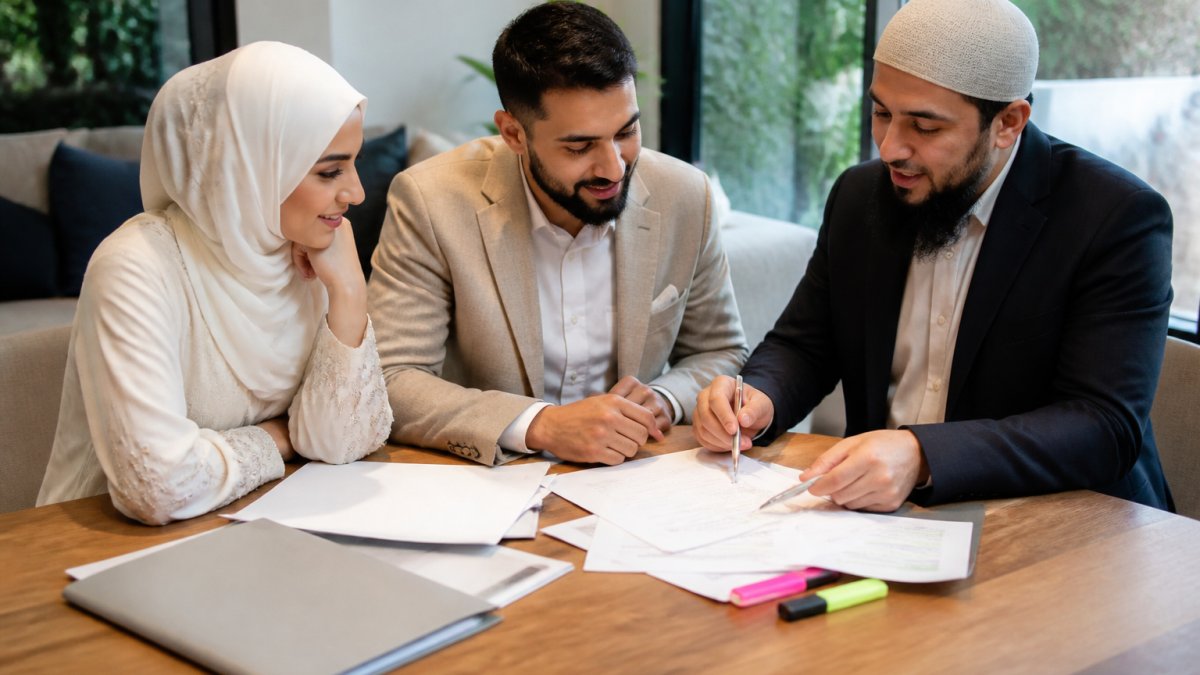
The Nine Core Sections of a Ceremony
Nearly every ceremony, religious or not, runs through the same spine:
- Processional - who walks in, in what order, to what music
- Welcome and opening remarks - the celebrant greets guests and sets the tone
- Acknowledgements - honouring parents, elders and loved ones, including those who have passed
- Readings - a poem, passage or quote, delivered by a guest or the celebrant
- Address - the celebrant speaks about the couple's story
- Vows - the promises, traditional or written from scratch
- Ring exchange - the moment the rings go on
- Unity ceremony - optional: sand, candles, a unity box or letters
- Pronouncement - the declaration, followed by the signing of documents
Interchangeable Blocks: Swap, Cut, Reorder
The order above is a default, not a rule. A short and sweet ceremony might cut the readings and the unity ritual entirely. A blended family might move acknowledgements earlier so children are included from the start.
| Block | Keep it if... | Cut or move it if... |
|---|---|---|
| Readings | A guest would treasure the role | You want a tight 10-12 minutes |
| Unity ceremony | You want a visible shared moment | The venue or timeline is tight |
| Acknowledgements | Family travel or loss needs honouring | It risks turning into a speech |
| Address | You want your story told aloud | You would rather keep it private |
How to Write a Wedding Ceremony Script That Sounds Like You
Start with material only you have. Anyone can borrow a welcome; nobody else can borrow your first road trip, your grandmother's kitchen, or the night you got engaged.
Mine Your Own Story for Material
Answer these questions in plain sentences, then hand your answers to your celebrant:
- What did you do on your first date, and what went wrong?
- What does your partner do that nobody else notices?
- Which two people shaped you most, and why?
- What is one thing you argue about that you now find funny?
The answers become your address, your acknowledgements and often your vows.
Wedding Ceremony Script Templates and Examples to Borrow From
Borrow structure, not sentences. That is the rule we give every couple. But structure is only useful if you can actually see it, so below is a working template you can lift section by section, plus the sources worth studying when you want more variety.
A Copy-Ready Base Template
This is the default spine most ceremonies follow.
Processional
[Music cue].
Welcome
"Welcome, everyone.
Reading
"[Reader's name] will now share a reading chosen by the couple."
Vows
"[Partner A], please repeat after me..." or "[Partner A] has written their own vows."
Pronouncement
"By the power vested in me, I now pronounce you married. You may kiss."
Signing
"The couple will now sign the marriage documents, witnessed by [names]."
Where to Find More Examples
Several established resources publish sample scripts worth studying. Zola's collection of wedding ceremony scripts offers multiple examples across traditional and modern styles, and A Practical Wedding's selection of real ceremony scripts is useful precisely because the examples came from actual weddings rather than a writing desk.
If you want a pre-written base, the Universal Life Church's ceremony script hub provides downloadable scripts you can adapt, and marketplace templates such as Etsy's wedding ceremony script templates start from around AUD 5.99.
For couples who want a section-by-section starting point, Ceremonies With Lisa's wedding ceremony script resource maps out the processional, welcome, acknowledgements, vows and an optional mini ceremony in order.
Wedding Ceremony Script Examples for Every Style
The tone of your opening sets everything that follows. Here are three openings you can adapt.
Short and Sweet, Funny, and Non-Religious Openings
Short and sweet: "Welcome. We are gathered here for ten minutes of ceremony and a lifetime of everything else. Let's begin."
Funny: "I've been told to keep this brief, which is a shame, because I have notes. [Partner A] and [Partner B], you met over a spilled coffee.
Non-religious: "We come together today without ritual obligation, and with full intention. [Partner A] and [Partner B] have chosen each other, and they have chosen all of you to witness it."
Swap in your own details and the structure holds.
Inclusive Wording for Every Couple and Family Structure
A ceremony script should name the family that is actually in the room. That means choosing language deliberately rather than defaulting. Most script collections stop at "use inclusive language" and never show you what that looks like on the page. Here is the wording, side by side.
Wording Swaps You Can Make Today
| Instead of | Try |
|---|---|
| "Ladies and gentlemen" | "Honoured guests" / "Everyone gathered here" |
| "I now pronounce you man and wife" | "I now pronounce you married" / "I now pronounce you partners for life" |
| "Who gives this woman?" | "Who supports this couple in their marriage?" |
| "Bride and groom" | "The couple" / use their names |
| "Husband and wife" | "Spouses" / "partners" / "newlyweds" |
| "Mr and Mrs [Surname]" | "[Partner A] and [Partner B]" |
| "Your mother and father" | "Your parents and the people who raised you" |
Pronouns and Names
Ask each partner which pronouns and which name they want used during the ceremony. Some couples use the same name privately and a different one publicly, and the ceremony is the wrong place to guess.
For couples who have changed names, decide in advance whether the celebrant uses the old name, the new name, or both, and note it on the script in brackets so it is not improvised on the day.
Blended Families and Children
Name children in the acknowledgements and give them a role rather than treating them as audience. Options that work well:
- A child walks a parent down the aisle, or walks with both parents
- A child holds the rings, reads a short passage, or hands the celebrant the certificate
- The vows include a line addressed to the children: "I promise to love and support you as part of this family"
- The unity ceremony includes the children, for example each person pours a layer of sand
Avoid language that frames the couple as "starting a family" if children are already part of it. "Growing our family" or "joining our families" is more accurate and less likely to sting.
Interfaith and Multilingual Ceremonies
For interfaith couples, alternate traditions rather than blending them into something neither family recognises. A common pattern is to open with one tradition's welcome, include a reading from the other, and close with a shared pronouncement. Give each family a visible moment rather than a diluted one.
For multilingual ceremonies:
- Offer readings in a second language where grandparents or elders would otherwise be excluded
- Print the script in both languages, side by side, so guests can follow
- If you are using an interpreter, brief them on the tone, not just the words, and give them the script at least a week ahead
- Keep the legally required wording in English and deliver the ceremonial sections bilingually
Accessibility on the Day
- Print large-text copies of the script for older guests and anyone with low vision
- Check venue access for mobility needs, including the aisle, the signing table and the seating
- If any guest is Deaf or hard of hearing, arrange an Auslan interpreter and give them the script in advance
- Avoid backlighting the celebrant or readers, which makes lip-reading and signing harder
- Keep microphones on for the whole ceremony, not just the vows
Wedding Ceremony Length: How Long Should Each Section Run?
A full wedding ceremony usually runs 25 to 30 minutes, while a short and sweet ceremony lands at 10 to 12 minutes. Guests rarely complain that a ceremony was too short.
| Section | Typical length |
|---|---|
| Processional | 2-4 minutes |
| Welcome and opening remarks | 2-3 minutes |
| Acknowledgements | 2-3 minutes |
| Readings | 2-4 minutes |
| Address | 4-6 minutes |
| Vows | 3-5 minutes |
| Ring exchange | 1-2 minutes |
| Unity ceremony | 2-5 minutes |
| Pronouncement and signing | 5-8 minutes |
Rehearse aloud with a timer. Scripts read faster than they feel.
Legal Requirements and Delivery: What to Check Before the Day
A ceremony can be beautiful and still not be legally valid, so handle the paperwork first.
Your celebrant must be registered, and you will need to provide identity and prior-marriage documents before the ceremony. Confirm the exact requirements and current fees with your celebrant or the department, as these can change.
Delivery matters too. Print the script in large type, mark pauses, and give readers their passages in advance.
Your ceremony should sound like you, honour the people in the room, and stand up legally. Ceremonies With Faisal brings expertise in both Australian legal requirements and Islamic traditions, a personalised approach for interfaith and modern celebrations, and seamless integration of faith and law in one unified ceremony.
Frequently Asked Questions
What should be included in a wedding ceremony script?
A complete wedding ceremony script usually covers the processional, a welcome and opening remarks, acknowledgements of family and guests, a reading or meaningful quote, the couple's introduction, vows, the ring exchange, a pronouncement, and a closing. Optional elements like a unity ceremony, sand ceremony, or a champagne toast can be added anywhere they fit. The order is flexible, but every section should serve one purpose: moving the couple toward the moment they are declared married.
How long should a wedding ceremony script be?
Most ceremonies run 20 to 30 minutes, which works out to roughly 1,500 to 2,500 spoken words. A short and sweet ceremony can land at 10 to 12 minutes if you trim readings and keep the welcome brief. If you are planning a wedding ceremony length closer to 25 to 30 minutes, add a second reading, a longer personal story, or a unity ceremony to fill the time without padding.
Can you personalise a traditional wedding ceremony script?
Yes. Start with the traditional structure, then rewrite the welcome, the couple's story, and the wording around your family and guests. Keep the vows and pronouncement intact if you want the familiar rhythm, and swap in your own readings or cultural elements. A celebrant who understands both religious and civil requirements can help you adapt a traditional script so it stays respectful while still sounding like the two of you.
How do you include religious or cultural traditions in a wedding ceremony?
Decide which traditions matter most, then place each one where it fits naturally. A Nikah ceremony might include the offer and acceptance, a sermon, and dua, while an interfaith ceremony could blend a reading from each tradition. Keep the total number of additions manageable so the ceremony does not feel crowded. If you are unsure how a tradition translates into a legally recognised ceremony, ask a registered celebrant before you finalise the script.