 how-to
Inclusive Celebrant Services for Everyone: A 2026 Guide
Table of Contents
- What Inclusive Celebrant Services Actually Include
- How to Find a Celebrant Who Respects Different Beliefs
- Planning an Interfaith Wedding Ceremony That Works for Both Families
- Working With a Civil Marriage Celebrant for a Non-Religious Ceremony
- How a Celebrant Ceremony Script Comes Together
- What Inclusive Celebrant Services Cost in 2026
- Frequently Asked Questions
Last Updated: October 12, 2026
What Inclusive Celebrant Services Actually Include
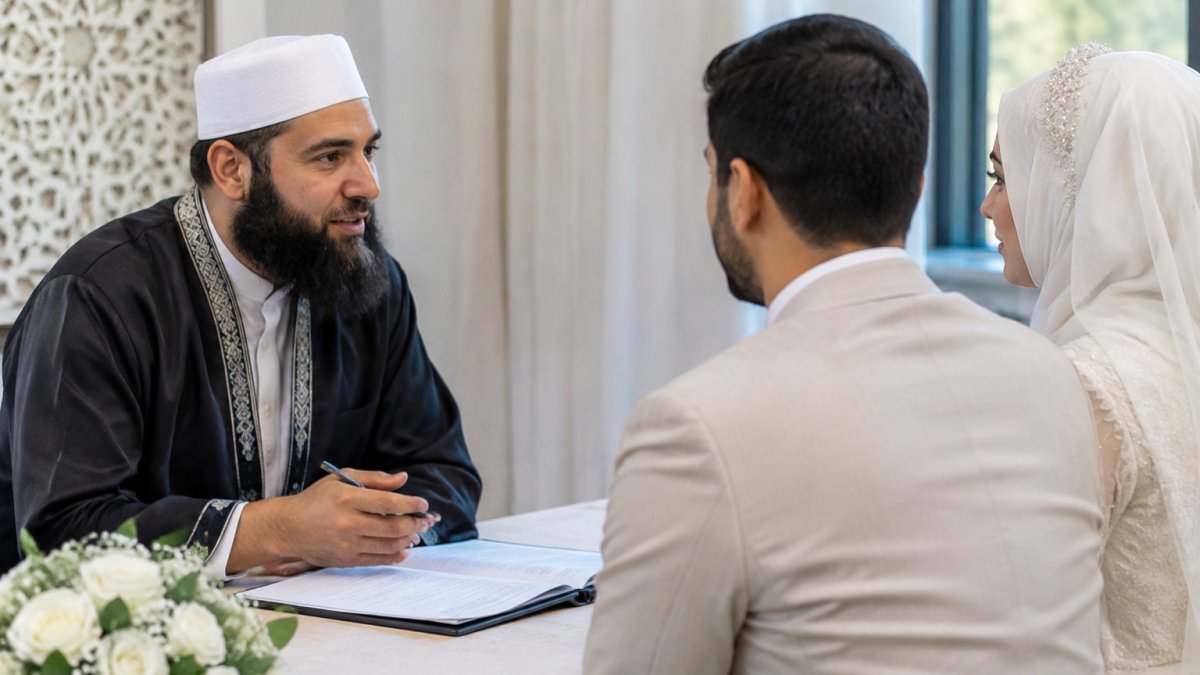
Inclusive celebrant services for everyone are professional ceremony services designed to welcome people of all faiths, backgrounds, abilities and family structures, without requiring anyone to hide who they are. Ceremonies With Faisal builds ceremonies around the people in the room rather than around a fixed template.
That distinction matters more than it sounds. A celebrant can legally marry you and still leave half your guests feeling like spectators. Inclusion is the part that decides whether a ceremony feels like yours.
Inclusive celebrant services typically cover:
- Weddings, elopements and commitment ceremonies
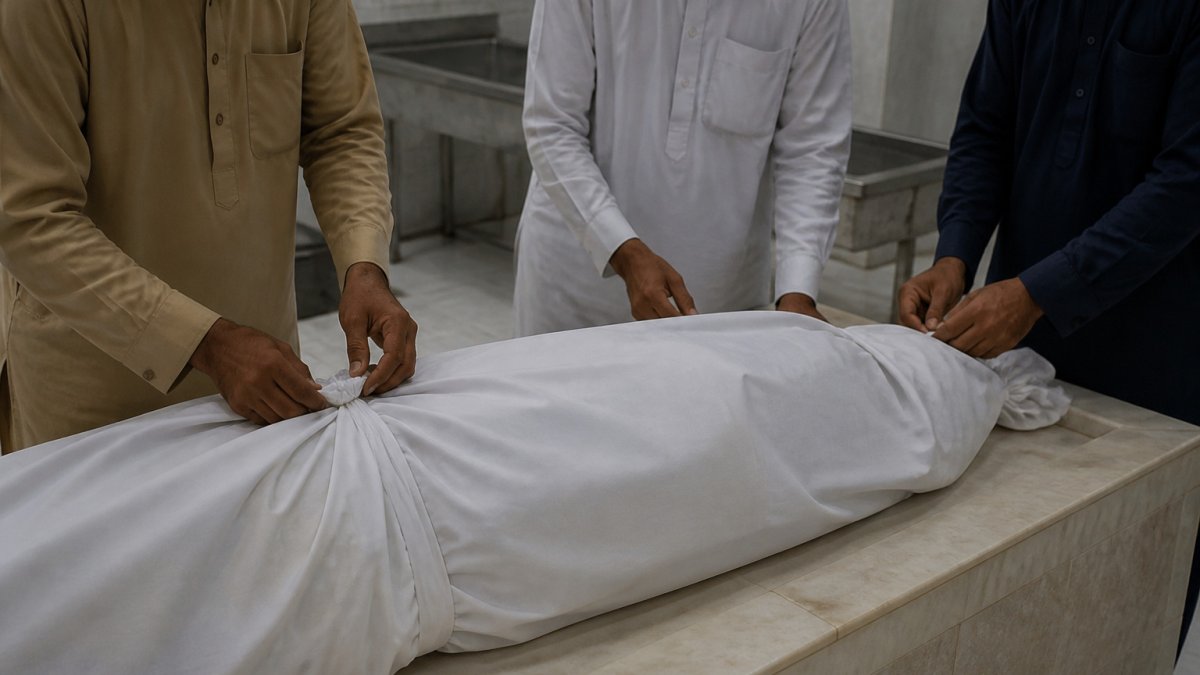
- Funerals and memorial ceremonies
- Naming ceremonies and vow renewals
- Interfaith, secular and mixed-tradition ceremonies
- Ceremony script writing and delivery
- Coordination with venues, families and other suppliers
Ceremony types: weddings, funerals, namings, and vow renewals
The same celebrant skills apply across every milestone, but the emotional register changes completely. A wedding leans warm and celebratory. A funeral ceremony needs restraint and room for grief. A naming ceremony sits somewhere between, joyful but grounded in family.
Vow renewals and commitment ceremonies suit couples who want a ceremony without the legal paperwork, or who married overseas and want to mark the moment again with the people who missed it.
How to assess whether a celebrant is genuinely inclusive
Most celebrant pages say they welcome everyone. Very few explain how they put that into practice. The difference shows up in the questions they ask you, not the claims they make.
A genuinely inclusive celebrant will typically:
- Ask how each person in the ceremony wants to be named and referred to, including pronouns, and confirm pronunciations in writing before the day
- Ask whether any guest has mobility, hearing, vision or sensory needs, and adjust seating, microphone use, ceremony length or lighting accordingly
- Offer to meet by phone, video or in person, and provide a written script draft rather than delivering something unrehearsed
- Explain how they handle religious, cultural or spiritual content when two or more traditions are present, and what they will do if family members disagree
- Confirm they hold current public liability insurance and can provide a certificate of currency on request
If a celebrant cannot answer these concretely, that is useful information. It does not automatically mean they are unsuitable, but it does mean you will need to do more of the planning yourself.
What to ask before you book
Six questions separate a good fit from a mismatch:
- Are you a registered marriage celebrant, and how do you handle the legal paperwork, including the Notice of Intended Marriage?
- How many meetings or calls do we get before the day, and is a rehearsal included?
- Can you hold a ceremony that blends two traditions, or none, and how do you decide what stays?
- What happens if a guest has mobility, sensory, hearing or communication needs?
- What is included in your fee, and what costs extra (travel, rehearsal, additional meetings, script rewrites)?
- Can you share two or three recent ceremonies you have conducted that resemble ours?
How to Find a Celebrant Who Respects Different Beliefs
Start by narrowing on values, not availability. A celebrant who lists inclusion as a specific commitment, rather than a generic claim, is usually the better starting point.
The Australian Government's marriage celebrant register lets you confirm someone is authorised before you invest time in a conversation. That check takes two minutes and rules out the wrong kind of "celebrant" entirely.
Beyond the register, look for:
- Language that names who they welcome, not just "all couples"
- Reviews that mention the celebrant adapting to family tension
- Willingness to meet by phone, video or in person
- Clear answers about how they handle religious and cultural content
LGBTQIA+, cultural, and accessibility considerations
Inclusion has three practical layers, and most celebrants handle only one well.
Cultural safety means the celebrant understands the specific traditions in the room and does not reduce them to decoration. LGBTQIA+ inclusion means no assumptions about names, pronouns, or who walks whom down the aisle. Accessibility means the ceremony itself is planned around guests who use wheelchairs, need hearing support, or find long standing periods difficult.
Ask directly. A celebrant who has thought about this will have concrete answers, not reassurance.
Planning an Interfaith Wedding Ceremony That Works for Both Families
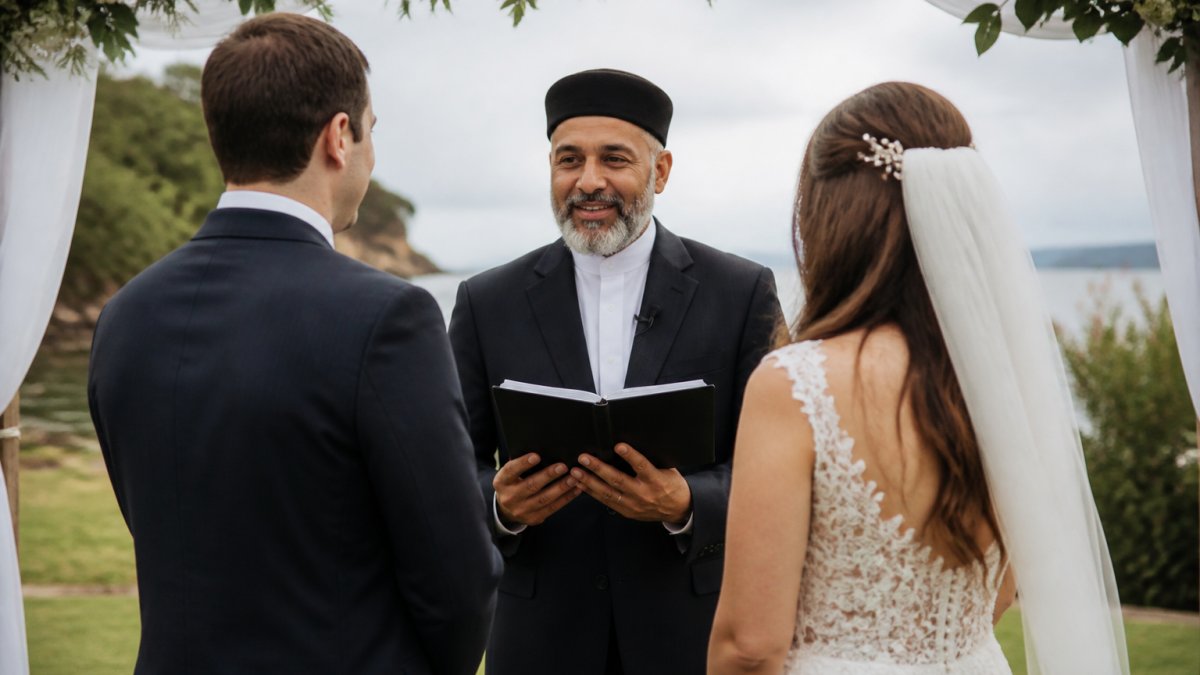
An interfaith wedding ceremony works when both traditions get a real moment, not a token gesture. The mistake is trying to merge everything into one blended ritual, which usually satisfies nobody.
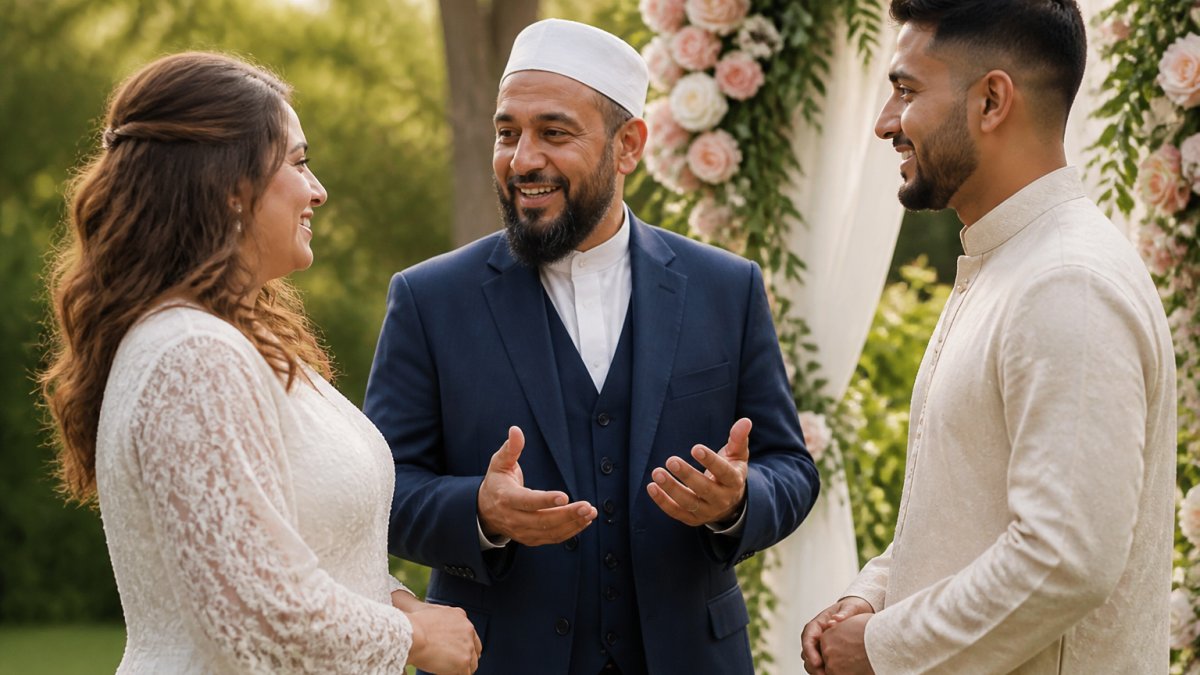
Instead, structure the ceremony in sections. One tradition opens, the other closes. Readings alternate. Vows can be spoken twice, once in each family's language or style. Guests from both sides recognise their own part of the ceremony, which is what stops the day feeling like a compromise.
Two practical points. First, agree on the non-negotiables with each family early, before the script is written. Second, decide who explains the ceremony to guests, because a short spoken introduction prevents confusion during unfamiliar rituals.
Working With a Civil Marriage Celebrant for a Non-Religious Ceremony
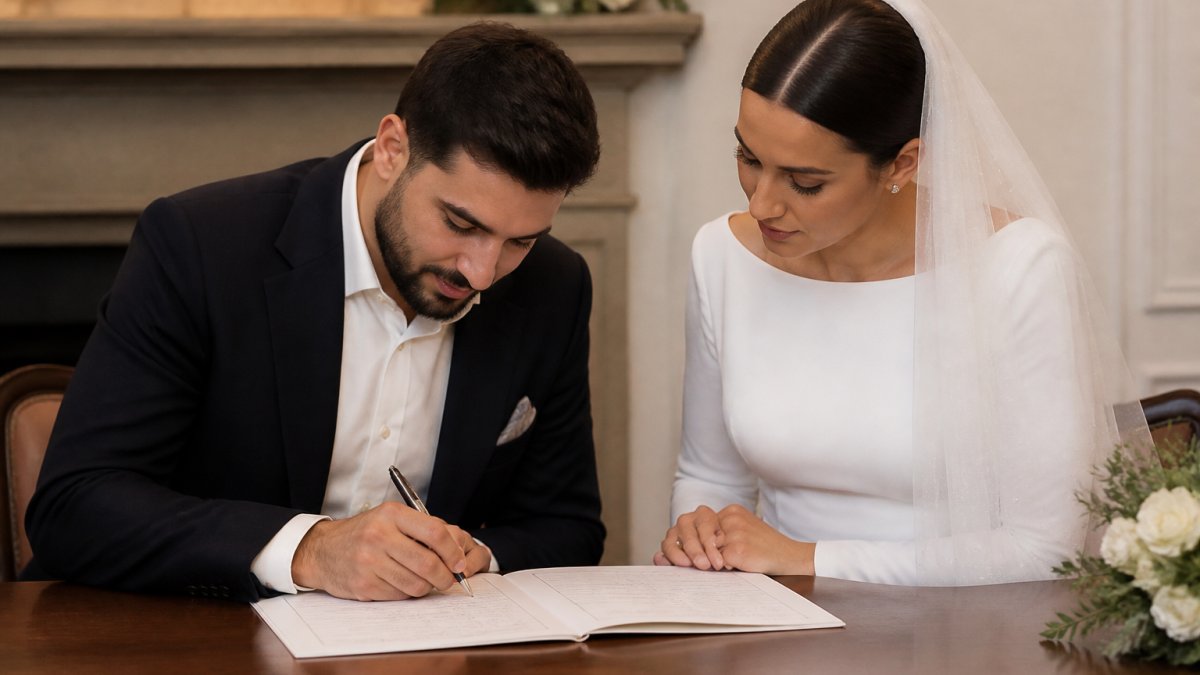
A civil marriage celebrant is a celebrant authorised to conduct legal marriages without any religious content. The ceremony is legally binding, entirely secular, and can still be deeply personal.
This suits couples who want meaning without doctrine. You can include readings, music, personal vows and family involvement, all without a religious framework. Many couples choose this option precisely because it lets them include cultural or spiritual elements on their own terms rather than a fixed order of service.
The legal side is straightforward but unforgiving of delays. The Notice of Intended Marriage must be lodged with your celebrant at least one month before the ceremony, and the Attorney-General's Department guidance on marriage sets out the requirements and the documents you will need to provide.
How a Celebrant Ceremony Script Comes Together
A celebrant ceremony script is written, not improvised. The process usually runs through four stages.
- Consultation. A phone call or face-to-face meeting to understand your story, your families, and what you want the room to feel like.
- Draft. The celebrant writes the script and sends it to you for changes.
- Revision. You mark what stays, what goes, and what needs different wording.
- Final read-through. A last check on names, pronunciations and timing before the day.
Expect at least two rounds of edits. If a celebrant offers no draft before the ceremony, that is a warning sign, not efficiency.
| Stage | What happens | Typical timing |
|---|---|---|
| Consultation | Discuss story, traditions, tone | 3-6 months before |
| Draft script | Celebrant writes first version | 4-8 weeks before |
| Revision | You request changes | 2-4 weeks before |
| Final check | Names, timing, logistics confirmed | 1 week before |
What Inclusive Celebrant Services Cost in 2026
Pricing for inclusive celebrant services depends on the ceremony type, the date, travel, and how much customisation you want. A simple registry-style ceremony and a fully personalised interfaith wedding sit at very different points on that scale.
Rather than quote a single figure that will not match your situation, the more useful approach is to understand what a transparent quote should contain, and how to compare two quotes side by side.
What a transparent quote should itemise
A written quote from an inclusive celebrant should normally separate:
- The ceremony itself (planning, script writing, delivery on the day)
- The number of meetings or calls included, and whether extra meetings are charged
- Rehearsal attendance, if offered
- Travel, and the distance threshold at which travel becomes an extra fee
- Any additional services such as MC duties, life coaching or public speaking
- Whether the fee includes the legal paperwork lodgement and the certificate of marriage
If a celebrant will not itemise, ask what is excluded. That is usually where the surprises live.
How to compare two quotes
Two quotes at the same headline price can differ substantially once inclusions are listed. A simple comparison works like this:
| Item | What to check |
|---|---|
| Base fee | Does it cover planning, script, and delivery? |
| Meetings | How many, and what happens if you need more? |
| Rehearsal | Included, optional, or not offered? |
| Travel | Free within how many kilometres, then what rate? |
| Script changes | Unlimited, or capped at a number of rounds? |
| Legal paperwork | Included, or charged separately? |
| Contingency | What happens if the ceremony is postponed? |
A quote that is higher but includes rehearsal, unlimited script revisions and travel within a reasonable radius may work out cheaper than a lower quote with add-ons.
What tends to push the price up
A common pattern is that cost rises with:
- Peak dates (spring and early autumn weekends, and dates with cultural or personal significance)
- Travel to regional or remote locations
- Ceremonies that blend two or more traditions and require research or consultation with family elders
- Additional services such as MC duties, vow writing support or life coaching
What tends to keep the price down
- Midweek and off-season dates
- Smaller ceremonies, including elopements and intimate gatherings
- A ceremony held at a venue the celebrant already knows well
- A shorter, simpler script that still reflects your values
Ceremonies With Faisal provides a written outline of inclusions before you commit, so you know what you are paying for. Contact Ceremonies With Faisal for current pricing and availability.
Frequently Asked Questions
What does an inclusive celebrant do?
An inclusive celebrant designs and leads ceremonies that welcome people of all backgrounds, faiths, genders, and abilities. This includes adapting wording, rituals, and logistics so every guest feels respected. For example, an inclusive celebrant might offer a ceremony script that blends two religious traditions, arrange seating for guests with mobility needs, or use gender-neutral language. The focus is on making the ceremony genuinely personal rather than following a fixed template.
How do I choose a celebrant who respects different beliefs and backgrounds?
Start by asking direct questions during your first consultation. Ask how they handle interfaith or non-religious ceremonies, what they do to include LGBTQIA+ couples, and whether they have experience with cultural or accessibility needs. Request a sample celebrant ceremony script to see how they write. A celebrant who listens more than they talk and asks about your family dynamics is usually a good sign. Trust your instinct: if you feel rushed or misunderstood, keep looking.
Can a civil ceremony include spiritual or religious elements?
Yes. A civil marriage celebrant can include readings, music, symbols, or moments of reflection that feel spiritual without being tied to a specific religion. Many couples choose a civil ceremony because they want legal recognition without a formal religious service, but they still want warmth and meaning. Your celebrant can help you select inclusive wording that honours your background while keeping the ceremony accessible to all guests.
What should I ask a celebrant before booking?
Ask about their registration, experience with ceremonies like yours, and how they handle the legal paperwork, including the Notice of Intended Marriage. Ask what is included in their fee and whether they charge extra for customisation. Also ask how many meetings or calls are included, and how they communicate in the lead-up to the day. For inclusive celebrant services, specifically ask how they adapt ceremonies for different beliefs, abilities, and family situations.