 ultimate-guide
Planning an Interfaith Wedding in Sydney: 2026 Guide
Table of Contents
- How to Choose a Celebrant for an Interfaith Wedding
- Legal Requirements for Marriage in Australia
- Interfaith Wedding Ceremony Script Examples
- Blending Cultural and Religious Traditions in Your Ceremony
- Managing Family Expectations and Navigating Sensitivities
- Budgeting for Dual-Ceremony Logistics and Vendor Vetting
- Conclusion
- Frequently Asked Questions
Last Updated: September 11, 2026
How to Choose a Celebrant for an Interfaith Wedding
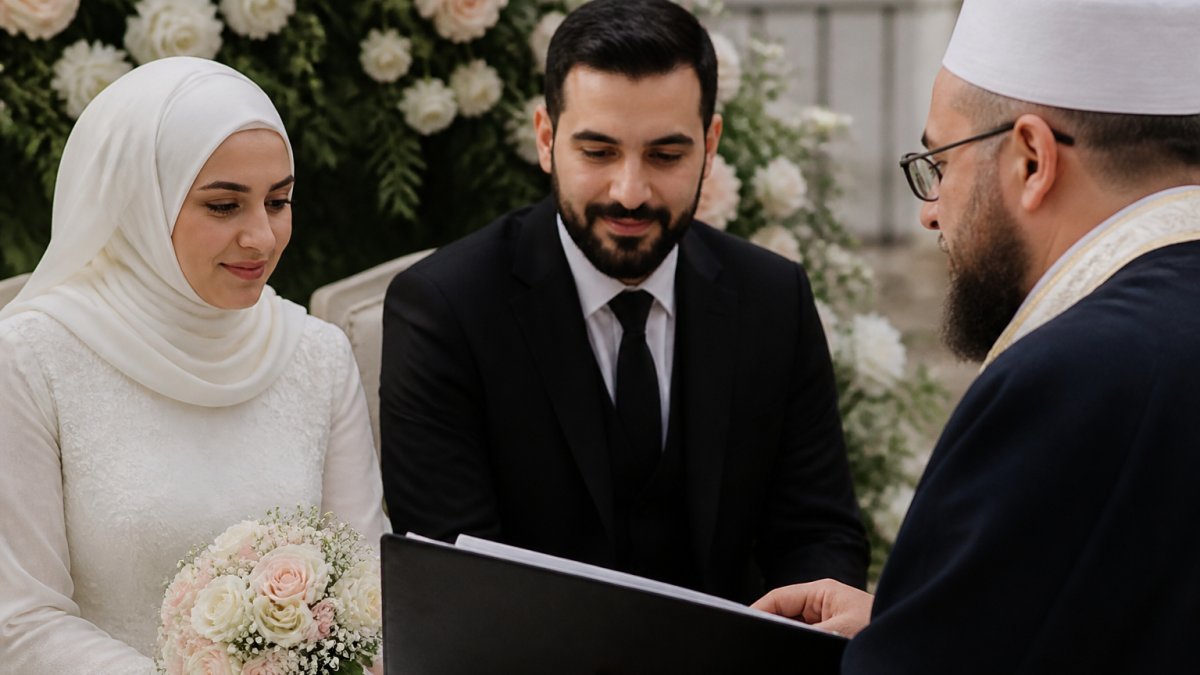
Planning an interfaith wedding in Sydney starts with one decision that shapes everything else: your celebrant. A celebrant who understands both faith traditions and Australian marriage law turns a complicated process into a calm one. According to the Attorney-General's Department on marriage in Australia, all marriages must be solemnised by an authorised celebrant, which makes this choice both personal and legal. This guide from Ceremonies With Faisal walks you through choosing a celebrant, the paperwork, ceremony scripts, and how to keep both families happy.
An interfaith wedding is a marriage ceremony that honours two different faith or cultural traditions within a single, unified celebration. For couples in Sydney, that often means blending Islamic and Christian elements, or combining religious and civil components.
Your celebrant should be a registered marriage celebrant with genuine experience across both traditions. Ask whether they have solemnised interfaith ceremonies before, how they handle prayers and readings from two faiths, and whether they can conduct a Nikah alongside the legal ceremony.
Questions to Ask Before You Book
Before you commit, ask these questions directly:
- Are you a registered marriage celebrant authorised to solemnise marriages in Australia?
- How many interfaith or blended ceremonies have you conducted?
- Can you include prayers, readings, and rituals from both traditions?
- Who lodges the Notice of Intended Marriage, and by when?
- How many planning meetings are included before the day?
A celebrant who answers with specifics, not vague reassurance, is the one to book.
Legal Requirements for Marriage in Australia
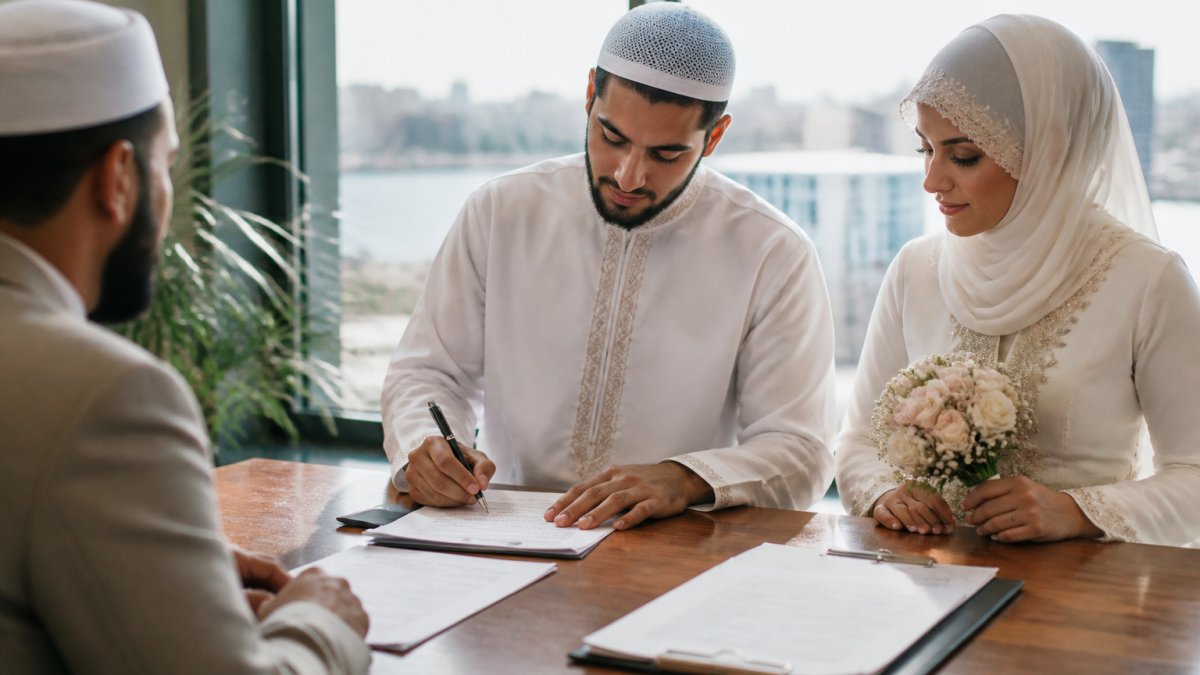
The legal side of an interfaith wedding is identical to any other marriage. Both parties must be at least 18, not already married, and must give at least one month's written notice before the ceremony. The Attorney-General's Department guide to getting married sets out these requirements, and a registered celebrant manages the process with you.
The key documents are:
- Notice of Intended Marriage (NOIM): lodged with your celebrant at least one month before the wedding
- Proof of identity and date of birth: birth certificates or passports
- Evidence of end of any previous marriage: divorce decree or death certificate, if applicable
- Two witnesses: both aged 18 or over, present at the ceremony
Your celebrant lodges the completed paperwork with the registry after the ceremony. A celebrant experienced in both Australian law and Islamic tradition can confirm a Nikah is legally recognised when performed within the legal framework.
The Notice of Intended Marriage and Other Paperwork
The Notice of Intended Marriage starts the legal clock. Lodge it with your celebrant at least one month before the ceremony, or up to 18 months in advance. For a dual ceremony, lodge the NOIM once and let your celebrant coordinate the legal signing at whichever ceremony you choose.
Interfaith Wedding Ceremony Script Examples
An interfaith wedding ceremony script is the written order of events that weaves two traditions into one coherent ceremony. A strong script names each tradition clearly, sequences rituals so they flow rather than compete, and gives both families a moment they recognise as their own.
A workable blended script usually follows this shape:
- Welcome and acknowledgement of both families and traditions
- Opening prayer or reflection drawn from one or both faiths
- Readings chosen from each tradition
- Vows, either standard legal vows, personal vows, or both
- Symbolic ritual, such as a ring exchange, unity candle, or shared blessing
- Signing of the register with two witnesses
- Closing blessing and introduction of the couple
Blending Vows from Two Traditions
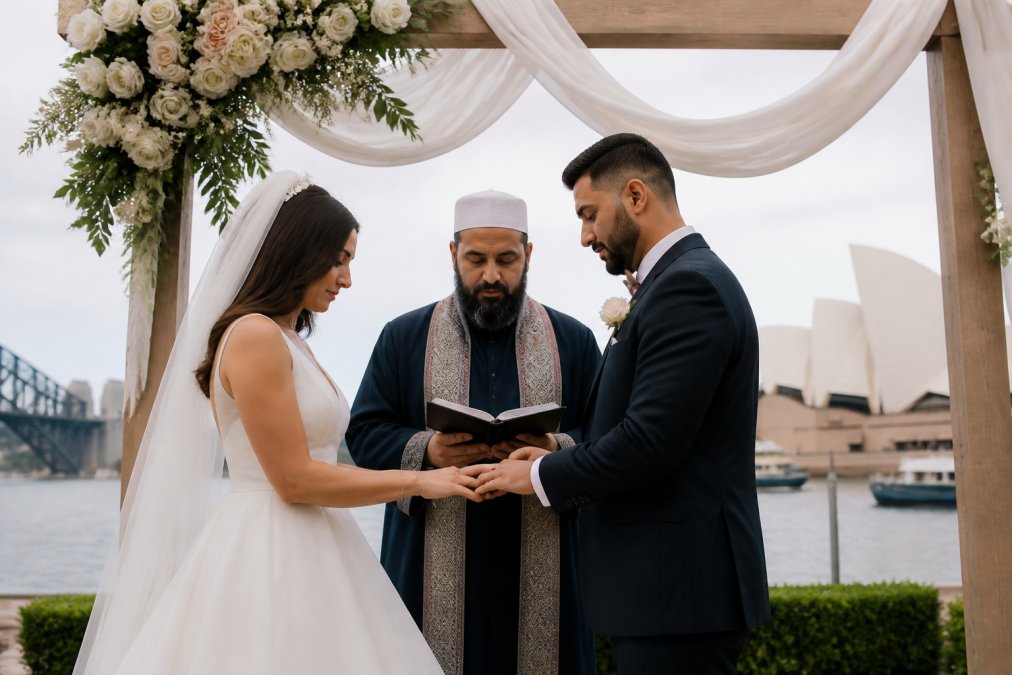
You can say the legal vows required under Australian law and add personal or religious vows alongside them. Many couples recite the legal vow first, then a second vow written in each family's tradition. Your celebrant should draft both sets and confirm the legal wording is intact.
A sample structure for blended vows:
"I, [Name], take you, [Name], to be my lawful wedded wife/husband. [Legal vow.] I also promise, before God and our families, to honour the faith you bring to our home and to build a life that holds both traditions with respect."
Blending Cultural and Religious Traditions in Your Ceremony
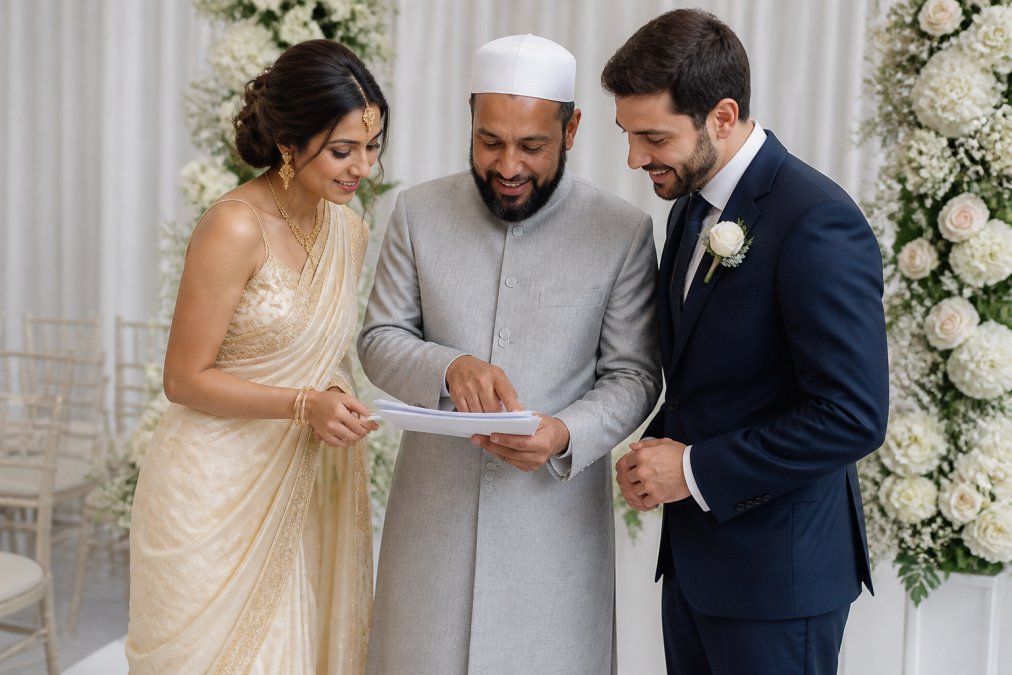
Give each tradition its own clear moment rather than mixing everything together. Couples often open with one tradition's prayer, include a reading from the other, and close with a shared ritual, so guests from each side can follow without feeling their tradition was diluted.
Practical touches that help:
- Print a ceremony program explaining each ritual and its origin
- Ask a family member from each side to give a short reading
- Choose music that represents both cultures
- Keep the ceremony to a length that respects guests unfamiliar with either tradition
Managing Family Expectations and Navigating Sensitivities
Family expectations are the hardest part of an interfaith wedding, and the least discussed. Relatives may worry their faith is being diluted, that a grandchild won't be raised in their tradition, or that the ceremony will quietly erase their side. Naming those fears early, in private conversations rather than at the wedding, defuses most of them.
Start With Pre-Marital Counselling, Not the Guest List
The highest-value step interfaith couples can take is pre-marital counselling with someone who understands both traditions.
Where to find it:
- Interfaith organisations, peak bodies and community groups often list counsellors experienced in mixed-faith relationships.
- Your celebrant, one who has solemnised many interfaith ceremonies has seen the same conflicts repeatedly and can recommend counsellors or facilitate conversations.
- Faith leaders from both traditions, some couples meet separately with a leader from each side, then together, to hear each tradition's concerns without either feeling ambushed.
- Relationship counselling services, general counsellors can help with communication patterns even without specific interfaith expertise.
The Five Conversations to Have Before You Plan Anything
These questions cause the most conflict when left unanswered. Have them early, in private, and write down what you agree.
- Which rituals are included, and which are not? Name each ritual explicitly. "We will include the Nikah and the exchange of rings, but not the Catholic Mass" is clearer than "we'll blend both."
- How will children be raised? This is the question relatives worry about most. You do not need a final answer before the wedding, but you do need a shared position you can communicate.
- What role will each family play? A reading, a blessing, a procession, a speech. Giving each side a named role reduces the feeling of being sidelined.
- What are the boundaries around alcohol, seating, and photography? Agree in advance so no one is negotiating on the day.
- How will you handle a relative who refuses to attend or who objects publicly? Decide together, before it happens, what your response will be.
Scripted Frameworks for Difficult Conversations
Vague reassurance rarely works. Specific, respectful framing does. Here are frameworks you can adapt.
When a parent says their faith is being diluted:
"We are not removing your tradition, we are giving it a named moment in the ceremony. Here is exactly where it sits in the order of events."
When a relative asks about children's religion:
"We have thought about this and we have a shared approach. We would rather tell you in person than have you hear it secondhand."
When one side wants a ritual the other side objects to:
"We hear that this matters to you. Here is what we can include, and here is what we cannot. Can we find a version that honours the intention without crossing the line?"
When a family member wants to invite more guests than the venue allows:
"We have a fixed capacity. Here is the number we can offer your side. Can you help us prioritise?"
When to Bring in a Neutral Voice
Your celebrant can act as a neutral voice, especially where religious sensitivity is involved. A celebrant who has conducted many interfaith ceremonies can reframe a conflict precisely because they are not part of either side. If conversations stall, consider one facilitated meeting with both sets of parents and your celebrant present.
What Not to Do
- Do not announce ceremony plans before you have spoken to each set of parents separately. Public announcements create positions people feel they cannot retreat from.
- Do not promise rituals you have not agreed between yourselves. A promise made to one family to smooth a conversation becomes a conflict with the other.
- Do not leave the children question unanswered. Relatives will fill the silence with their own assumptions, and those assumptions will harden.
- Do not treat a refusal to attend as a permanent rupture. Some relatives need time. Keep the invitation open and let the ceremony itself do the persuading.
Budgeting for Dual-Ceremony Logistics and Vendor Vetting
Some couples hold two ceremonies, a religious rite and a legal or civil ceremony, on the same day or across two dates. This doubles some costs and adds logistics single-ceremony couples never face.
What Actually Drives the Cost Up
A dual ceremony is not simply "two of everything." The cost multipliers vary by line item:
| Item | Single Ceremony | Dual Ceremony | What Drives the Difference |
|---|---|---|---|
| Venue hire | One booking | Two bookings, or one with a room change | Room-change fees, second set-up/tear-down, extended staff hours |
| Celebrant or officiant | One fee | Confirm whether one celebrant covers both rites | A single registered celebrant can often handle both the legal and religious components; a separate religious officiant adds a second fee |
| Catering | One service | Two services, or one extended service | Second service charge, additional dietary coverage, longer staff hours |
| Attire | One outfit | Often two outfits | Cultural or religious dress for one rite, formal wear for the other |
| Travel and setup | One location | Two locations or a longer day | Transport between venues, second décor set-up, guest transfer costs |
| Photography | Standard coverage | Extended coverage | More hours, second location, potentially a second shooter |
| Stationery | One program | Two programs or a combined program | Design and print for each rite |
Pricing for celebrant services depends on scope, dates, and customisation, so request a quote directly. The same applies to venue and catering, ask for a written quote that itemises the second ceremony separately.
Three Budgeting Rules That Save Money
- Book one venue with two spaces. A single venue with a garden and an indoor room often costs less than two separate venues once you factor in transport, second set-up, and guest transfers.
- Ask whether one celebrant can cover both rites. A registered marriage celebrant who is also authorised within your faith tradition can often conduct the legal ceremony and the religious rite, avoiding a second officiant fee.
- Run one catering service, not two. A single extended service with a menu that covers both traditions' dietary requirements is usually cheaper than two separate services.
Vendor Vetting for Cultural Sensitivity
When booking photographers, caterers, or venue staff for a multicultural ceremony, cultural fluency matters as much as price. Use this checklist:
- Ask for one example of a ceremony they've worked that involved two faiths. The answer tells you whether they'll adapt or whether you'll be explaining your own wedding to them on the day.
- Ask how they handle dietary requirements across two traditions. A caterer who names specific requirements (halal, kosher, vegetarian, no alcohol) without prompting is safer than one who says "we'll work something out."
- Ask about photography and videography restrictions during prayers or rituals. Some traditions restrict flash, movement, or photography during specific moments. A photographer who has worked interfaith weddings will already know to ask.
- Ask about seating customs. Some ceremonies require gender-segregated seating, family-order seating, or specific placement for elders. Confirm the venue can accommodate this without last-minute rearrangement.
- Ask how they handle language. If readings or vows will be in more than one language, confirm the vendor can work with a bilingual MC or printed program.
- Ask for written confirmation of cultural requirements. Putting dietary, photography, and seating requirements in the booking contract prevents misunderstandings on the day.
A Simple Dual-Ceremony Budget Framework
Build your budget in three layers:
- Fixed legal costs, celebrant fee, NOIM lodgement, certificate. The same whether you hold one ceremony or two.
- Per-ceremony costs, venue, catering, attire, stationery, photography hours. Multiply by the number of ceremonies.
- Bridge costs, transport between venues, second set-up, extended staff hours, guest transfers. Unique to the dual format and the line most couples forget.
With those three layers, you can see whether a dual ceremony is genuinely affordable or whether a single blended ceremony with distinct moments for each tradition delivers a similar emotional result.
Conclusion
An interfaith wedding asks you to hold two traditions, two families, and a legal process together without losing either. The couples who get it right plan early and choose a celebrant who understands both faith and law. Ceremonies With Faisal, led by Faisal Akhtar, is a registered marriage celebrant and experienced Sheikh who specialises in Muslim, civil, and interfaith ceremonies. His approach integrates Islamic tradition with Australian legal requirements, offers personalised ceremony scripts, and provides guidance through the Notice of Intended Marriage and beyond. Get started with Ceremonies With Faisal and create a ceremony that honours both of you.
Frequently Asked Questions
How do you balance two different religious traditions in one wedding ceremony?
Balancing two traditions starts with open conversation between you, your partner, and your celebrant. Identify which rituals hold the most meaning for each side, then sequence them so neither feels like an afterthought. Many couples alternate elements: a reading from one faith, a symbolic gesture from the other, then a joint vow. A celebrant experienced in interfaith weddings can help you structure the ceremony flow so every tradition is honoured with equal respect and clarity.
What are the legal requirements for marriage in Australia?
You must complete a Notice of Intended Marriage form at least one month before the ceremony and give it to your registered celebrant. Both parties need to provide original birth certificates or passports, and if previously married, divorce or death certificates. Two witnesses over 18 must be present. Your celebrant will guide you through the process and ensure your interfaith wedding is legally binding under Australian law.
How can a celebrant help facilitate an interfaith wedding?
A celebrant trained in interfaith ceremonies helps you design a ceremony script that respects both traditions without favouring one. They coordinate with religious leaders if needed, suggest symbolic gestures that resonate across faiths, and manage the ceremony flow so it feels unified. They also handle legal paperwork and can recommend pre-marital counselling resources. Choosing a celebrant with interfaith experience reduces stress and ensures your ceremony reflects your shared values.
What are some ways to include family traditions from both faiths?
You can include a Nikkah contract signing alongside a Christian blessing, or incorporate cultural readings in multiple languages. Other ideas: a unity candle, a handfasting ribbon, or a shared meal ritual. Ask each family to contribute one tradition they cherish, then weave them into the ceremony script. Your celebrant can help you place these moments so they flow naturally and feel inclusive for all guests.
How do you handle potential family conflict during wedding planning?
Start by having honest conversations with both families early. Acknowledge their concerns and explain your vision for a blended ceremony. Set clear boundaries about decisions that are yours to make, while offering family members specific roles they can own. If tension rises, a celebrant experienced in interfaith weddings can act as a neutral facilitator. Pre-marital counselling also gives you tools to manage expectations and keep the focus on your commitment.
Are there specific venues that are better suited for interfaith ceremonies?
Neutral venues like gardens, community halls, and boutique event spaces work well because they do not favour one faith's symbols. Look for a venue that allows you to bring in your own decorations, readings, and ritual items. Some venues have interfaith experience and can accommodate multiple ceremony setups. Check capacity, accessibility, and whether you can hold both a religious and civil component in one location to simplify logistics and budgeting.