 ultimate-guide
Legal Requirements for Nikah in Australia: 2026 Guide
Last Updated: October 22, 2026
Quick Summary
A nikah in Australia is only legally binding when solemnised by an authorised marriage celebrant under the Marriage Act 1961 and registered with the relevant state or territory births, deaths and marriages office. A religious-only nikah performed by an unregistered imam has no legal standing.
- Lodge the Notice of Intended Marriage with your celebrant at least one calendar month before the wedding date.
- You need two witnesses aged 18 or over present at the ceremony to sign the marriage documents.
- Both parties must be at least 18 and free to marry, with divorce or death certificates for any prior marriage.
- Australian law does not require a wali, but a celebrant can build the wali's consent into the legal ceremony.
- Check a celebrant's registration through the Attorney-General's Department's public register before you book.
Table of Contents
- Is Nikah Legally Binding in Australia?
- Notice of Intended Marriage for Nikah: What You Must Know
- Nikah Witnesses Requirements: Who Can Sign and Why It Matters
- Nikah and Civil Marriage in Australia: How to Combine Both
- Legal Requirements for Nikah Australia: Eligibility, Consent and Documents
- Authorised Celebrant, Registration and the Role of the Wali
- Common Pitfalls and How to Avoid Them
- Frequently Asked Questions
Is Nikah Legally Binding in Australia?
A nikah on its own is not automatically legally binding in Australia. For a nikah to be recognised under Australian law, it must be solemnised by an authorised marriage celebrant, follow the requirements of the Marriage Act 1961, and be registered with the relevant state or territory births, deaths and marriages office.
That single distinction explains most of the confusion we see at Ceremonies With Faisal. Couples book an imam, sign a contract, celebrate with family, and only later discover the marriage was never registered. The religious ceremony was real. The legal marriage was not.
Australian law separates the two. A religious ceremony carries spiritual weight; a legal marriage carries legal weight. You can have both in one event, and for most Muslim couples that is exactly the goal.
The legal requirements for nikah in Australia therefore split into two tracks: what your faith requires, and what the Attorney-General's Department marriage guidance requires. Getting both right in a single ceremony is entirely possible. It just needs planning.
Notice of Intended Marriage for Nikah: What You Must Know
Every legal marriage in Australia starts with the Notice of Intended Marriage (NOIM). The NOIM is the official form you lodge with your celebrant to declare your intention to marry, and it must be signed and witnessed before the ceremony can proceed.
The timing rule catches people out. You must give your celebrant the completed NOIM at least one calendar month before the wedding date. Not four weeks exactly, but one clear calendar month.
There are limited exceptions. A prescribed authority can shorten the notice period in specific circumstances, such as a medical condition or travel commitments, but approval is not guaranteed and the process takes time. Treat the one-month rule as fixed.
Your celebrant lodges the NOIM and later registers the marriage. At Ceremonies With Faisal, we walk couples through the NOIM line by line, because a misspelled name or wrong date of birth on this form creates problems at registration that are far harder to fix later.
Nikah Witnesses Requirements: Who Can Sign and Why It Matters
You need two witnesses, both aged 18 or over, present at the ceremony to sign the marriage documents. That is the legal minimum under Australian law, and it applies to a nikah just as it applies to any civil marriage.
Here is where religious and legal expectations can diverge. Many families want Muslim witnesses, often the wali and a senior family member, and that is fine. The law does not require witnesses to share your faith. It requires them to be adults who are present, who understand what they are signing, and who can sign their names.
A common mistake is assuming the imam counts as a witness. He does not, unless he is also the authorised celebrant and signs in that capacity. Line up two separate witnesses who will definitely attend.
The witnesses sign the official certificates after the ceremony, alongside the couple and the celebrant. If a witness is unavailable on the day, the ceremony cannot be properly completed. Confirm your witnesses early and have a backup in mind.
Nikah and Civil Marriage in Australia: How to Combine Both
Combining a nikah and a civil marriage into one ceremony is the cleanest path for most couples, and it is what we recommend at Ceremonies With Faisal. One event, one guest list, one set of documents, and full legal recognition.
The mechanics are straightforward when your celebrant is also equipped to lead the Islamic elements. The ceremony opens with the religious components, the wali's involvement, the consent and the dua, then moves into the legal formalities: the declarations, the signing of the certificates, and the registration.
The alternative is two separate events. Some couples hold a religious nikah first, then a civil ceremony later. That works, but it doubles your costs and logistics, and the nikah alone provides no legal protection in the interim.
What most guides miss is that a registered celebrant who understands Islamic tradition can handle both roles without either feeling bolted on. The ceremony stays spiritually authentic and legally compliant.
Legal Requirements for Nikah Australia: Eligibility, Consent and Documents
The legal requirements for nikah in Australia come down to eligibility, consent and documentation, and each one is checked before the ceremony proceeds.
Eligibility means you must be at least 18 years old. If either party is under 18, a court approval process applies and the requirements are strict.
Consent must be free and voluntary from both parties. The bride's consent matters as much as the groom's, and duress voids the marriage.
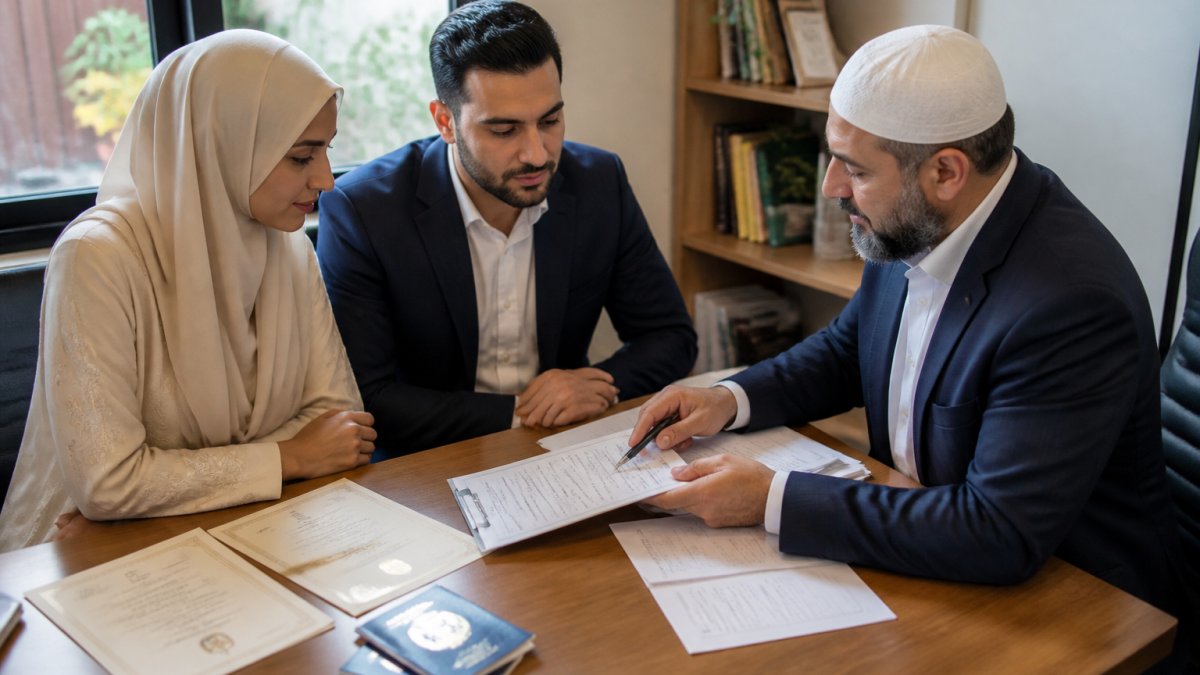
Documents must be originals or certified copies. The exact list depends on your circumstances, so use the audience-specific checklist below rather than a one-size-fits-all list.
For Australian citizens and permanent residents:
- Birth certificate or current passport (proof of date and place of birth)
- Photo identification (driver licence or passport)
- Divorce certificate, if either party was previously married
- Death certificate, if a former spouse has died
- Change-of-name documentation, if applicable (marriage certificate, deed poll, or statutory declaration)
For overseas visitors marrying here:
- Current passport (the most commonly accepted proof of identity and date of birth for visitors)
- Birth certificate, where available
- Divorce certificate or death certificate for any prior marriage
- Certified English translation of any non-English document
- Visa or entry documentation, if requested by the celebrant
A common pattern is for overseas couples to arrive with a passport only.
Prior marriages, divorce and name changes are the three areas that stall the most ceremonies. If you have divorced, bring the divorce certificate, not a statutory declaration saying you are divorced. If a former spouse has died, bring the death certificate. If you have changed your name, bring the document that connects your birth name to your current name.
Translations must be certified. A translation prepared by a qualified translator, with a statement confirming the translation is accurate, is the standard celebrants expect.
Interpreters may be needed at the ceremony itself if either party is not fluent in English. The celebrant must be satisfied that both parties understand the declarations they are making.
Authorised Celebrant, Registration and the Role of the Wali
Only an authorised marriage celebrant can legally solemnise your marriage. This is the requirement that decides whether your nikah is recognised, and it is the one couples most often overlook.
What "authorised" means in practice. A celebrant must be registered with the Attorney-General's Department, hold current registration, and comply with the Act's requirements, including the NOIM, the one-month notice period, the declarations, and the registration of the marriage.
The wali's role is religious, not legal. Australian law does not require a wali, and a marriage is not invalid merely because a wali was not present.
What happens if the nikah was religious-only. A nikah performed by an imam who is not an authorised celebrant has no legal standing in Australia.
Registration and the marriage certificate. After the ceremony, the celebrant registers the marriage with the state or territory authority. You then apply for your official marriage certificate, which is the document you will need for name changes, visas and legal matters.
Common Pitfalls and How to Avoid Them
The same mistakes surface again and again, and nearly all of them are avoidable with planning.
Lodging the NOIM too late. This is the most common and most painful. One calendar month is a hard floor.
Assuming the religious ceremony is enough. A nikah without an authorised celebrant is not a legal marriage. Confirm your celebrant's registration before you book anything.
Missing documents. A divorce certificate left at home, an expired passport, or an untranslated overseas birth certificate will stall the process. Build your document folder early.
Unclear witness arrangements. Two adults, 18 or over, present and able to sign. Confirm them and have spares.
Name mismatches. The name on your birth certificate, your passport and your NOIM should align. If you have changed your name, bring the paperwork.
At Ceremonies With Faisal, Faisal Akhtar is both a registered marriage celebrant and an experienced Sheikh, which means the religious and legal sides are managed by one person who understands how they fit together.
Frequently Asked Questions
Is a Nikah legally recognised in Australia?
A Nikah is legally recognised only if it meets the requirements of the Marriage Act 1961. This means the ceremony must be performed by an authorised marriage celebrant, you must have given at least one month's notice via the Notice of Intended Marriage (NOIM), and both parties must provide valid identification and consent. A religious-only Nikah without a registered celebrant does not create a legally binding marriage, even if it is religiously valid.
Can you have a female witness for Nikah?
Australian law requires two witnesses who are at least 18 years old, but does not specify gender. So yes, a female witness is legally acceptable. However, some Islamic traditions prefer two male witnesses or one male and two female witnesses. To satisfy both legal and religious requirements, discuss the witness arrangement with your celebrant and imam before the ceremony so there are no surprises.
What documents do you need for a Nikah in Australia?
You will need original birth certificates or passports, photo identification, and if either party has been married before, a divorce certificate or death certificate of the former spouse. For overseas visitors, foreign documents must be translated into English by a certified translator. The Notice of Intended Marriage form must be signed in the presence of an authorised celebrant, who will also witness your signatures.
Can a Nikah ceremony also be a civil marriage?
Yes, many couples choose a combined ceremony where the Nikah and civil marriage are conducted together by a registered celebrant who understands Islamic traditions. This ensures the marriage is legally valid under Australian law while fulfilling religious obligations. If you have already had a religious-only Nikah, you can later have a civil ceremony to formalise the marriage legally.
What is the minimum age to marry in Australia?
The minimum age to marry in Australia is 18 years. If one party is between 16 and 18, they may apply to a court for approval, but this is rare and requires special circumstances. Parental consent alone is not enough for a legal marriage under 18. Both parties must give free and informed consent, and the celebrant must be satisfied of this before solemnising the marriage.
Do you need a wali for a legally valid Nikah in Australia?
Australian law does not require a wali (guardian) for a marriage to be legally valid. However, in Islamic tradition, a wali is often required for the Nikah to be religiously valid. Many celebrants and imams work together to ensure both legal and religious requirements are met. If you have concerns about the role of the wali, speak with your celebrant and religious scholar before the ceremony.
The legal requirements for nikah in Australia are not complicated, but they are unforgiving of small oversights. A missed NOIM deadline or an unregistered celebrant can leave you spiritually married and legally single. Ceremonies With Faisal brings both sides together: registered celebrant authority, deep knowledge of Islamic tradition, and a personalised approach that reflects your story. Get started with Ceremonies With Faisal and walk into your ceremony knowing every requirement is met.