 how-to
How to Register Nikah in Australia: 2026 Legal Guide
Table of Contents
- Step 1: Confirm Your Eligibility for Marriage Under Australian Law
- Step 2: Lodge Your Notice of Intended Marriage (NOIM)
- Step 3: Understand the Legal Requirements for Marriage in Australia
- Step 4: Finding a Registered Marriage Celebrant for Nikah
- Step 5: How to Write a Muslim Marriage Contract (Nikah Nama)
- Step 6: The Nikah Ceremony and Legal Solemnisation
- Step 7: Registering Your Marriage and Getting the Certificate
- Common Mistakes to Avoid
- Frequently Asked Questions
Last Updated: September 16, 2026
Step 1: Confirm Your Eligibility for Marriage Under Australian Law
Before you can register nikah in Australia, both parties must meet the eligibility criteria set out in the Marriage Act 1961. You must be at least 18 years old, not currently married to anyone else, and not in a prohibited relationship. Each person must give free and informed consent.
If either party has been married before, you will need to provide evidence that the previous marriage has ended. That means a divorce certificate or a death certificate, depending on the circumstances.
There is one exception to the age rule. A person aged 16 or 17 may apply to a court for an order authorising marriage, but this requires parental consent and a judge's approval. In practice, this pathway is rare.
Step 2: Lodge Your Notice of Intended Marriage (NOIM)
The Notice of Intended Marriage is the form that starts the legal process. It is a prescribed form under the Marriage Act 1961 and must be lodged with your authorised celebrant at least one month before the ceremony, and no more than 18 months in advance. The NOIM is valid for 18 months from the date you lodge it.
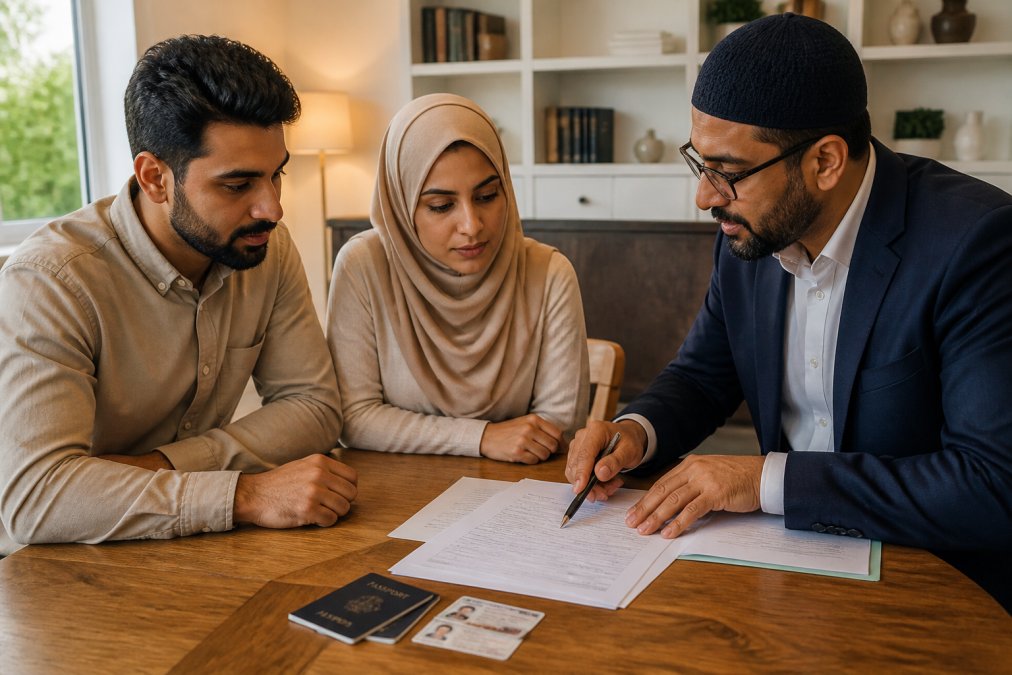
Your celebrant will witness your signatures on the NOIM.
Who can witness the NOIM if one party is overseas
This is the detail most couples miss. If your partner is outside the country, the NOIM can be signed before an Australian diplomatic or consular officer, or before a notary public in the country where they are located. The signed original must then reach your celebrant before the ceremony. A scanned copy is not enough to lodge the notice, the celebrant needs the original, or a copy certified in the manner the celebrant accepts.
What happens if your details change after lodging
If either party changes address, or if a name changes, tell your celebrant before the ceremony. The celebrant can note the correction, but significant changes, such as a change of party, may require a fresh NOIM and a fresh one-month waiting period.
Shortening the one-month waiting period
The one-month waiting period can only be shortened in limited circumstances, and only by a prescribed authority. The usual grounds are:
- Employment or travel commitments that cannot reasonably be changed
- A medical condition that makes bringing the date forward necessary
- A court order or other legal requirement
- An error in the original NOIM that needs correcting
Step 3: Understand the Legal Requirements for Marriage in Australia
The legal requirements for marriage in Australia are strict, and failing to meet them means your ceremony will not be recognised. Three things must happen: you must lodge a valid NOIM, you must have two witnesses present, and your celebrant must be authorised to solemnise the marriage.
Documents Required for Registration
You will need to provide original documents, not photocopies. The celebrant must sight them before the ceremony.
- Birth certificate or passport (one form of primary ID)
- Photo identification (driver's licence or passport)
- Divorce certificate (if previously married)
- Death certificate (if widowed)
- Change of name certificate (if applicable)
Witnesses and the Marriage Register
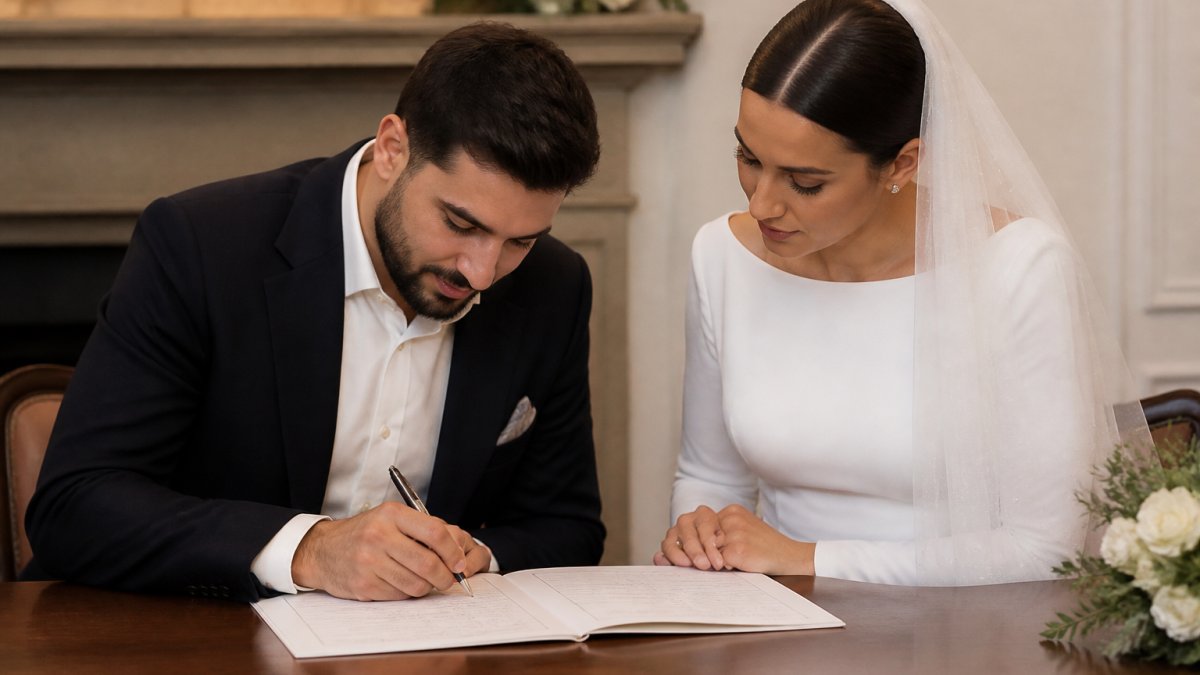
Two witnesses aged 18 or over must be present at the ceremony. They do not need to be Australian citizens or residents. Their signatures go on the marriage register alongside yours and the celebrant's.
Step 4: Finding a Registered Marriage Celebrant for Nikah
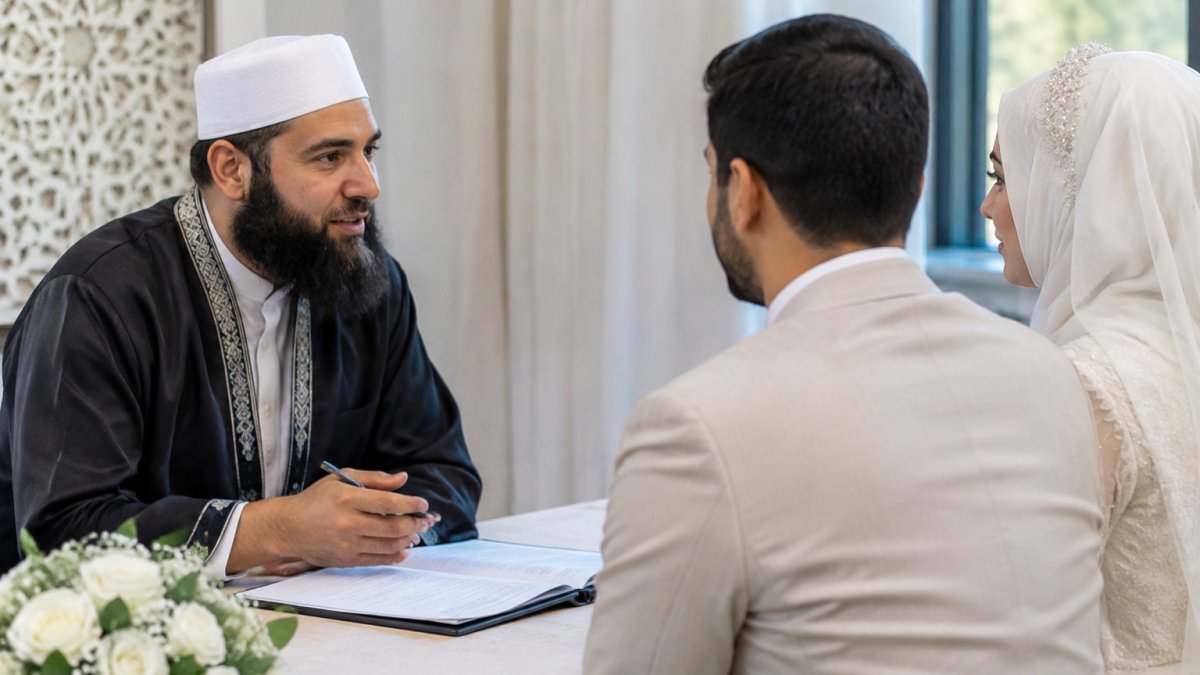
Finding a registered marriage celebrant for nikah means looking for someone who is both authorised under Australian law and understands Islamic requirements. Not every celebrant fits both categories.
Step 5: How to Write a Muslim Marriage Contract (Nikah Nama)
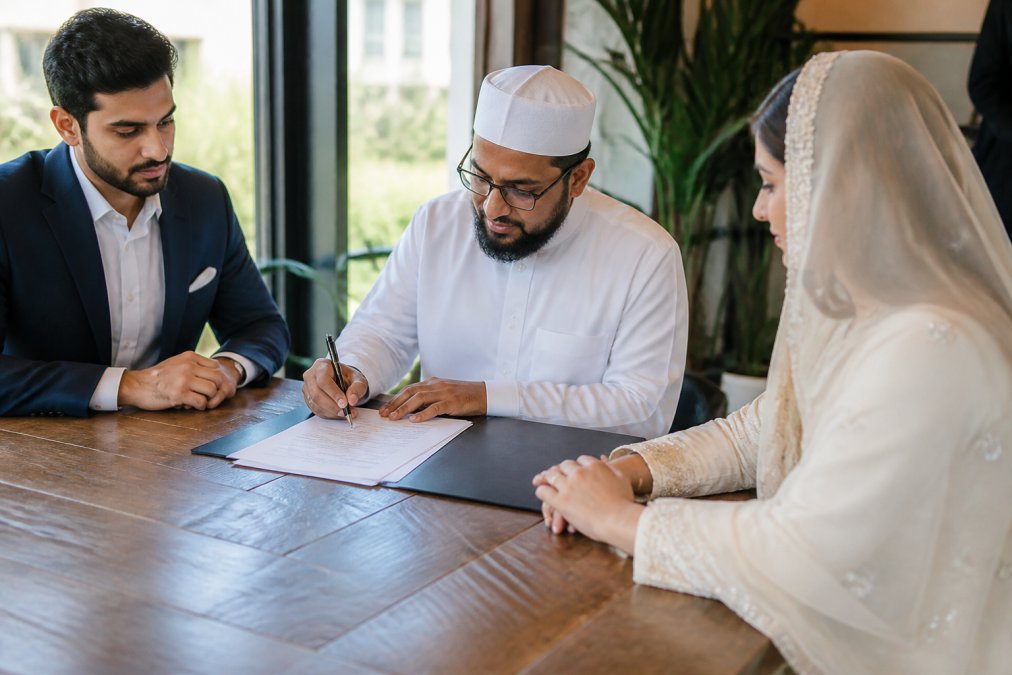
A Muslim marriage contract, known as a Nikah Nama, is a written record of the marriage agreement between the bride and groom. It typically includes the names of both parties, the witnesses, the mahr (dowry), and any conditions the couple agrees to.
Step 6: The Nikah Ceremony and Legal Solemnisation
The Nikah ceremony and the legal solemnisation can happen together or separately. Many couples choose to combine them, which means the religious ceremony fulfils the legal requirements at the same time.
The two-step bridge: religious Nikah plus civil registration
This is the distinction that causes the most confusion. In Australia, a Nikah performed by an imam who is not a registered marriage celebrant is a religious event only. It does not create a legal marriage. To be legally married, the ceremony must be solemnised by an authorised celebrant, and the legal words required by the Marriage Act 1961 must be spoken.
The practical bridge is one of two paths:
- One ceremony, dual purpose. Your celebrant is both authorised under Australian law and able to conduct the Nikah. The religious and legal elements happen in the same ceremony, and the register is signed on the day.
- Two ceremonies. You hold a Nikah with your imam, then a separate civil ceremony with a registered celebrant. The civil ceremony is what creates the legal marriage.
The legal words that cannot be omitted
Even in a religious ceremony, the celebrant must state the legal monitum and each party must say the required vows. These words are prescribed and cannot be replaced with religious wording alone. A Nikah that includes only ijab and qubul, without the legal monitum and vows, does not meet the legal requirement.
Overseas-born applicants: the document checklist that trips people up
If you were not born in Australia, or you do not hold a standard Australian driver's licence, your document set looks different from the standard checklist. Gather these early:
- Overseas birth certificate, with a certified English translation if not in English
- Current passport (this often serves as both primary ID and photo ID)
- Visa or entry document showing your current status
- Divorce certificate or death certificate from the overseas jurisdiction, translated if needed
- Change of name certificate or marriage certificate from a previous marriage, translated if needed
Visa implications: what a registered Nikah does and does not do
A legally registered marriage supports a partner visa application, but it is not automatic. You will need to provide evidence of your relationship, including the marriage certificate, joint financial arrangements, and statements from people who know you as a couple.
Step 7: Registering Your Marriage and Getting the Certificate
After the ceremony, your celebrant lodges the marriage with the Registry of Births, Deaths and Marriages in the relevant state or territory. You do not need to do this yourself.
Applying for a Partner Visa After Nikah
A legally registered marriage supports a partner visa application, but it is not automatic. You will need to provide evidence of your relationship, including the marriage certificate, joint financial arrangements, and statements from people who know you as a couple.
Common Mistakes to Avoid
The most common mistake is assuming a Nikah ceremony alone creates a legal marriage. It does not. Without a registered celebrant and the proper paperwork, you are not legally married.
Other frequent errors include:
- Lodging the NOIM too late and having to postpone the ceremony
- Using an unregistered celebrant who cannot legally solemnise the marriage
- Failing to provide original documents when required
- Not checking whether previous marriages have been properly dissolved
Frequently Asked Questions
Is a Nikah ceremony legally recognised as a marriage under the Marriage Act 1961?
A Nikah is only legally recognised under the Marriage Act 1961 if it is performed by an authorised celebrant and follows all legal requirements, including the lodgement of a valid Notice of Intended Marriage. The religious ceremony alone, without a registered celebrant, does not create a legally binding marriage. To register nikah in Australia lawfully, you must ensure a registered marriage celebrant or a state registry officiant solemnises the union and completes the official paperwork.
How do I get a Nikah certificate in Australia?
After your Nikah ceremony, your celebrant will lodge the required documents with the Registry of Births, Deaths and Marriages in your state. You can then apply for an official marriage certificate, which is the legal proof of marriage. A religious Nikah certificate issued by a mosque or imam is not the same as a government-issued marriage certificate. The official certificate is what you need for legal purposes such as visa applications or name changes.
Do I need a civil marriage registration if I have already had a Nikah?
Yes, you do. A Nikah performed without a registered celebrant does not automatically register your marriage under Australian law. You must complete the civil registration process through a registered marriage celebrant or state registry. This involves lodging the NOIM, providing identity documents, and having the ceremony solemnised according to legal requirements. Only then will your marriage be legally valid and a marriage certificate issued.
Can a registered marriage celebrant perform both a Nikah and a civil ceremony?
Yes, a registered marriage celebrant who is also authorised to perform Islamic marriages can conduct a ceremony that includes both the Nikah and the legal solemnisation. This means you can have one unified ceremony that satisfies both your religious and legal obligations. When finding a registered marriage celebrant for nikah, confirm they are authorised under the Marriage Act 1961 and experienced in integrating Islamic traditions with civil requirements.