 comparison
Legal Marriage vs Religious Nikah: What Couples Must Know
Table of Contents
- Legal Marriage vs Religious Nikah: The Core Difference
- Is Nikah Legally Recognised? Religious Validity vs State Recognition
- Nikah Requirements in Islam and Under Australian Law
- How to Register a Marriage After Nikah: Step by Step
- A Muslim Wedding Ceremony in Australia: Combining Faith and Law
- Rights, Protections and What an Unregistered Nikah Leaves Uncovered
- Frequently Asked Questions
Last Updated: October 13, 2026
Legal Marriage vs Religious Nikah: The Core Difference
The core difference in the legal marriage vs religious nikah question is simple: a nikah is a religious contract that makes a marriage valid in Islam, while a legal marriage is a civil status recognised by the state. One satisfies faith. The other satisfies the law. Most couples need both.
Under Australian law, a religious ceremony only becomes a legal marriage when it meets the requirements of the Marriage Act 1961 (Cth) and is conducted by an authorised celebrant.
That distinction matters more than most people realise, because it decides your property rights, inheritance entitlements, and what happens if the relationship ends.
What Nikah Means in Islam
Nikah is the Islamic marriage contract, a binding religious agreement between a bride and groom made before witnesses.
It requires mutual consent, a formal offer and acceptance, two witnesses, and a mahr (bridal gift) agreed between the parties. An imam or appointed officiant typically performs the ceremony, though a nikah does not need a mosque to be valid.
The nikah creates religious obligations and moral rights. It does not, on its own, create legal rights under Australian civil law.
What Civil Marriage Means Under Australian Law
Civil marriage is the legal union recognised by the state, governed by the Marriage Act 1961 (Cth).
It requires a Notice of Intended Marriage lodged at least one month before the ceremony, two witnesses over 18, and a celebrant authorised under the Act. The result is a marriage certificate and a change of marital status in official records.
That certificate is what unlocks legal rights: property division, inheritance, spousal benefits, and next-of-kin recognition.
Is Nikah Legally Recognised? Religious Validity vs State Recognition
A nikah is legally recognised only if it also satisfies Australian civil marriage requirements. Religious validity and state recognition are two separate tests, and passing one does not pass the other.
Here is how they compare:
| Aspect | Religious Nikah | Legal Marriage |
|---|---|---|
| Governing framework | Islamic law | Marriage Act 1961 (Cth) |
| Who officiates | Imam or appointed officiant | Authorised celebrant |
| Witnesses | Two required | Two required |
| Notice period | None | One month minimum |
| Documentation | Nikah contract | Marriage certificate |
| Legal rights | None on its own | Full protections |
The Attorney-General's Department guidance on marriage sets out the full legal requirements, and none of them are waived because a religious ceremony took place.
What Happens If Your Nikah Is Not Registered
An unregistered nikah leaves both spouses without legal protections. There is no automatic right to property division, no recognised inheritance claim, and no formal marital status.
If the relationship ends, a court may treat the couple as de facto partners, but that depends on evidence of cohabitation and can be contested. If one spouse dies without a will, the surviving partner may have no automatic claim on the estate.
Nikah Requirements in Islam and Under Australian Law
Islamic and Australian requirements overlap in places and diverge in others. Meeting both from the start avoids the scramble later.
Nikah requirements under Islamic law:
- Mutual consent from both bride and groom
- Two Muslim witnesses
- A mahr agreed and stated
- An offer and acceptance in the same gathering
- A wali (guardian) for the bride in most schools of thought
Marriage requirements under Australian law:
- Both parties at least 18, or court approval if younger
- Notice of Intended Marriage lodged one month ahead
- Two witnesses over 18 at the ceremony
- An authorised celebrant, or a religious celebrant registered under the Act
- No existing marriage
A religious celebrant who is not registered under the Marriage Act cannot solemnise a legal marriage.
How to Register a Marriage After Nikah: Step by Step
There are two scenarios, and they need different answers.
Scenario one: the nikah has not happened yet. You can fold the civil requirements into the religious ceremony so a single event produces both an Islamic marriage and a legal one. This is the cleanest path.
Scenario two: the nikah has already happened. You can still register a legal marriage afterwards. The religious ceremony stands on its own; the civil ceremony is a separate event that creates the legal status. There is no penalty for the gap, but the legal protections only begin from the date of the civil marriage.
The practical checklist
- Confirm your celebrant is authorised under the Marriage Act 1961 (Cth). An imam who is not a registered celebrant cannot solemnise a legal marriage, no matter how the ceremony is described.
- Lodge the Notice of Intended Marriage (NOIM) with your celebrant at least one month before the civil ceremony. The notice is valid for 18 months. If you are combining ceremonies, the notice must be in before the nikah, not after.
- Gather identity and status documents, birth certificates or passports, and evidence of any prior divorce (decree absolute) or death of a spouse.
- Hold the civil ceremony with the required legal wording, two witnesses aged 18 or over, and the celebrant's declaration.
- Sign the official certificates at the ceremony, the celebrant, both parties and both witnesses.
- Lodge the paperwork with the Registry of Births, Deaths and Marriages in the relevant state or territory.
- Receive the official marriage certificate by post, usually within a few weeks. The ceremonial certificate is not the same document and is not accepted as proof of marriage for most purposes.
Timing traps to avoid
- The one-month notice is a minimum, not a target. Lodging late pushes the civil ceremony back, which is why some couples end up religiously married months before they are legally married.
- The 18-month validity window means a long engagement can outlast the notice. If plans shift, a fresh notice may be needed.
- A prior nikah does not shorten the process. The civil requirements apply the same way whether or not a religious ceremony has already taken place.
What varies by state and territory
The Marriage Act is Commonwealth legislation, so the core requirements, age, notice, witnesses, authorised celebrant, are the same everywhere. What differs is the administrative layer: which registry handles the lodgement, processing times, certificate fees, and the exact forms for correcting details. Always check the registry for the state or territory where the marriage is solemnised.
If you are already in an unregistered nikah
A common pattern is a couple who married religiously years ago and now want the legal status recognised. The route is the same: lodge a NOIM, wait out the notice period, and hold a civil ceremony with an authorised celebrant. Legal advice is worth taking first if there is property, children, or an inheritance question already in play, because the civil marriage will not retroactively fix everything.
Attorney-General's Department guidance on marriage
A Muslim Wedding Ceremony in Australia: Combining Faith and Law
A Muslim wedding ceremony in Australia can satisfy both Islamic and civil requirements in a single event when the celebrant is qualified on both sides. That is the cleanest path, and it avoids a second ceremony.
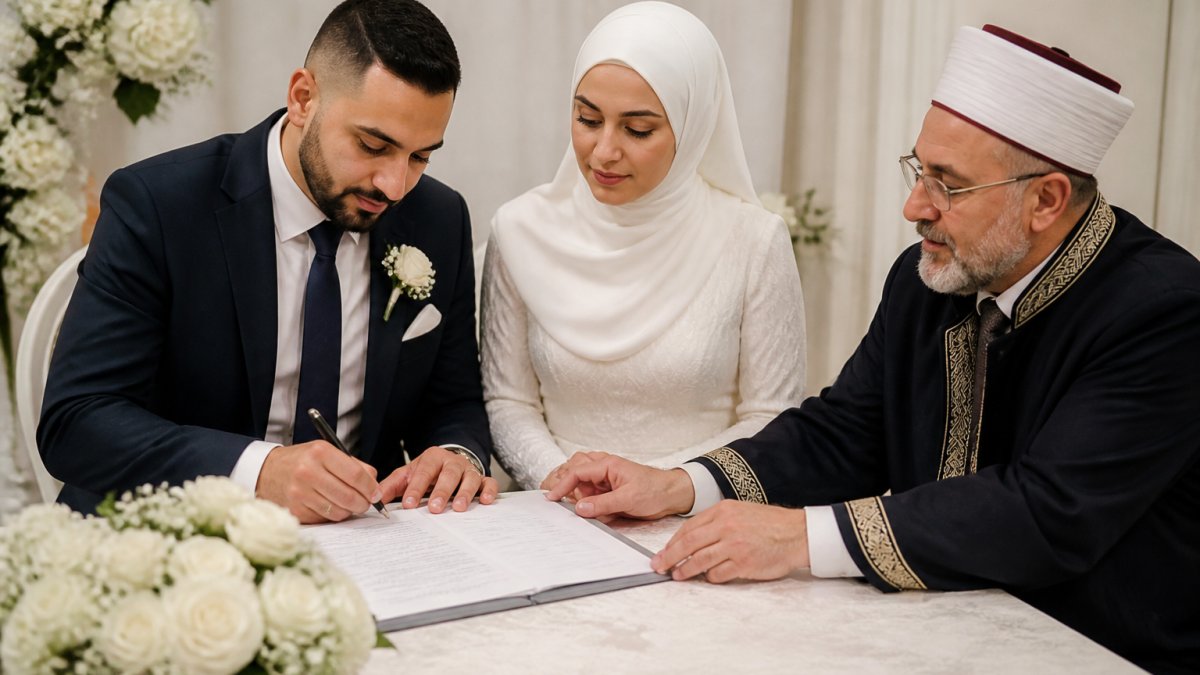
The nikah is performed with the imam's blessing, the mahr is stated, and the witnesses sign. Then the celebrant moves into the legal portion: the required wording under the Marriage Act, the signing of the official certificates, and the declaration.
Book a celebrant who is both a registered marriage celebrant and experienced in Islamic ceremony structure. When one person handles both, you avoid the awkward gap between "religiously married" and "legally married" that trips up so many couples.
Rights, Protections and What an Unregistered Nikah Leaves Uncovered
An unregistered nikah leaves you without the legal rights that a civil marriage automatically provides. That gap is not theoretical. It shows up in court, in inheritance disputes, and in financial settlements.
What a legal marriage gives you:
- Property rights: a clear framework for dividing assets if the marriage ends
- Inheritance: a recognised claim on your spouse's estate
- Financial rights: spousal maintenance and superannuation entitlements
- Child custody: a defined legal starting point
- Medical and legal standing: next-of-kin recognition
What an unregistered nikah leaves uncovered:
- No automatic property division
- No guaranteed inheritance
- No formal marital status
- Reliance on de facto rules, which require proof and can be challenged
As Services Australia explains on relationship status and the Australian Institute of Family Studies notes on family law, legal recognition is what determines entitlements, not religious ceremony.
Many couples assume their nikah is enough until a separation, a death, or a dispute forces the question. It never is. At Ceremonies With Faisal, Faisal Akhtar is both an experienced Sheikh and a registered marriage celebrant, which means a single ceremony can carry full Islamic validity and full legal recognition. Get started with Ceremonies With Faisal and marry with your faith and your rights intact.
Frequently Asked Questions
Is a nikah legally recognised as a marriage in Australia?
A nikah on its own is not automatically recognised as a legal marriage. For it to be legally valid, the ceremony must meet Australian legal requirements and be performed by a registered marriage celebrant or authorised officiant. This includes lodging a Notice of Intended Marriage at least one month before the ceremony, having two witnesses present, and using the correct legal wording. Many couples choose to have a combined nikah and legal ceremony so both religious and civil aspects are covered in one event.
What are the nikah requirements in Islam?
In Islam, a nikah requires mutual consent from both the bride and groom, two witnesses, and a mahr (a gift or dower given by the groom to the bride). The ceremony is typically performed by an imam or authorised person and involves an offer and acceptance. While these religious requirements make the nikah valid in Islamic tradition, they do not automatically satisfy Australian legal requirements such as the Notice of Intended Marriage or registration with the appropriate state authority.
How do you register a marriage after a nikah ceremony?
To register a marriage after a nikah, the ceremony must first meet legal requirements. This means a registered celebrant or authorised officiant must perform it, the Notice of Intended Marriage must have been lodged at least one month prior, and two witnesses must be present. After the ceremony, the celebrant submits the required paperwork to the state or territory births, deaths and marriages registry. You can then apply for an official marriage certificate. If the nikah was performed without these steps, you may need a separate civil ceremony.
What happens if a nikah is not legally registered?
An unregistered nikah means the marriage is not recognised under Australian law. This can affect inheritance rights, property division, spousal maintenance, and child custody arrangements if the relationship ends. Without legal recognition, spouses may not have automatic access to the protections available under the Family Law Act. If you have had an unregistered nikah, you can arrange a civil ceremony with a registered celebrant to formalise the marriage and secure those legal rights.
Can a nikah ceremony also be a legal marriage?
Yes. A nikah ceremony can be a legal marriage if it is performed by a registered marriage celebrant who is also authorised to conduct the religious aspects. The celebrant must ensure all legal requirements are met, including the Notice of Intended Marriage, correct legal wording, and two witnesses. This allows couples to have one ceremony that satisfies both Islamic tradition and Australian law. Many celebrants who are also imams or sheikhs offer this combined service.