 how-to
How to Register Marriage in Sydney: Step-by-Step Guide
Table of Contents
- The Legal Framework: Requirements for Marriage in NSW
- Step 1: Lodge Your Notice of Intended Marriage Form
- Step 2: Gather Your Identification Documents
- Step 3: Choose Your Celebrant and Ceremony Venue
- Step 4: Plan the Ceremony Day Details
- Step 5: Sign the Official Papers and Register the Marriage
- Step 6: How to Get a Marriage Certificate in NSW
- Common Mistakes to Avoid When Registering Your Marriage
- Frequently Asked Questions
Last Updated: September 6, 2026
Registering a marriage in Sydney means completing two separate legal steps: lodging a Notice of Intended Marriage (NOIM) at least one month before your ceremony, and then having that ceremony solemnised by an authorised marriage celebrant who lodges the official paperwork afterwards. The process is governed by the Marriage Act 1961 (Cth). This guide from Ceremonies With Faisal walks you through the entire registration process, from the paperwork to the certificate.
Get the NOIM timing wrong, and your ceremony date simply cannot proceed. Below, we break down the exact steps to register marriage in Sydney.
The Legal Framework: Requirements for Marriage in NSW
Marriage in New South Wales is a legal contract, not just a personal commitment. To register marriage in Sydney, you must meet the eligibility criteria set out in the Marriage Act 1961: you must be over 18, not already married, and not in a prohibited relationship. If you are between 16 and 18, you need a court order and parental consent.
Your ceremony must be performed by an authorised marriage celebrant, a registered civil celebrant, minister of religion, or state registry officer, who ensures both parties have legal capacity to marry and that the ceremony includes the prescribed words from the Act.
The official Marriage Act 1961 legislation sets out the exact wording that must be spoken during the ceremony for the marriage to be valid. This includes the monitum, a statement about the nature of marriage in Australia, which the celebrant must recite before the vows.
Step 1: Lodge Your Notice of Intended Marriage Form
The Notice of Intended Marriage (NOIM) is the foundational document for your wedding. This form must be lodged with your chosen authorised marriage celebrant no earlier than 18 months and no later than one month before your ceremony date. The one-month waiting period is a legal requirement, not a suggestion, and it begins from the date the NOIM is received.
You can complete the NOIM in person or online, but the form must be signed in the presence of your celebrant or another authorised witness. If you are overseas, you can lodge it at an Australian embassy or consulate.
A celebrant who understands your cultural or religious requirements, such as Ceremonies With Faisal, can guide you through this step while ensuring the ceremony reflects your traditions.
Step 2: Gather Your Identification Documents
Your celebrant needs to verify your identity before the NOIM can be accepted. You will need to provide your full birth certificate, which shows your name, date of birth, and parents' details. If you were born overseas, you will need your overseas birth certificate or a passport.
Proof of identity also requires a government-issued photo ID, such as a driver's licence or passport. If you have been married before, you must provide evidence of how that marriage ended, such as a divorce decree or a death certificate if your former spouse has passed away.
NSW Registry of Births Deaths and Marriages document requirements provides the full list of acceptable identification documents. If your documents are not in English, you will need accredited translations. A statutory declaration may also be required if you cannot provide a birth certificate, but this must be explained to your celebrant well in advance.
Step 3: Choose Your Celebrant and Ceremony Venue
You cannot register marriage in Sydney without an authorised celebrant. There are three main options: a civil celebrant, a religious celebrant, or the registry office. Each performs a legally valid ceremony, but the experience differs significantly.
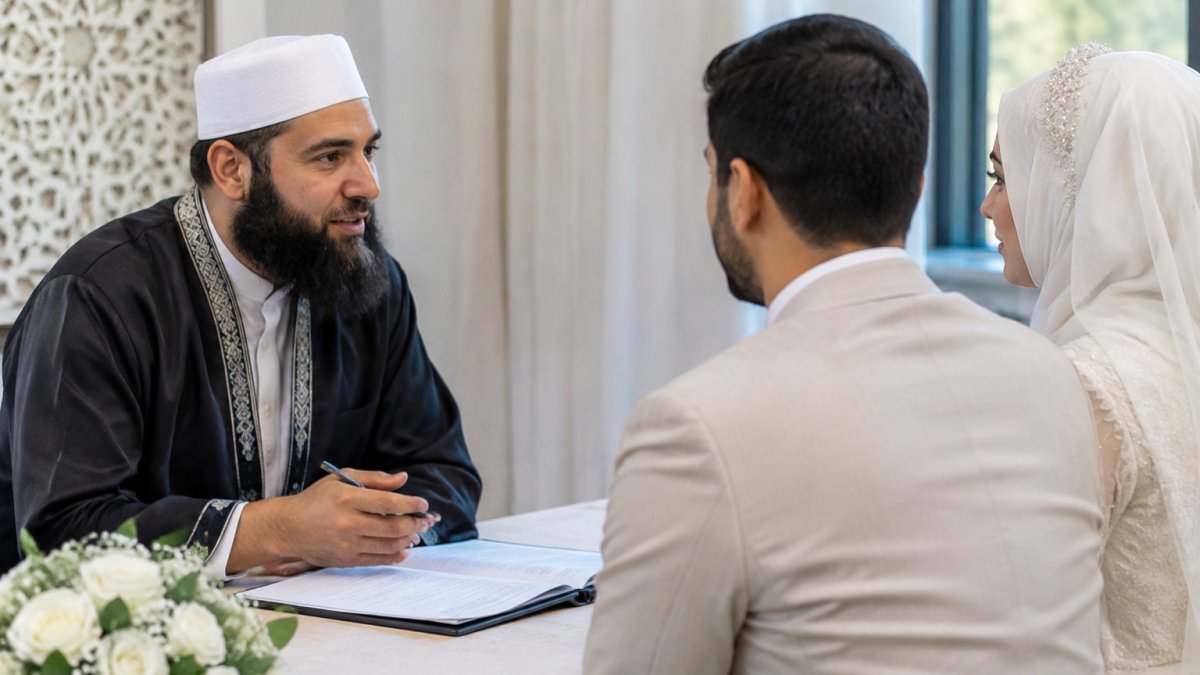
A registered civil celebrant offers flexibility in the ceremony content. A religious celebrant, such as an Imam or Sheikh, performs a ceremony that meets both Australian legal requirements and specific religious traditions, like a Nikah. The registry office offers a simple, civil ceremony conducted by a government official, which is the most straightforward option but offers little personalisation.
For Muslim and interfaith couples, the choice of celebrant matters deeply. You need someone who understands the legal requirements for marriage in NSW and the religious significance of the ceremony. A celebrant who is both a registered marriage celebrant and an experienced Sheikh ensures your Nikah is valid under Australian law and meaningful within your faith.
Step 4: Plan the Ceremony Day Details
The practical logistics of the ceremony day can trip couples up if they are not planned. This section provides a concrete, day-of checklist that goes beyond the generic advice found on government portals.
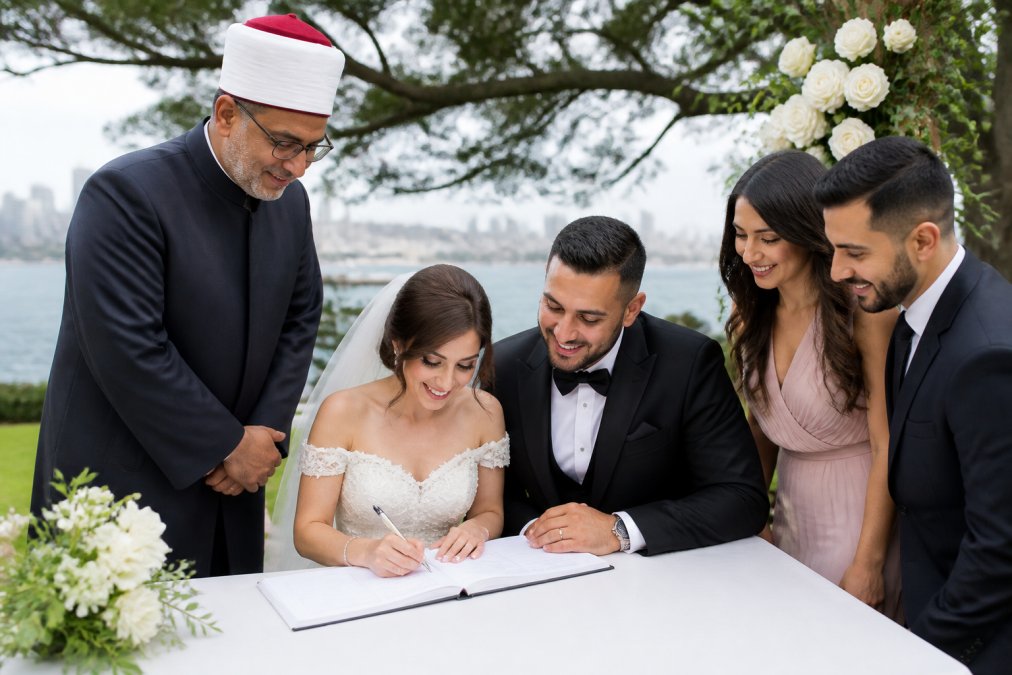
The Legal Core of the Ceremony
Your celebrant must include the prescribed words from the Marriage Act 1961 (Cth), specifically the monitum, which states the nature of marriage in Australia. For a Nikah or interfaith ceremony, your celebrant will weave these legal requirements into the religious structure, ensuring the Islamic contract signing and the Mahr agreement are positioned correctly within the legal framework. The legal words must be spoken before the vows are exchanged.
A Practical Day-of Checklist for the Registry Office
If you are having a registry office wedding at the NSW Registry of Births, Deaths and Marriages, the experience is more structured than a celebrant-led ceremony. Plan for the following:
- Arrival time: Arrive at least 15 minutes before your scheduled ceremony time. Registry offices run on a tight schedule, and late arrival can mean your slot is forfeited and you must rebook.
- Bring your ID: Even though your celebrant verified your identity at the NOIM lodgement, the registry officer may ask for a final check. Bring the same photo ID you used for the NOIM.
- Witness readiness: Confirm your two witnesses are present and have photo ID with them. Registry staff may ask for their details, and they must be over 18.
- Ceremony room rules: The registry ceremony rooms are typically small (often 10-20 guests maximum). Check the capacity when you book, and plan your guest list accordingly. There is usually no space for photography setups, so discuss with your photographer beforehand.
- Payment method: If you are paying for the ceremony on the day, confirm whether the registry accepts card or requires cash. Most registries prefer card, but it is worth checking when you book.
For Celebrant-Led Ceremonies: The Signing Sequence
For a Nikah with a celebrant like Ceremonies With Faisal, the signing often happens after the Mahr agreement is confirmed and the religious vows are exchanged. Your celebrant will coordinate the sequence so that the two witnesses sign at the correct moment, without rushing the religious significance of the act.
What to Do If Something Goes Wrong on the Day
The most common day-of issues are a missing witness or a guest who forgets their ID. If a witness cannot attend, you can substitute another adult over 18 at the last minute, they do not need to be pre-registered. If your celebrant notices a discrepancy in the paperwork (for example, a name mismatch between your ID and the NOIM), they may need to pause the ceremony to correct it. Arriving early with all documents on hand is essential.
The 'What Happens Next' Moment
Immediately after the ceremony, the celebrant or registry officer will hand you a commemorative certificate or an official receipt confirming the marriage took place. This is not your legal marriage certificate, that comes later from the registry. Keep this document safe.
Step 5: Sign the Official Papers and Register the Marriage
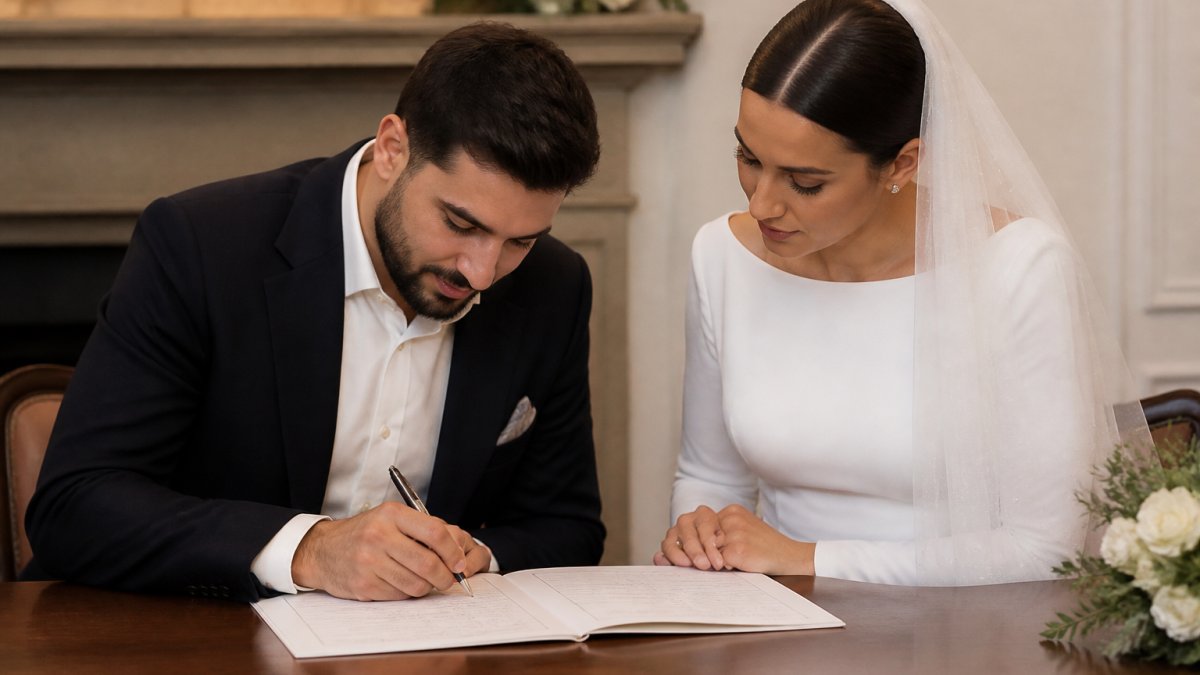
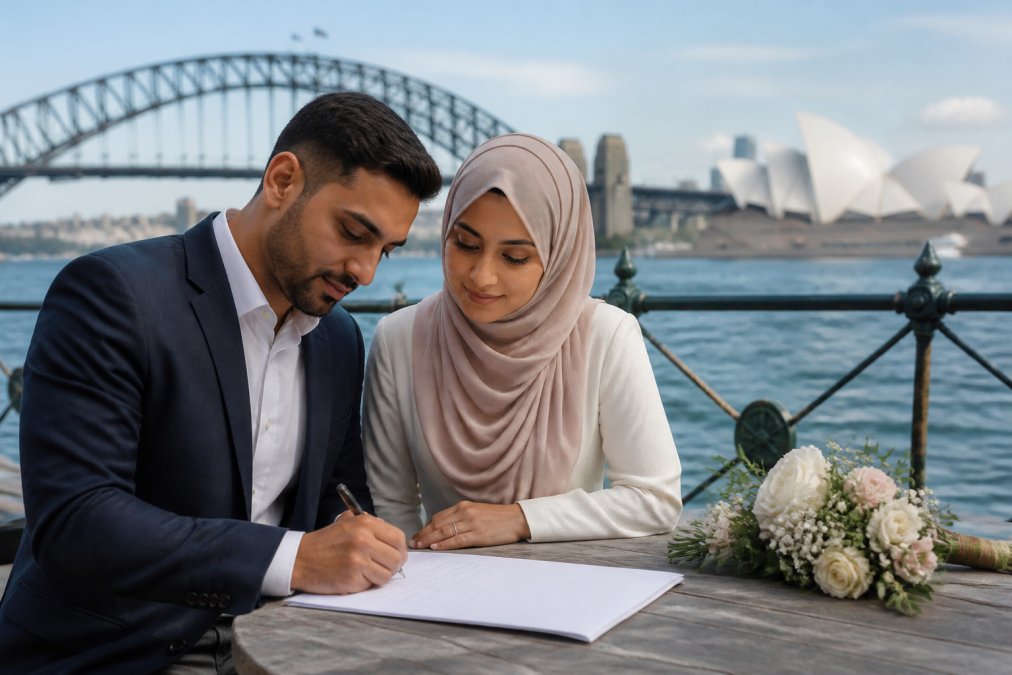
Immediately after the ceremony, you, your partner, your two witnesses, and your celebrant will sign the official marriage register. This is the moment your marriage becomes legally valid, not when the vows are spoken.
The celebrant then lodges the paperwork with the NSW Registry of Births, Deaths and Marriages. In most cases, the celebrant submits the documents electronically or by mail within 14 days of the ceremony. Once the registry processes the paperwork, your marriage is officially registered in the state's records.
Until the registry processes the paperwork, your marriage is valid but not yet recorded in the official system.
Step 6: How to Get a Marriage Certificate in NSW
A marriage certificate is the official record of your marriage, needed for legal purposes such as changing your name, updating your passport, or proving your marital status. It is not issued automatically; you must apply for it from the NSW Registry of Births, Deaths and Marriages.
You can apply for a standard or commemorative certificate. The standard certificate is the legal document, while the commemorative version is a decorative copy suitable for framing. Applications can be made online, by post, or in person at a registry office. Processing times vary, so it is wise to apply as soon as you receive confirmation that your marriage has been registered.
Applying for a marriage certificate through the NSW Registry explains the application process and the fees involved.
The Name Change Bridge: What the Certificate Does and Does Not Do
Registering your marriage does not automatically change your name on any government or financial records. The marriage certificate is the evidence you need to change your name, but you must take separate steps with each agency.
Here is the practical sequence after you receive your marriage certificate:
- Service NSW (driver's licence): Visit a Service NSW centre or apply online to update your driver's licence. You will need your marriage certificate, proof of identity, and your current licence. There is no fee for a name change on a licence, but you may need to pay for a replacement card.
- Passport: The Australian Passport Office requires you to complete a new passport application (form PC7) or a renewal (form PC8) if you want your new name on your passport. You cannot simply 'update' an existing passport, you must apply for a reissue. This involves a fee, and you will need to provide your marriage certificate along with other identity documents.
- Bank accounts and financial institutions: Each bank has its own process. Most require you to visit a branch in person with your marriage certificate and photo ID. Some allow online submissions. Do not assume one bank's process applies to another.
- Medicare and Centrelink: You can update your name with Medicare through your MyGov account or by visiting a Services Australia office. Centrelink has a similar process. You will need your marriage certificate and proof of identity.
- Electoral roll and other agencies: The Australian Electoral Commission (AEC) allows you to update your name online or by form. Utilities, insurance, and superannuation funds each have their own procedures, so keep a checklist of every organisation that holds your name.
Same-Sex Couples and Historical Documentation
For same-sex couples who married overseas before Australia's marriage equality legislation in December 2017, you do not 're-register' your marriage in Australia. Instead, you can apply to have your overseas marriage recognised by the NSW Registry, which involves lodging a NOIM and providing evidence of your overseas marriage. This process is separate from a standard marriage registration.
If You Need the Certificate Urgently
If you need your marriage certificate quickly, the NSW Registry offers a priority processing service for an additional fee. Standard processing can take up to 28 days, so the priority service is worth the cost if time is critical.
Common Mistakes to Avoid When Registering Your Marriage
The most common mistake couples make is miscalculating the one-month notice period. Another frequent error is providing identification documents that do not meet the requirements, such as an expired passport or an extract of a birth certificate instead of the full certificate.
A third mistake is assuming the registry office will handle everything. The legal requirements place the responsibility on you and your celebrant to ensure the paperwork is correct. If you are changing your name after the wedding, do not assume it happens automatically through the registry.
| Common Mistake | How to Avoid It | Impact of Getting It Wrong |
|---|---|---|
| Lodging the NOIM too late | Count back one month from your ceremony date | Ceremony must be postponed |
| Providing an expired passport as ID | Check expiry dates before lodging the NOIM | NOIM cannot be accepted |
| Forgetting to apply for the marriage certificate | Apply online after registration is confirmed | Delays in name change and visa processes |
Finally, do not overlook the importance of choosing a celebrant who understands your specific needs. Whether you require a civil ceremony, a Nikah, or an interfaith wedding, your celebrant should help you navigate the legal process while creating a ceremony that feels personal. For couples seeking a registered marriage celebrant who also brings deep experience with Islamic traditions and interfaith celebrations, Ceremonies With Faisal's celebrant services offers a seamless blend of legal compliance and cultural sensitivity.
Registering a marriage in Sydney involves strict legal timelines and specific documentation, but the process becomes manageable when you understand each step. The key is to start early, lodge your NOIM on time, and work with an authorised celebrant. Ceremonies With Faisal combines expertise in Australian marriage law with a deep understanding of Islamic and interfaith traditions, ensuring your ceremony is both legally valid and personally meaningful. Get started with Ceremonies With Faisal and book a consultation to plan your wedding registration with confidence.
Frequently Asked Questions
How long before the wedding must I lodge the NOIM form?
You must lodge your Notice of Intended Marriage form with your authorised marriage celebrant at least one month before your ceremony date. This is a mandatory waiting period under Australian law. The form is valid for 18 months from the date you lodge it. If you need to marry sooner, you may be eligible for a shortening of the prescribed time, but this requires a special application and specific circumstances.
Do I need to register my marriage separately after the ceremony?
No, you do not need to register your marriage separately. Your authorised marriage celebrant is responsible for lodging the official paperwork with the NSW Registry of Births, Deaths and Marriages after the ceremony. The celebrant handles the legal registration process as part of their duties.
What documents are required to prove identity for marriage in NSW?
You will need to provide your celebrant with proof of identity documents when you lodge your NOIM. This typically includes your full birth certificate and a current photo ID such as a driver's licence or passport. If you have been previously married, you will also need to provide evidence of how that marriage ended, such as a divorce decree or death certificate, before your ceremony can proceed.
Can I get married at the Registry Office or with a private celebrant?
You have both options in Sydney. A registry office wedding is a civil ceremony conducted by a government-appointed official, often in a simple format. Alternatively, you can choose a private authorised marriage celebrant who can perform the ceremony at a venue of your choice, offering a more personalised and flexible experience. Both options are legally valid. A private celebrant can also help you integrate cultural or religious traditions into the ceremony.