 comparison
7 Muslim Celebrant Sydney Alternatives for Your Nikah
Last Updated: October 25, 2026
Quick Summary
A muslim celebrant sydney search usually returns imams, kazis and registered civil celebrants, but the best fit is someone holding both religious and legal authority so your Nikah is spiritually complete and legally valid. Verify each credential separately against the Attorney-General's register before booking.
- Lodge your Notice of Intended Marriage with your celebrant at least one month before the ceremony.
- A religious Nikah alone does not register your marriage under Australian law.
- Check the celebrant's registration number against the Attorney-General's authorised marriage celebrants register.
- Compare the total cost of a combined ceremony against a mosque Nikah plus separate civil ceremony.
- Ask every provider to confirm legal registration and religious recognition in writing.
Table of Contents
- Why Couples Look Beyond the First Muslim Celebrant They Find
- Quick Comparison: Muslim Celebrant Sydney Options at a Glance
- Nikah Requirements in Australia: What the Ceremony Must Include
- Civil Marriage and Nikah: Combining Faith and Law in One Day
- Interfaith Nikah Ceremony: Balancing Two Traditions with Respect
- Checking the Authorised Marriage Celebrants List Before You Book
- Fees and What Each Package Includes: What to Ask Before You Commit
- Choosing Between an Imam, a Kazi and a Registered Celebrant
- Frequently Asked Questions
Why Couples Look Beyond the First Muslim Celebrant They Find
Searching for a muslim celebrant sydney couples often find one name and stop looking. That first result is rarely the best fit.
Here is the tension most guides ignore. A Nikah that satisfies Islamic requirements but fails Australian marriage law leaves a couple spiritually married and legally single.
Below, we compare seven options across Sydney, from imams and kazis to registered civil celebrants who also perform Nikahs. You can also see the Nikah ceremony services Sydney available to book. We will show you what each actually delivers, what to ask before you commit, and how to verify credentials rather than trust a website.
Quick Comparison: Muslim Celebrant Sydney Options at a Glance
The table below summarises the main paths available to couples. Fees are not published by most providers, so the pricing column reflects what you should ask about rather than a quoted figure. Use the columns to compare like with like, then verify each claim using the steps further down.
| Option | Best For | Religious Authority | Legal Authority | Pricing Clarity | Verification Step |
|---|---|---|---|---|---|
| Ceremonies With Faisal | Couples wanting faith and law in one ceremony | Sheikh (Imam) | Registered marriage celebrant | Quote on enquiry | Check registration number against the Attorney-General's register; ask about Islamic study and appointment |
| Sheikh Bilal Dannoun | Online Nikah, counselling | Islamic celebrant | Authorised civil celebrant | Contact for pricing | Confirm both credentials in writing before booking |
| Qazi | Nikah plus legal guidance | Islamic celebrant | Guidance offered | Contact for pricing | Ask whether the qazi personally solemnises the legal marriage or refers you onward |
| Sheikh Ibrahim | Sydney and surrounds | Registered Islamic celebrant | Stated as registered | Contact for pricing | Request the registration number and confirm the religious appointment |
| Local imam at a mosque | Traditional community Nikah | Imam | Usually none | Often donation-based | Ask directly whether the imam is on the authorised list; if not, plan a separate civil ceremony |
| Civil celebrant only | Registry-style legal wedding | None | Registered celebrant | Published fees common | Confirm the celebrant's registration and ask whether they will accommodate religious content |
| Family-appointed kazi | Cultural continuity | Kazi | Varies | Negotiated | Clarify in advance who handles the legal paperwork and who bears the cost |
How We Evaluated Each Option
We scored each option on five criteria: whether the provider holds both religious and legal authority, how transparent the process is, the range of ceremony formats offered, how well the service handles interfaith or blended-family situations, and how easy it is to verify the credentials claimed.
Eligibility and Documents: What Every Couple Needs Regardless of Option
Whichever path you choose, the legal side requires the same core documents. Under the Marriage Act 1961, you must lodge a Notice of Intended Marriage with your celebrant at least one month before the ceremony. You will typically need:
- Proof of identity, such as a passport or birth certificate.
- Proof of the end of any previous marriage, such as a divorce certificate or death certificate.
- Two witnesses aged 18 or over at the ceremony.
- The Notice of Intended Marriage signed and lodged within the required window.
A religious Nikah alone does not register your marriage. If the person performing the Nikah is not an authorised celebrant, you will need a separate civil ceremony to be legally married. Build that into your comparison from the start rather than discovering it after the religious ceremony.
How to Verify a Celebrant's Authorisation and Religious Credentials
Verification takes two minutes and prevents months of problems. The Attorney-General's Department maintains a public register of every celebrant legally able to solemnise a marriage in Australia. Ask for the celebrant's registration number, then check it against the authorised marriage celebrants register.
Religious credentials need a separate check. Registration as a civil celebrant says nothing about Islamic scholarship. Ask where the person studied, who appointed them, and whether they are recognised by a local mosque or Islamic council.
Nikah Requirements in Australia: What the Ceremony Must Include
A Nikah in Australia must satisfy two separate sets of rules. Islamic law requires offer and acceptance before witnesses; Australian law requires a registered celebrant, a valid Notice of Intended Marriage, and two witnesses over 18 at a legally recognised ceremony.
The religious side is straightforward for an experienced imam: consent from both parties, a wali for the bride in most schools of thought, two Muslim witnesses, and a mahr agreed in advance. The legal side is where couples get caught out. Under the Marriage Act 1961, the Notice of Intended Marriage must be lodged with your celebrant at least one month before the ceremony, and only an authorised celebrant can solemnise a legally binding marriage.
Many couples assume a mosque Nikah automatically registers the marriage. It does not. If your celebrant is not on the authorised list, you will need a separate civil ceremony. For the full checklist, see our guide to Nikah requirements in Australia.
Civil Marriage and Nikah: Combining Faith and Law in One Day
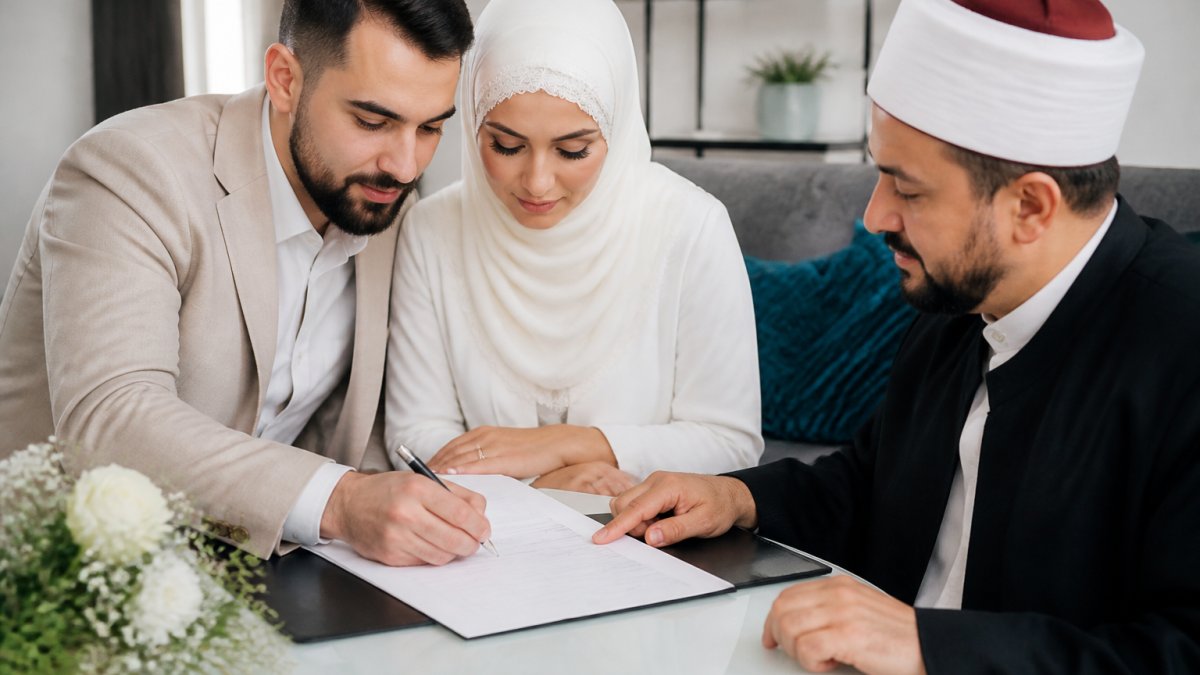
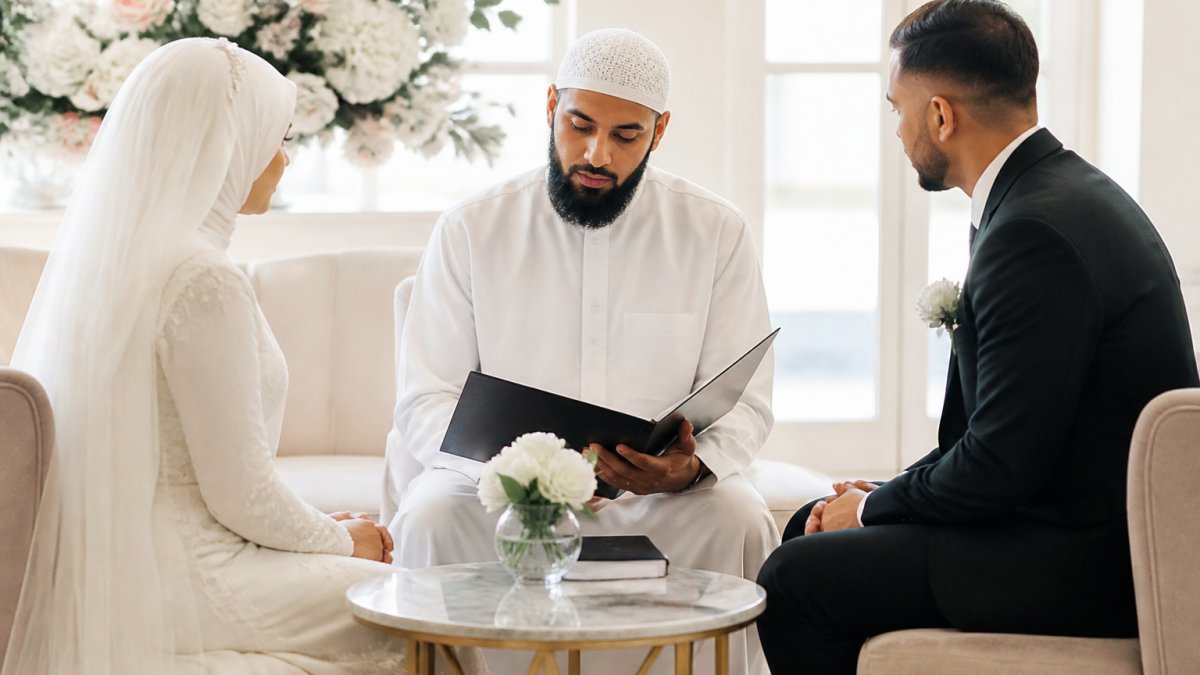
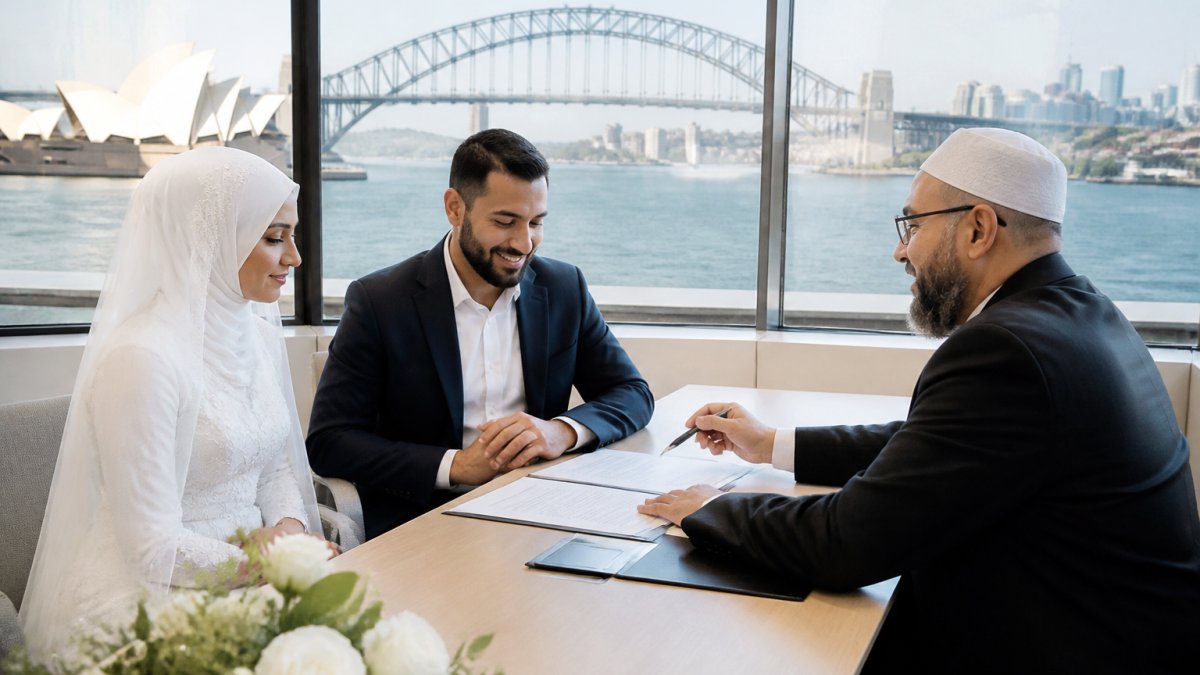
Combining both ceremonies into one event is now the most common request we receive.
The format is flexible. Some couples hold the Nikah first, then move straight into the legal vows and sign the certificates in the same sitting.
The advantage is cost and continuity. One celebrant, one venue booking, one set of witnesses. Our breakdown of legal marriage versus religious Nikah explains exactly where the two intersect.
Interfaith Nikah Ceremony: Balancing Two Traditions with Respect
An interfaith Nikah is a ceremony where one partner is Muslim and the other is not, and both families expect their tradition to be honoured.
In practice, this means explaining the Islamic components to non-Muslim guests, choosing readings or vows that both families accept, and being clear about what the religious contract requires.
Not every imam will perform an interfaith Nikah, and not every civil celebrant understands the sensitivities. Our interfaith marriage ceremonies in Sydney page shows how we structure these.
Checking the Authorised Marriage Celebrants List Before You Book
Verification takes two minutes and prevents months of problems. The Attorney-General's Department maintains a public register of every celebrant legally able to solemnise a marriage in Australia. If a name is not on it, that person cannot legally marry you.
Ask for the celebrant's registration number, then check it against the authorised marriage celebrants register. A legitimate celebrant will not hesitate. One who deflects or says "the mosque handles it" is telling you something important.
Religious credentials need a separate check. Registration as a civil celebrant says nothing about Islamic scholarship. Ask where the person studied, who appointed them, and whether they are recognised by a local mosque or Islamic council.
Fees and What Each Package Includes: What to Ask Before You Commit
Pricing in this market is opaque, and that is by design. Most providers list "contact for pricing" because fees vary with travel, ceremony length, and whether legal paperwork is included. You will not get a fair comparison until you ask the same questions of every provider and compare the total cost of a combined ceremony against the total cost of splitting the religious and legal parts.
The Fee Components to Compare
A quote is only useful if you know what sits inside it. Ask every provider to break their fee into these components:
- Religious ceremony fee, the Nikah itself, including any pre-ceremony meeting or counselling.
- Legal ceremony fee, the solemnisation of the marriage under Australian law, including the Notice of Intended Marriage lodgement.
- Paperwork and lodgement, who prepares the Notice of Intended Marriage, who lodges it, and who supplies and lodges the marriage certificate after the ceremony.
- Travel, whether travel to your venue is included and what radius applies before an extra charge.
Combined Versus Split: The Total-Cost Trade-Off
A low headline fee often excludes the legal component, so you pay twice. Compare the total cost of a combined ceremony, one celebrant holding both religious and legal authority, against the total cost of a mosque Nikah plus a separate registry or civil ceremony.
Ask for the total cost of a combined ceremony in writing before you compare anything. If a provider cannot give you a written total, treat that as a warning sign rather than a negotiating tactic.
Questions to Put to Every Provider
- Is the Notice of Intended Marriage lodgement included, or an extra fee?
- Does the quote cover the religious ceremony, the legal ceremony, or both?
- Is travel to your venue included, and what is the radius?
- How many planning meetings are included before the day?
- Who supplies and lodges the marriage certificate after the ceremony?
For a realistic picture of what celebrants charge across the city, see our guide to Sydney celebrant costs.
Choosing Between an Imam, a Kazi and a Registered Celebrant
The right choice depends on what you actually need. An imam leads the religious ceremony and provides spiritual guidance. A kazi traditionally officiates the Nikah contract and handles the religious formalities.
Most couples who want one ceremony with no follow-up paperwork need someone who is both.
One insider point most reviews miss: the title on the business card matters less than the two credentials behind it. Ask for the legal registration and the religious recognition separately, and confirm both in writing. That single habit will save you from the most expensive mistake in this process.
Choosing a celebrant for your Nikah should not mean guessing whether the ceremony will be spiritually complete and legally valid.
Frequently Asked Questions
What alternatives are there to a Muslim marriage celebrant?
You can choose an imam or kazi who performs the Nikah, a registered civil celebrant for the legal ceremony, or a combined service where one person handles both. Some couples book two separate officiants: a religious leader for the Nikah and a registered marriage celebrant for the legal paperwork. Others prefer a single registered celebrant with religious credentials who can conduct a Sharia-compliant ceremony and complete the marriage registration in one sitting.
Can an imam perform a Nikah without being a registered marriage celebrant?
Yes. An imam can lead the Nikah and the ceremony carries religious significance, but it is not automatically recognised as a legal marriage under the Marriage Act 1961. To make the marriage legally binding, a registered marriage celebrant or authorised officiant must conduct the legal solemnisation, or the couple must complete the legal process separately. Always confirm the celebrant's registration before the day.
How do I check whether a celebrant is authorised in Australia?
Search the authorised marriage celebrants list on the Attorney-General's Department website. You will need the celebrant's full name and registration number. Ask for their registration number directly, then verify it matches the official list. For religious credentials, ask which mosque or Islamic body endorsed them and whether they can share references. A celebrant who understands Nikah requirements in Australia will answer both questions without hesitation.
What should I ask a Muslim celebrant before booking?
Ask about their registration status, their experience with interfaith Nikah ceremony requests, and how they handle the Notice of Intended Marriage. Confirm whether the fee covers legal paperwork, rehearsal, travel and a personalised ceremony. Ask how they verify witnesses and what happens if documents are delayed. Request a sample ceremony outline so you can see how they blend Islamic values with Australian legal requirements. Get all inclusions in writing before you pay a deposit.