 ultimate-guide
Nikah in Sydney: Legal Requirements Explained (2026)
Table of Contents
- Legal Requirements for Nikah in Sydney: The 2026 Guide
- What Makes a Nikah Ceremony Legally Valid in Australia?
- The Notice of Intended Marriage Form: Your First Legal Step
- Documents You Need for a Sydney Nikah
- Your Marriage Celebrant's Role in Legalising the Nikah
- How to Write a Muslim Marriage Contract That Holds Up
- What Happens After the Ceremony: Registration and Name Changes
- Your Nikah Checklist: Steps to a Smooth Sydney Wedding
- Frequently Asked Questions
Last Updated: September 7, 2026
Legal Requirements for Nikah in Sydney: The 2026 Guide
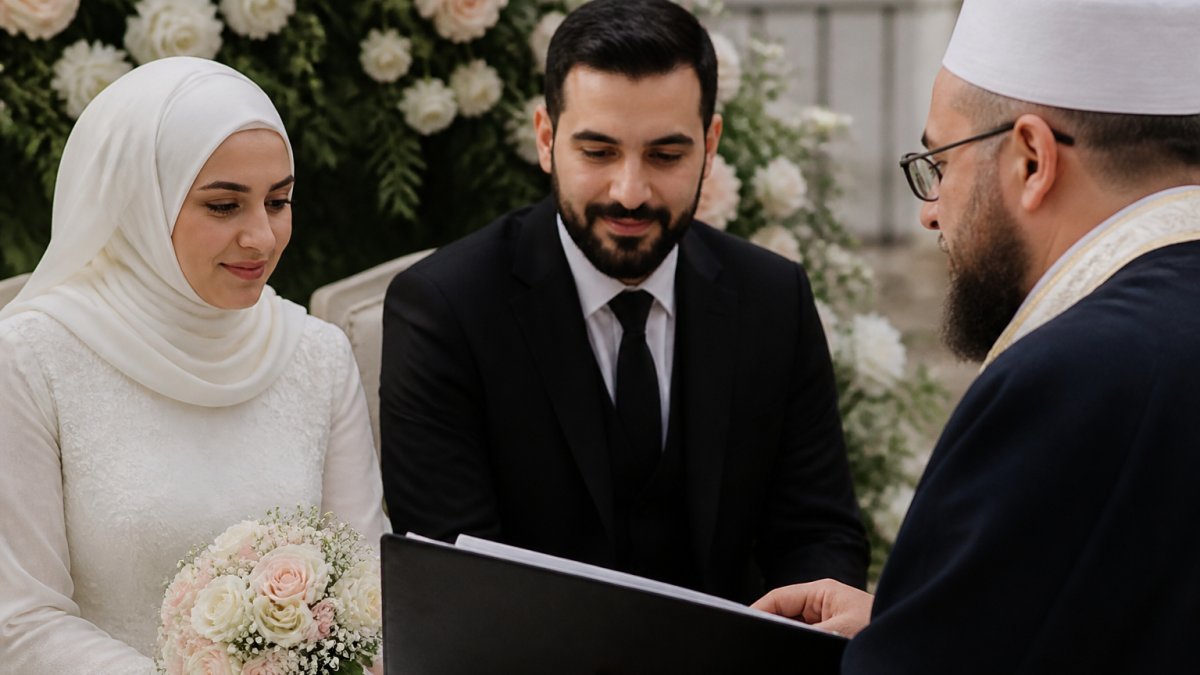
When you plan a Nikah in Sydney, the nikah sydney legal requirements sit alongside the spiritual ones, and confusing the two is the most common mistake couples make. A religious ceremony alone does not create a valid marriage under Australian law.
The core principle is simple: Australian law requires a marriage to be solemnised by an authorised celebrant, with proper notice given and documentation lodged. Islamic tradition requires the Nikah contract, the bride's freely given consent, and appropriate witnesses. Nikah sydney legal requirements demand that both sets of rules be satisfied simultaneously.
Below, we'll walk through the paperwork, the timing, the documents, and the ceremony itself, including the Muslim marriage contract and what happens after the ceremony.
What Makes a Nikah Ceremony Legally Valid in Australia?
A Nikah ceremony is legally valid in Australia when it is conducted by an authorised marriage celebrant under the Marriage Act 1961, with a completed Notice of Intended Marriage lodged at least one month beforehand. The ceremony must include the couple's consent, and both parties must be free to marry, meaning any previous marriage has ended through divorce or death.
The Marriage Act 1961 sets out the eligibility criteria clearly (legislation.gov.au). Both parties must be at least 18 years old, though those aged 16 or 17 can marry with parental consent and a court order in exceptional circumstances. Neither party can be already married, and the couple cannot be within prohibited relationships. Consent must be freely given, aligning with the Islamic requirement that the bride's consent be explicit and uncoerced.
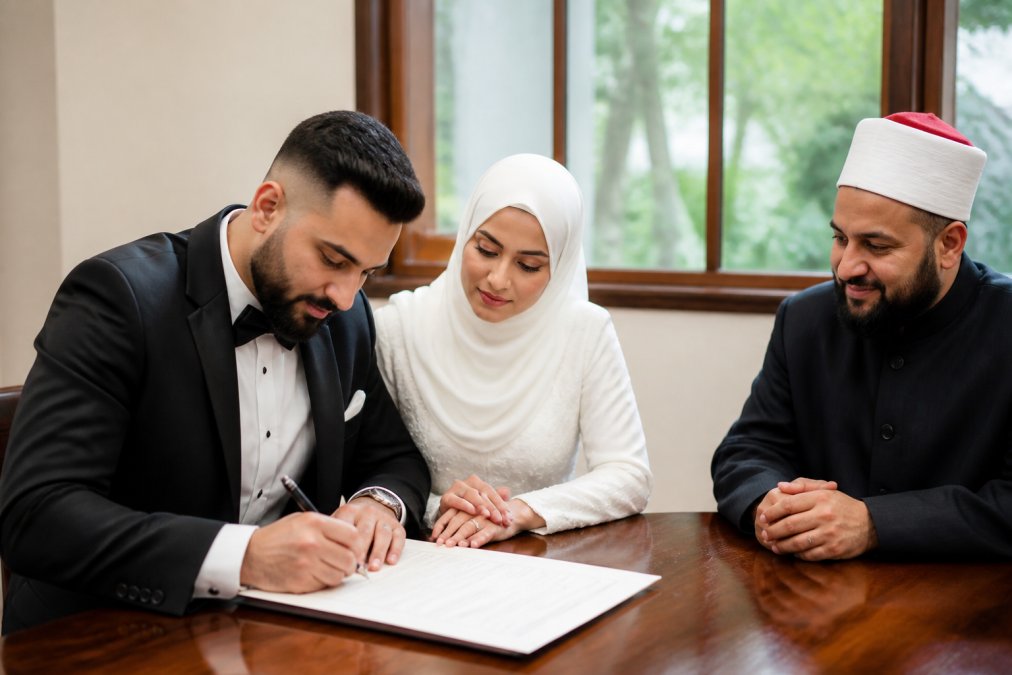
The key distinction couples often miss is between the religious Nikah and the legal registration. The Nikah is your Islamic marriage contract, while the legal marriage is the state's recognition of your union. In Australia, a single ceremony can accomplish both if the celebrant is authorised to solemnise marriages.
The Notice of Intended Marriage Form: Your First Legal Step
The Notice of Intended Marriage, commonly called the NOIM, is the form that starts your legal journey, and it must be lodged with your celebrant no earlier than 18 months and no later than one calendar month before your wedding date. This one-month waiting period is a firm legal requirement, though it can be shortened in exceptional circumstances with a prescribed authority's approval.
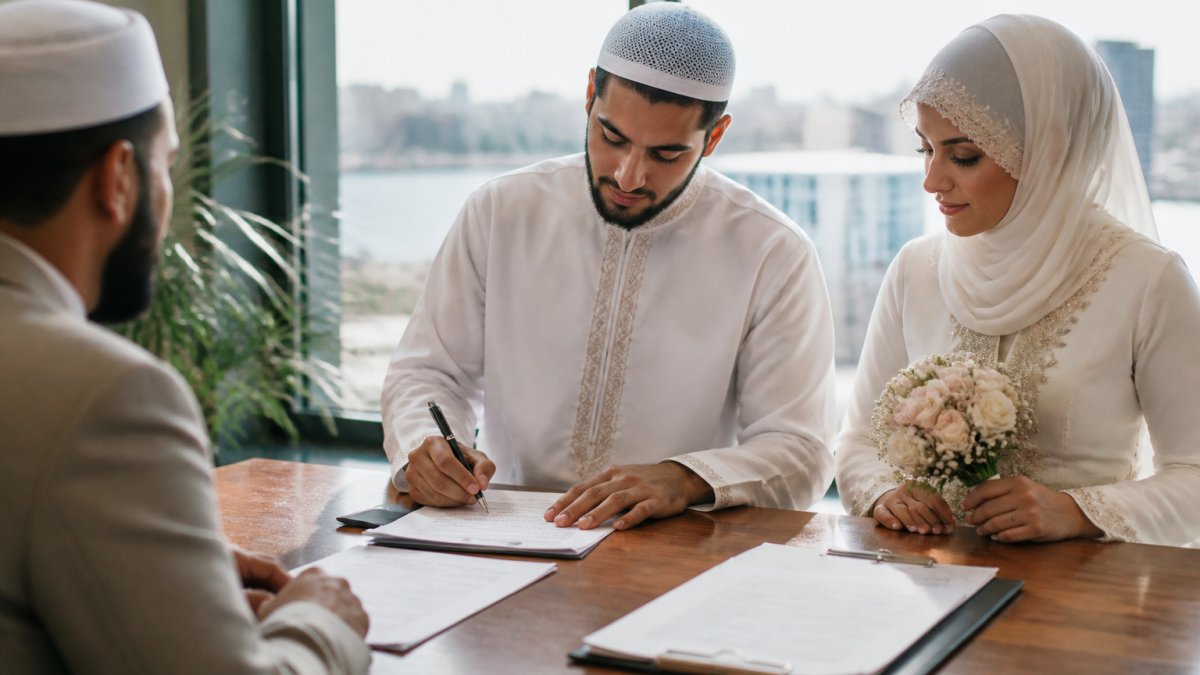
You complete the NOIM with your celebrant, who lodges it on your behalf. The form asks for your full names, dates of birth, places of birth, and details about any previous marriages. Both parties must sign the form, witnessed by your celebrant. If you are overseas or unable to sign in person, alternative witnessing arrangements exist but require extra time.
The one-month waiting period begins from the date your celebrant receives the completed NOIM, not from when you start planning. This is the single biggest cause of postponed Nikah ceremonies.
Documents You Need for a Sydney Nikah
The documentation for a Sydney Nikah follows a standard pattern, and having everything ready before your NOIM appointment saves significant stress. Below is the specific list your celebrant will ask for, split by your situation.
For Australian-born citizens
- Birth certificate - This is the primary document. An original or a certified copy is required. A driver's licence or passport is not a substitute for your birth certificate if you have one.
- Current passport or driver's licence - This serves as your photo identification. A Medicare card or proof-of-age card is generally not accepted as primary ID.
- If you have been married before - You must provide either the original divorce decree (the final order, not just the separation certificate) or the death certificate of your former spouse. A decree nisi or a certificate of divorce issued by an Australian court is acceptable. If your divorce was overseas, you will need to confirm it is recognised under Australian law.
For overseas-born applicants
If you were born outside Australia, the requirements are more involved:
- Original birth certificate - An original or a certified copy from your country of birth is required. A passport alone is not sufficient if you have a birth certificate.
- Current passport - This is your primary photo ID.
- Accredited English translations - If any document is not in English, you must arrange an accredited translation before lodging your NOIM. The translation must be done by a NAATI-accredited translator. A friend or family member translating the document is not acceptable.
- Evidence of freedom to marry - If you have been married before, you will need the original divorce decree or death certificate, also translated if necessary. In some cases, a certificate of no impediment from your home country may be requested.
The 'no birth certificate' scenario
If you genuinely do not have a birth certificate and cannot obtain one, a passport can sometimes be used at your celebrant's discretion, but most will ask for a statutory declaration explaining why. This adds time, so start early if this applies to you.
What counts as a 'certified copy'?
A certified copy is a photocopy of the original signed and dated by an authorised person, such as a justice of the peace, a police officer, or a court officer. Your celebrant can certify copies at your NOIM appointment, but it is faster to have them certified beforehand.
A note on name mismatches
If your name on your birth certificate differs from your current name (for example, after a previous marriage or a legal name change), you must provide the documentation linking those names, such as a change-of-name certificate or a marriage certificate. This is a common cause of NOIM rejection, so check this before your appointment.
Your celebrant must sight the original documents and keep a copy of each on file; they are not sent to the Registry. If unsure whether a document will be accepted, ask your celebrant before your appointment.
Your Marriage Celebrant's Role in Legalising the Nikah
Your marriage celebrant is the person who makes the ceremony legal, not just meaningful. Under Australian law, only an authorised marriage celebrant can solemnise a marriage, and the ceremony must include specific words and declarations to be valid.
The celebrant must say specific words conveying that the marriage is created by the law of Australia, and each party must state their consent in the presence of the celebrant and two witnesses aged at least 18. The celebrant also ensures the NOIM was lodged correctly and signs the certificate after the ceremony.
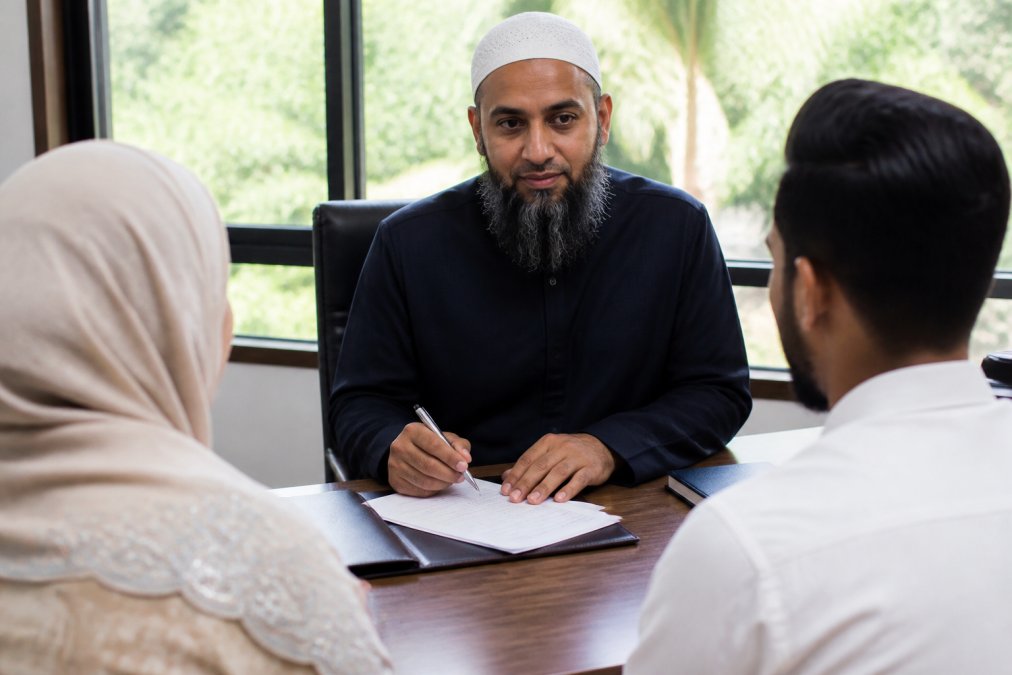
For a Nikah, this legal framework sits alongside the Islamic requirements. The celebrant, if qualified as an Imam or Sheikh, can recite the appropriate Islamic texts, ensure the mahr is addressed, and witness the bride's consent as required by tradition. This dual role is where a celebrant like Faisal Akhtar at Ceremonies With Faisal adds genuine value.
How to Write a Muslim Marriage Contract That Holds Up
A Muslim marriage contract, or Nikah nama, records the terms of your marriage. While Australian law does not require it, Islamic tradition does, making it essential. The contract typically includes the mahr, the gift the groom gives the bride, and any other agreed conditions.
When you write a Muslim marriage contract, the key is clarity. State the full legal names of both parties, the date and place of the Nikah, and the mahr amount or description precisely. If the mahr is deferred, state when it becomes payable. Any additional conditions should be written explicitly to avoid ambiguity.
The contract should be signed by both parties and witnessed by two adult Muslim witnesses. While it is a religious document, keeping a copy with your legal marriage certificate is wise. A well-drafted contract prevents disputes.
What Happens After the Ceremony: Registration and Name Changes
Once your ceremony concludes, your celebrant lodges the marriage paperwork with the Registry of Births, Deaths and Marriages in New South Wales. The celebrant must complete the official marriage certificate form, have it signed by the couple and witnesses, and lodge it within 14 days of the ceremony under the Marriage Act 1961.
Registration timeline and what you receive
The registry typically processes the lodgement, after which you will receive an official marriage certificate in the mail. This is your proof of marriage for legal purposes, distinct from any commemorative certificate from your celebrant, the official one matters for government and financial purposes.
The cost of official certificates
When your celebrant lodges the paperwork, you can order additional official copies at the same time. It is generally cheaper to order extra upfront. Most couples order multiple copies: one for name changes, one for visa or passport applications, and one for safekeeping.
Changing your surname after the Nikah
If you plan to change your surname after marriage, the official marriage certificate authorises this change, but the process is not automatic, you must update each organisation individually. The common order is:
- Services Australia - Update your Medicare card and any Centrelink records. You can do this online or in person at a service centre.
- Australian Taxation Office - Update your tax file number records through your myGov account.
- Driver's licence - Visit Service NSW in person with your marriage certificate and current licence. There is a fee for a new licence.
- Passport - You will need to apply for a new passport in your new name. This requires a full passport application, not just a name change, and the fee applies.
- Bank accounts, superannuation, and insurance - Each institution has its own process. Most accept a certified copy of your marriage certificate, but some require you to visit a branch in person.
For international couples: what the certificate is for
For international couples, the registered marriage certificate is also what you need for visa applications or to register your marriage in your home country. For a partner visa, it is a core document. If your home country requires local registration, you will need an authenticated copy, which may require an apostille from the Department of Foreign Affairs and Trade.
Keeping your records safe
Keep your official marriage certificate in a safe place alongside your Nikah contract. You will need both repeatedly for property purchases, wills, and family law matters. A fireproof safe or safety deposit box is wise. Do not laminate the certificate, as this can make it invalid for official purposes.
A note on the Nikah contract after the ceremony
The Nikah contract is a religious document, not a legal one, but it can still have practical value. If it includes conditions such as a deferred mahr or specific financial arrangements, keep a copy with your legal documents. While Australian family law does not automatically enforce religious contracts, a clearly written Nikah contract can be used as evidence of the couple's intentions if a dispute arises.
Your Nikah Checklist: Steps to a Smooth Sydney Wedding
| Step | Action | Timing |
|---|---|---|
| 1 | Choose a registered celebrant who understands Islamic requirements | As early as possible |
| 2 | Gather identification and birth documents | Before NOIM lodgement |
| 3 | Lodge the Notice of Intended Marriage | At least 1 month before wedding |
| 4 | Draft your Muslim marriage contract | Before the ceremony |
| 5 | Arrange two adult witnesses | Before the ceremony |
| 6 | Complete the ceremony with legal declarations | Wedding day |
| 7 | Receive and store your marriage certificate | 2-4 weeks after ceremony |
The paperwork for a Nikah in Sydney is straightforward once you know the steps, but the timing requires discipline. Start with your celebrant, lodge the NOIM early, and keep your documents organised. A celebrant who handles the admin side, as we do at Ceremonies With Faisal, removes the stress so you can focus on the meaning of the day. For guidance on the legal and religious requirements specific to your situation, Services Australia's marriage information provides a helpful starting point.
Planning a Nikah in Sydney means balancing legal precision with spiritual meaning, and getting that balance right takes experience. Ceremonies With Faisal offers the expertise of a registered marriage celebrant and experienced Sheikh in one person, ensuring your ceremony is both legally binding and deeply faithful to Islamic tradition. Call now to begin planning your ceremony with confidence.
Frequently Asked Questions
What are the minimum legal requirements for a Nikah ceremony in Sydney?
To be legally valid, your Nikah must be performed by an authorised marriage celebrant, with both parties present and freely giving consent. You need two witnesses over 18. The ceremony must include the prescribed words from the Marriage Act 1961, and you must have lodged a Notice of Intended Marriage with your celebrant at least one month prior.
Does a Nikah ceremony alone satisfy Australian marriage law?
No. A religious Nikah ceremony is not automatically a legal marriage. For it to be recognised under Australian law, the ceremony must be performed by a registered marriage celebrant who includes the required legal wording. This ensures your Islamic marriage is also a valid civil marriage, giving you full legal rights and protections.
What documents do I need to provide to my celebrant for a Nikah?
You will need to provide your birth certificate or passport as proof of identity and date of birth. If you have been married before, you must supply a divorce decree or death certificate. Your celebrant will also require you to complete and sign the Notice of Intended Marriage form, which must be lodged at least one month before your wedding date.
Can I write my own Muslim marriage contract for the Nikah?
Yes, you can write your own Islamic marriage contract, which often outlines the mahr and other conditions. This document is separate from the legal marriage paperwork. Your authorised celebrant can guide you on including clauses that respect both Islamic principles and Australian law, ensuring the contract is meaningful and clear without conflicting with your legal marriage obligations.