 blog
How to Choose Between a Civil Wedding and Religious Ceremony
Last Updated: October 31, 2026
Quick Summary
A civil wedding is a legally binding marriage solemnised by a registered civil celebrant with no religious content required, while a religious ceremony is led by a registered minister of religion and carries identical legal weight. Choose civil for venue freedom, content control and mixed-faith guest lists, or religious for tradition and family continuity.
- Lodge a Notice of Intended Marriage with your celebrant at least one month before the wedding.
- A religious ceremony is only legal if the minister is registered and the NOIM process is followed.
- Civil ceremonies can happen in gardens, halls, restaurants or private property, not just churches.
- A split score on faith versus venue freedom signals you should consider a hybrid ceremony.
- If a religious ceremony comes first, you are not legally married until the civil ceremony is completed.
Table of Contents
- Civil Wedding vs Religious Ceremony: What Modern Couples Are Weighing Up
- Civil Marriage vs Religious Marriage: How the Legal Side Actually Works
- What a Non-Religious Wedding Ceremony Looks Like in Practice
- Inside a Civil Wedding Ceremony Script: Readings, Vows and Music
- Planning an Interfaith Wedding Ceremony That Holds Both Traditions
- Comparing the Two: Venue Flexibility, Cost and Inclusion
- A Decision Framework for Choosing Your Ceremony
- Booking a Celebrant Who Handles Faith and Law Together
- Frequently Asked Questions
Civil Wedding vs Religious Ceremony: What Modern Couples Are Weighing Up
Choosing between a civil wedding and a religious ceremony is the first real decision most modern couples face, shaping everything from venue to paperwork. Couples often agonise over this more than they need to.
What differs is who leads the ceremony, where it can happen, and how much of your own story you can write into it. Below, we break down the legal mechanics, the practical trade-offs, and the hybrid options most guides ignore.
Civil Marriage vs Religious Marriage: How the Legal Side Actually Works
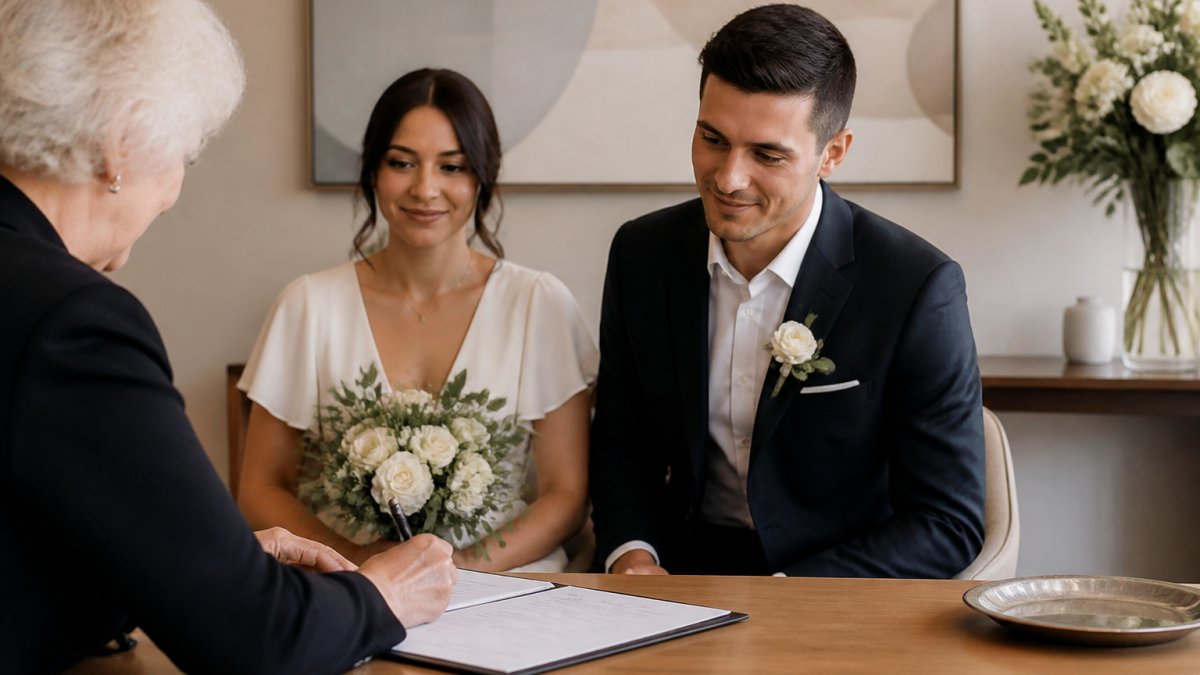
A civil marriage is a legally binding union solemnised by a registered civil celebrant, with no religious content required. A religious marriage is solemnised by a minister of religion who is also authorised to perform legal marriages. Both create a valid marriage under Australian law, provided the correct process is followed.
The process is where couples get caught out. Three steps matter:
- Lodge a Notice of Intended Marriage (NOIM) with your celebrant at least one month before the wedding
- Present identity and prior-marriage documents to your celebrant
- Have the ceremony witnessed by two adults and the celebrant, who registers the marriage
The Notice of Intended Marriage and Authorised Celebrant
The NOIM is the form that starts the legal clock, and it must be lodged with an authorised celebrant. A celebrant is either a civil marriage celebrant or a minister of religion registered to perform marriages.
Legally, a marriage must be solemnised by an authorised celebrant, and there are strict rules about who can be registered. The Attorney-General's Department guidance on marriage celebrants sets out who can be authorised and what the ceremony must include.
Does a Religious Ceremony Carry the Same Legal Weight?
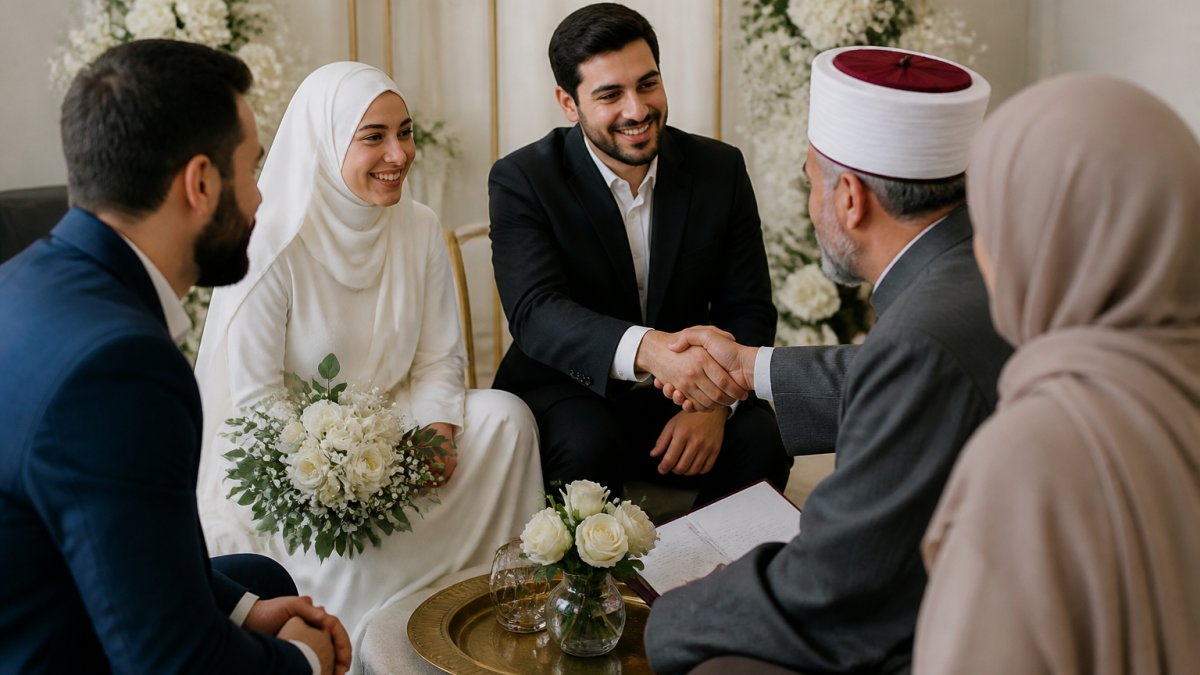
Yes, a religious ceremony carries identical legal weight, as long as the minister is registered and the NOIM process is followed. A Nikah, a church wedding, or an interfaith service all produce the same legal marriage certificate when done properly.
Watch out: a ceremony that skips the NOIM or uses an unregistered officiant is not a legal marriage, and unwinding it is painful. If you want a service that handles the legal side from NOIM lodgement to the final signing, see the civil marriage celebrant service.
What a Non-Religious Wedding Ceremony Looks Like in Practice
A non-religious wedding ceremony is a formal but faith-free celebration focused on the couple's own story, values, and commitments. There are no prayers, hymns, or scripture readings unless you choose to include them. The structure is yours to shape.
In practice, a non-religious ceremony usually runs like this:
- A welcome and introduction from the celebrant
- A reading or two chosen by the couple
- Personal vows written in your own words
The format is flexible: keep it short and registry-style, or build a full formal ceremony with music, cultural nods, and family involvement. For couples who want to go deeper, the complete guide to non-religious civil ceremonies walks through the options.
Inside a Civil Wedding Ceremony Script: Readings, Vows and Music
A civil wedding ceremony script is the written plan covering the welcome, readings, vows, legal wording, and music cues. It is not a rigid template but a document you and your celebrant build together.
Here is what a workable script includes:
- Welcome: a short opening that names you both and thanks guests
- Readings: poems, letters, or cultural texts, chosen for meaning not obligation
- Vows: personal promises, plus the required legal declarations
The legal declarations are the one part you cannot rewrite, and your celebrant will guide you through the exact wording. For wording ideas, the interfaith ceremony script examples and guide offers ready-to-adapt language.
Planning an Interfaith Wedding Ceremony That Holds Both Traditions
An interfaith wedding ceremony blends two faith or cultural traditions into one respectful, unified celebration. It is where a celebrant's experience matters most.
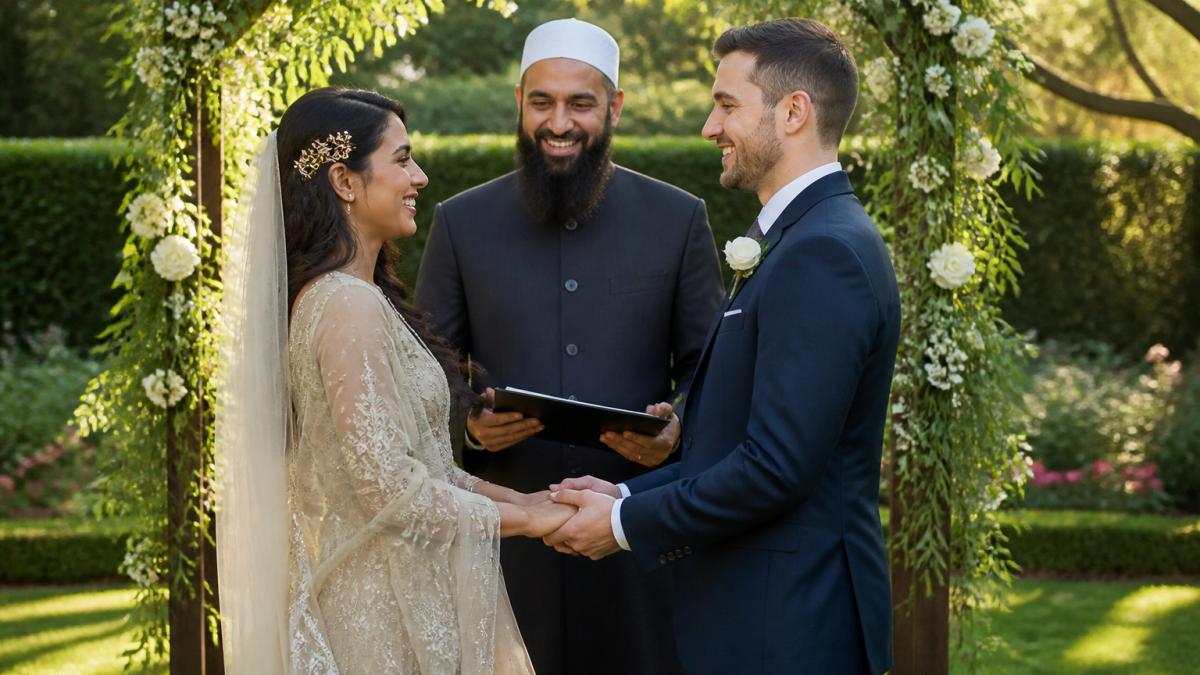
The work is in the balance. To see how blended ceremonies are structured, explore the interfaith marriage ceremony service.
Comparing the Two: Venue Flexibility, Cost and Inclusion
Venue flexibility is where civil ceremonies often have the edge. A civil ceremony can happen in many settings, including gardens, halls, restaurants, or private property. A church wedding is tied to the church and its rules, and many denominations also require pre-marriage preparation or attendance commitments before they will solemnise the marriage.
| Factor | Civil Ceremony | Religious Ceremony |
|---|---|---|
| Who leads | Registered civil celebrant | Registered minister of religion |
| Venue | Anywhere, indoors or out | Usually a church or approved site |
| Content | Fully personalised | Follows faith tradition and rules |
| Readings and music | Your choice, no restrictions | Governed by the tradition |
| Inclusion | Easy to adapt for all guests | Varies by faith |
| Legal weight | Fully recognised | Fully recognised |
| Typical lead time | Notice of Intended Marriage lodged at least one month ahead | Same legal minimum, plus any faith-specific preparation |
A Transparent Cost Comparison
Most guides wave at cost without showing the moving parts. Here is what drives the budget, with the caveat that every figure varies by state, venue, and supplier. Treat these as categories to price, not fixed quotes.
- Celebrant or officiant fee. A registered civil celebrant charges a professional fee covering NOIM lodgement, planning meetings, the ceremony, and lodgement of documents afterwards. Ministers may charge a fee, a suggested donation, or nothing, depending on denomination and congregation.
- Venue. A backyard or public park ceremony can cost little beyond a permit where required. A church may charge a facility fee, and some denominations expect a separate donation to the minister. A hired venue adds hire and catering costs.
- Paperwork and certificates. The formal marriage certificate is issued by the state or territory births, deaths and marriages registry, and it is the document you need for name changes, visas, and travel.
The legal side of a wedding is usually one of the smaller line items, while venue, catering, and attire dominate the budget. For a fuller breakdown, the cost and legal guide to booking a celebrant explains the moving parts.
Inclusion and Accessibility
On inclusion, civil ceremonies have the edge for mixed-faith guest lists and secular couples, because nothing assumes a shared belief. That matters for LGBTQ+ couples, interfaith families, non-religious guests, and guests needing accessibility accommodations such as step-free venues, hearing loops, or interpreted vows, a civil celebrant can build those in without negotiating doctrine. Religious ceremonies offer the weight of tradition and community, and a continuity many families value deeply.
A Decision Framework for Choosing Your Ceremony
Most guides give you a pros-and-cons list and leave you to it. A decision framework is more useful: a short, weighted process that forces the trade-offs into the open so you stop comparing and start booking. Here is one you can work through in an evening.
Step 1: Score the Five Levers
Rate each lever from 1 (not important) to 5 (non-negotiable) for each partner, then add the two scores. The levers are:
- Faith. Does a specific religious tradition need to be present for you or your families?
- Venue freedom. Do you have a location in mind that is not a church?
- Content control. Do you want to write your own vows and choose every reading and piece of music?
A high combined score on faith and family expectations points toward a religious or hybrid ceremony. A high combined score on venue freedom, content control, and guest fit points toward a civil ceremony. A split score is the signal to look seriously at a hybrid.
Step 2: Check the Legal Floor
Whatever you score, the legal requirements are non-negotiable. The Notice of Intended Marriage must be lodged with an authorised celebrant at least one month before the ceremony, identity and prior-marriage documents must be presented, and the ceremony must be witnessed by two adults. A religious ceremony only carries legal weight if the minister is registered to solemnise marriages. If your preferred religious officiant is not registered, you will need a separate civil ceremony to make the marriage legal, which pushes you toward the hybrid option below.
Step 3: Choose a Hybrid If You Are Split
A hybrid or two-ceremony option lets you have both. There are three practical patterns:
- Legal civil ceremony first, religious celebration second. The civil ceremony satisfies the law, often with a small guest list, and the religious or symbolic celebration follows with the full family and community present. This is the cleanest sequencing because the legal status is settled before the larger event.
- Religious ceremony that is also legal. If your minister is registered and the Notice of Intended Marriage is lodged correctly, one ceremony does both jobs. This is the simplest option when faith is central and the venue is a church or approved site.
- One celebrant-led service that blends both. A registered celebrant who also understands your faith or cultural tradition can hold the legal declarations and the spiritual or cultural elements in a single ceremony, avoiding the cost and coordination of two events.
Step 4: Pressure-Test the Decision
Before you book, run three checks. First, confirm your officiant is authorised to solemnise marriages and can lodge the NOIM. Second, confirm the venue permits the ceremony you want, including any public-space permit. Third, confirm the guest experience: accessibility, language, and whether non-religious or interfaith guests will feel included. If any check fails, the framework has told you something useful before you have paid a deposit.
Booking a Celebrant Who Handles Faith and Law Together
The best celebrant for a modern couple understands both the legal requirements and the faith or cultural traditions you want to honour.
Faisal Akhtar is both an experienced Sheikh and a registered marriage celebrant.
A ceremony that reflects who you are takes conversation, not a template.
The hardest part is not choosing between a civil wedding and a religious ceremony.
Frequently Asked Questions
Does a religious wedding ceremony have the same legal status as a civil marriage?
Yes, provided the person officiating is a Commonwealth-registered marriage celebrant or a recognised religious celebrant. A religious ceremony performed by an authorised celebrant is legally recognised once the Notice of Intended Marriage has been lodged, the ceremony follows the legal requirements, and the marriage is registered. A religious blessing conducted by someone who is not registered does not create a legal marriage on its own, so check the celebrant's registration before booking.
Can a couple have both a civil wedding and a religious ceremony?
Many couples do exactly this. One option is a single hybrid ceremony where the celebrant handles the legal vows and the religious or cultural elements together. Another is two separate events: a small civil wedding for the paperwork and a larger religious ceremony for family and faith. If you choose two events, make sure the legally binding one is performed by a registered celebrant and that the Notice of Intended Marriage is lodged at least one month before.
Can a civil wedding include personal or spiritual elements?
A civil wedding ceremony can include readings, personal vows, cultural rituals, music and moments of reflection, as long as the legal wording is delivered. A non-religious wedding ceremony can still feel spiritual and respectful. A registered celebrant who understands both traditions can weave in a prayer, a meaningful reading or a family ritual without compromising the legal side, which suits couples who want something meaningful but not strictly religious.
How do couples choose between a civil and religious wedding ceremony?
Start with three questions: what does your family expect, what does your faith require, and what kind of atmosphere do you want? A civil wedding offers venue flexibility and full control over the script. A religious ceremony brings tradition, community and familiar rituals. If you sit between the two, an interfaith wedding ceremony or a hybrid format lets you honour both. A celebrant experienced in faith and law can talk you through the trade-offs before you commit.