 how-to
Nikah Ceremony Structure for Couples: Step-by-Step Guide
Table of Contents
- Nikah Ceremony Structure: The Order of Events
- The Four Pillars That Hold the Ceremony Together
- The Legal Requirements for Marriage in Australia
- How to Perform a Nikah Ceremony: Step-by-Step
- The Islamic Marriage Contract Template and Nikah Nama
- Cultural Variations in Nikah Ceremony Structure
- Modern Challenges for Cross-Cultural Couples
- Pre-Ceremony Logistics: A Checklist for Couples
- Conclusion
- Frequently Asked Questions
Last Updated: October 4, 2026
Nikah Ceremony Structure: The Order of Events
The nikah ceremony structure follows a clear sequence: proposal, acceptance, witnesses, and mahr. For couples planning an Islamic marriage, understanding this order removes the guesswork from one of the most important days of your life.
At Ceremonies With Faisal, we walk couples through every step. A nikah is a contract, not just a ritual. Once you see it that way, the structure makes sense.
Below, we break down the full order of events, the legal side, and the logistics most couples forget.
The Four Pillars That Hold the Ceremony Together
Four elements must be present for a nikah to be valid. Remove any one of them and the ceremony does not hold.
- Ijab and Qubool: the offer and the acceptance
- Witnesses: two adult Muslims of sound mind
- Mahr: the gift promised to the bride
- Consent: both parties must agree freely
These pillars come from Sharia, and they do not change based on venue or budget. Everything else, the decorations, the food, the order of speeches, is flexible.
The Legal Requirements for Marriage in Australia
An Islamic nikah on its own does not create a legally recognised marriage in Australia. The religious contract and the civil marriage are two separate legal instruments, and a couple needs both if they want the marriage recognised under Australian law as well as under their faith.
The civil side is governed by the Marriage Act 1961, administered by the Attorney-General's Department. The requirements are:
- Both parties must be at least 18 years old, unless a court order has been obtained
- Neither party can be already married
- Both must give free and informed consent
- The marriage must be solemnised by a registered marriage celebrant or an authorised minister of religion
- Two witnesses aged 18 or over must be present
- The couple must have lodged a Notice of Intended Marriage with the celebrant
How the Two Ceremonies Fit Together
There are three common ways couples structure this, and each has a different run sheet.
One blended ceremony. The celebrant performs the religious elements and the legal elements in a single sitting.
Two ceremonies, same day. The nikah is held first, often at home or in a mosque, and the civil ceremony follows at the reception venue.
Two ceremonies, different days. The nikah is held on one date and the civil registration on another, sometimes months apart.
The Notice of Intended Marriage and Other Paperwork
The Notice of Intended Marriage (NOIM) must be lodged with your celebrant at least one month before the ceremony.
You will also need:
- Birth certificates or passports
- Photo identification
- Evidence of any previous marriage ending, such as a divorce certificate or a death certificate
- A signed declaration if either party has been married before
If either party was born overseas, the celebrant will need to see the original documents or certified copies. Translations may be required if the documents are not in English.
After the ceremony, the celebrant lodges the paperwork with the relevant state or territory registry. You then apply for a marriage certificate through that registry.
How to Perform a Nikah Ceremony: Step-by-Step
Here is the working order we follow for a nikah that satisfies both faith and law.
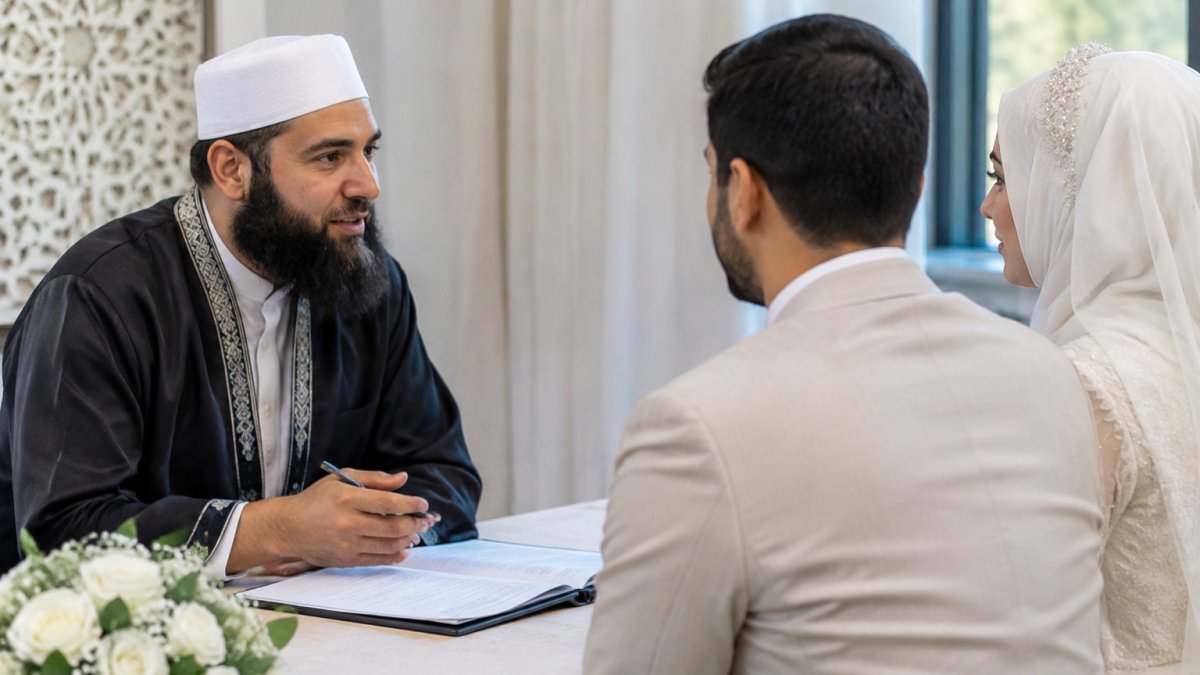
- Opening and welcome. The officiant opens with a short introduction and Quranic verses.
- Khutbah. A brief sermon on the meaning of marriage.
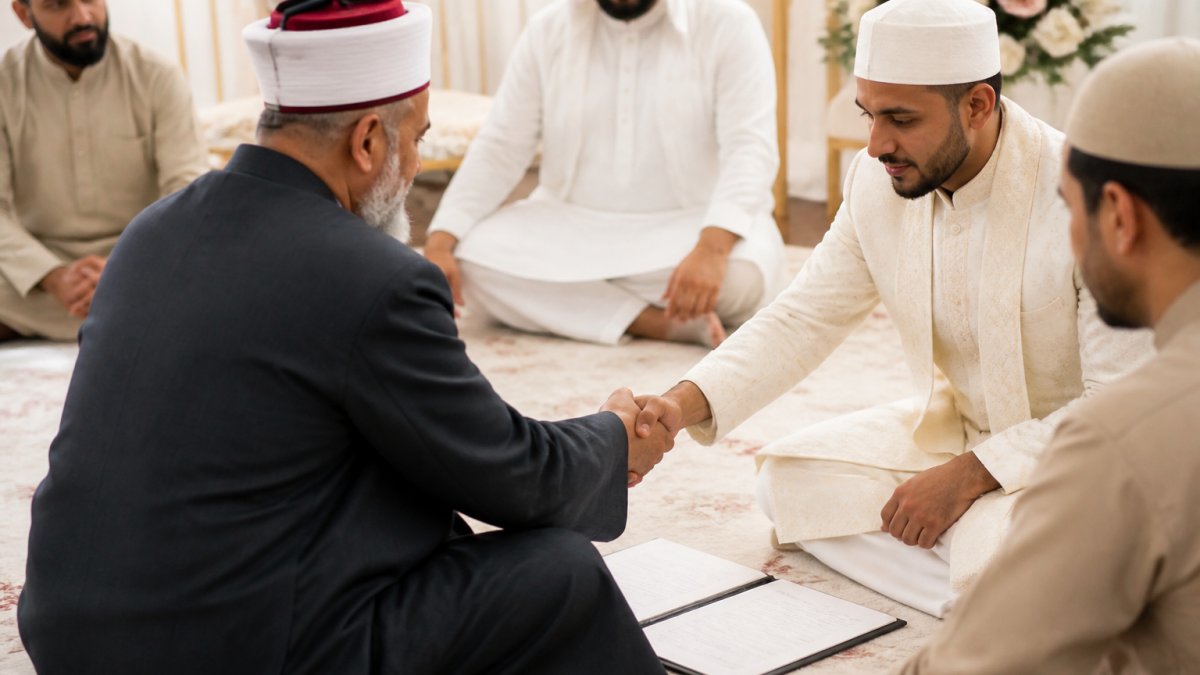
- Ijab and Qubool. The proposal and acceptance are spoken aloud.
- Witness confirmation. Witnesses confirm they heard and understood.
- Mahr declaration. The mahr is stated and agreed.
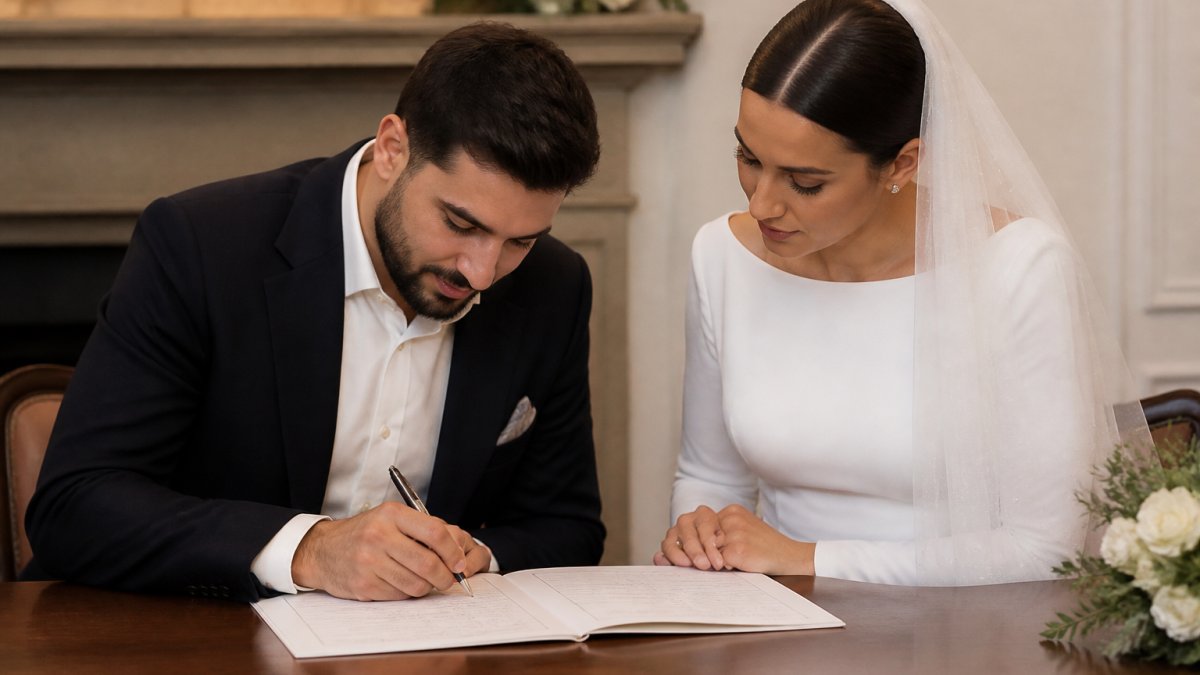
- Nikah Nama signing. Both parties and witnesses sign the contract.
- Dua and closing. Prayers for the couple, then congratulations.
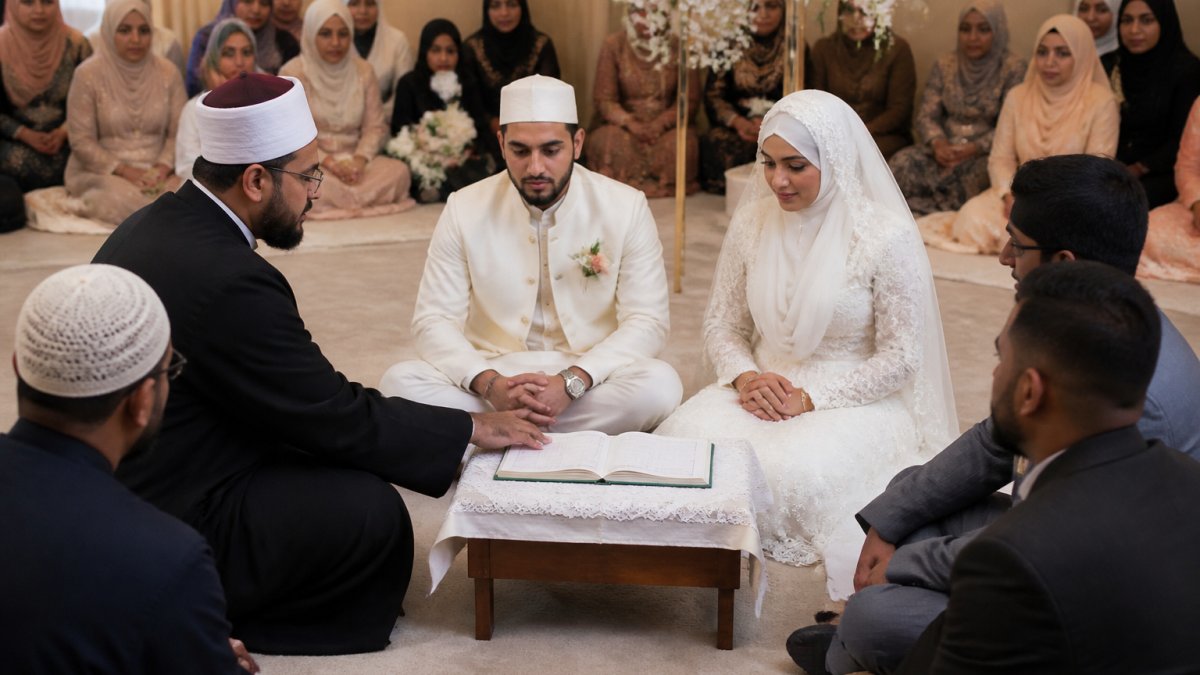
Ijab and Qubool: The Proposal and Acceptance
Ijab is the offer made by the bride's side, and qubool is the groom's acceptance. Both must be spoken clearly, in the same gathering, with witnesses present.
The wording matters less than the clarity. Some couples use formal Arabic phrases. Others use plain English. Both work, as long as everyone understands what is being agreed.
The Role of the Wali, Witnesses and Mahr
The wali is the bride's guardian, traditionally her father or another male relative. His role is to protect her interests, not to decide for her.
Witnesses must hear the offer and acceptance directly. They are not spectators; they are part of the contract.
The mahr is the bride's right, not a fee paid to anyone else. It can be given upfront, deferred, or split between the two. It should be written into the Nikah Nama so there is no dispute later.
The Islamic Marriage Contract Template and Nikah Nama
The Nikah Nama is the written record of the marriage contract. A strong one includes:
| Section | What It Records |
|---|---|
| Parties | Full names of bride and groom |
| Wali | Name and relationship of guardian |
| Witnesses | Names of two witnesses |
| Mahr | Amount, form, and payment timing |
| Date and place | Where and when the nikah took place |
| Signatures | All parties and witnesses |
Many couples now add extra clauses covering education, work, or relocation. These are optional, but they can prevent misunderstandings later. If you want a custom clause, raise it with your officiant well before the ceremony.
Cultural Variations in Nikah Ceremony Structure
The four pillars do not move. What changes is the sequence around them, who speaks, and how long the whole thing runs. If you are planning a ceremony that blends two backgrounds, the practical question is not "which tradition is correct" but "which elements do we keep, and in what order."
Here is how the structure typically shifts across the traditions most couples in Australia are working with.
South Asian
The nikah itself is often short, sometimes under 30 minutes, and is frequently held at home or in a mosque rather than at the reception venue. The Walima is the public celebration and is usually a separate event, sometimes days later. The Mehndi and, for some families, the Baraat procession sit before the nikah. For planning, the key implication is that the religious contract and the party are decoupled, so you can schedule the nikah at a quiet time of day and keep the reception for the evening.
Arab
A common pattern is a small, private nikah attended by close family and the wali, with a larger celebration hosted separately. The contract may be signed in one gathering and the Walima held weeks later. This structure suits couples who want the legal and religious side handled without a large audience, and it is often the easiest format to adapt when one side of the family is travelling from interstate or overseas.
Turkish
Many Turkish-Australian couples combine the civil registration and the religious nikah on the same day, sometimes back to back. The civil ceremony is conducted by a registered celebrant, and the nikah follows. This is efficient but it means the paperwork has to be lodged well in advance, because the Notice of Intended Marriage cannot be compressed into the same week.
Southeast Asian
Ceremonies frequently include a formal procession, a gift exchange, and a seated arrangement where the couple is presented to guests. The nikah itself may be conducted by a local imam or a family-appointed officiant, and the mahr is sometimes presented physically during the ceremony rather than only declared.
What Actually Changes for Planning
Across all four, three things move:
- Timing. Whether the nikah and the Walima are the same day or separated by days.
- Audience. Whether the contract is witnessed by two people or by a full hall.
- Language. Whether the ijab and qubool are spoken in Arabic, in English, or in both, with a translation read aloud.
None of these affect validity. They affect the run sheet, the guest list, and how long your celebrant needs on the day. Raise the format with your officiant early, because a blended structure takes longer to script than a single-tradition one.
Modern Challenges for Cross-Cultural Couples
When one partner is not Muslim, the nikah ceremony structure raises questions that a same-faith couple never faces.
Common issues include:
- Whether the non-Muslim partner will take part in religious portions
- How to word the civil ceremony so both families feel included
- Which language the ceremony is conducted in
- How to handle two sets of family expectations on timing and format
The practical answer is usually a two-part ceremony: a religious nikah and a civil ceremony, or one blended ceremony that clearly separates the two. An officiant experienced with interfaith couples can hold both sides together without watering down either.
Pre-Ceremony Logistics: A Checklist for Couples
Work through this list in the months before the ceremony.
- Confirm your celebrant is registered and available
- Lodge the Notice of Intended Marriage at least one month out
- Gather birth certificates, passports, and ID
- Resolve any previous marriage documentation
- Agree on the mahr and write it into the Nikah Nama
- Confirm your wali and two witnesses
- Book the venue and confirm capacity
- Finalise the ceremony script and language
- Arrange a rehearsal if the venue allows
- Confirm who signs the Nikah Nama and when
Most delays come from paperwork, not the ceremony itself. Start the admin early and the day runs smoothly.
Conclusion
A nikah ceremony structure only works when the faith requirements and the legal requirements line up. Miss one and you either end up with a ceremony that is not legally recognised or one that does not honour your beliefs.
At Ceremonies With Faisal, we handle both sides. Faisal Akhtar is a registered marriage celebrant and an experienced Sheikh, so your nikah is legally binding and spiritually complete.
Get started with Ceremonies With Faisal and walk into your wedding day.
Frequently Asked Questions
What are the steps involved in a Nikah ceremony?
A Nikah ceremony structure follows a clear order. The officiant opens with a welcome and Quranic verses, then recites the khutbah. The Wali confirms consent on the bride's behalf, the Mahr is agreed and stated, and the Ijab and Qubool (proposal and acceptance) are exchanged before two witnesses. The Nikah Nama is signed, a dua is made, and the couple is announced as spouses. The exact wording varies by tradition, but these core steps remain consistent.
What is the role of the Wali in a Nikah ceremony?
The Wali is the bride's guardian, usually her father or another close male relative, who represents her interests and confirms her consent during the Ijab and Qubool. In some schools of thought the Wali's presence is a condition of a valid Nikah; in others the bride may act through a Wali appointed for the purpose.
How does a Nikah ceremony differ from a civil marriage registration?
A Nikah is a religious contract between two spouses, witnessed by two Muslims and sealed by Ijab and Qubool. A civil marriage registration under Australian law is a separate legal process, requiring a Notice of Intended Marriage lodged with a registered celebrant at least one month before the ceremony. Many couples hold a single ceremony that satisfies both, with an authorised celebrant who can solemnise the marriage and lead the Nikah in one sitting.
Can we use an Islamic marriage contract template or do we need a custom one?
A template is a useful starting point, but the contract should reflect your actual Mahr, witnesses, and any conditions you both agree to. Most templates cover the names of the spouses, the Wali, the two witnesses, the Mahr, and the date of the ceremony.